Best Bicycle Electric Motor Kits for Upgrading Your Rides in 2026
Choosing the right bicycle electric motor kit depends on your riding goals, bike type, and maintenance preferences. This guide highlights five solid options that cover front- and rear-wheel configurations, brushed and brushless designs, and a range of power levels. Ideal buyers include commuters seeking easy upgrades, hobbyists building DIY e-bikes, and riders who want extra hill-climbing power without breaking the bank. Below is a quick comparison table to help you decide which kit aligns with your needs.
| Product | Best For |
|---|---|
| 48V 1000W Brushed Motor Kit | Budget-conscious riders needing strong torque for hills |
| 48V 1500W Rear Hub Kit with PAS & LCD | Commuters who want efficient performance and ride data |
| 100cc Gas Bike Engine Kit | Non-electric upgrade option for riders seeking gasoline power |
| Orudauy 26″ Rear Wheel Kit 48V 1000W | High-load applications with LCD readout and PAS |
| 24V 350W Brushed Motor Kit | Simple, low-voltage upgrade for hobby projects |
48V 1000W Brushed Motor Kit For E-Bikes

The 48V 1000W Brushed Motor Kit delivers robust performance at a practical price. With a 3000rpm rating and 4.5N.M torque, it offers reliable acceleration and solid hill-climbing capability. Its durable iron and copper construction resists rust and deformation, making it suitable for frequent use and varied weather. This kit is best for riders who want straightforward, high-torque power without the complexity of a brushless system. A potential caveat is heat management under sustained high-load usage, which may require attention on long, steep climbs.
48V 1500W Rear Hub Motor Kit With PAS

This 48V, 1500W hub kit emphasizes efficiency and quiet operation, featuring a PAS sensor that assists pedaling and reduces rider fatigue. The kit uses high-quality materials—rubber, stainless steel, aluminum, and copper—to resist rust, impact, and wear. It suits commuters who want strong performance with a smooth, low-effort pedal assist and an LCD display to monitor speed, battery level, and system faults. It may be less ideal for riders seeking regenerative braking features or a lightweight frame, due to its power and build.
YUNLAIGOTOP 100cc Gas Bike Engine Kit

The YUNLAIGOTOP 100cc engine kit converts a bicycle into a gasoline-powered vehicle. It includes a 44-tooth sprocket, upgraded carburetor, and CDI for enhanced performance and reliability. This kit is best for riders who want gasoline-powered versatility and long-range capability without relying on electric power. A key limitation is fuel handling and maintenance requirements, which may be more involved than an electric kit and may require appropriate legal compliance depending on location.
Orudauy 26″ Rear Wheel Kit 48V 1000W

This Orudauy rear-wheel motor kit pairs a robust 48V 1000W motor with a PAS sensor and an LCD display. It is designed for riders who want clear ride data, simple installation, and confident load handling up to roughly 309 lbs. The kit emphasizes durable construction and real-time monitoring, making it well-suited for daily commuting and leisure rides. A limitation to consider is compatibility with non-standard bike frames, which can complicate installation on some models.
24V 350W Brushed Motor Kit
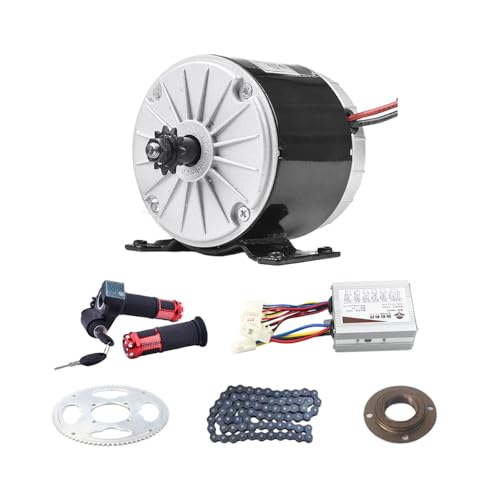
The 24V 350W Brushed Motor Kit provides a compact, low-voltage upgrade option with a 3000RPM rating. It is best for hobbyists and beginners who want a simple, affordable entry into electric conversion projects. The kit includes a brushed controller with basic protection features. A caution is that lower voltage generally means reduced torque and top speed compared to higher-voltage kits, which may not satisfy riders needing more power on demanding terrains.
Buying Guide: Key Considerations For Bike Motor Kits
Power and compatibility matter most. Match voltage to your frame and battery capacity to your riding goals. Higher wattage delivers stronger torque but adds weight and cost. Consider motor type: brushed motors are straightforward and affordable; brushless motors offer higher efficiency and smoother operation but can be more complex to install and tune.
- Wheel configuration: Front hub, rear hub, or mid-drive. Rear-hub kits often feel more natural for ramp climbs, while front-hub kits are easier to install on a wider range of frames.
- Battery integration: Ensure your frame clearance and weight distribution won’t affect handling. Check connector compatibility and battery mounting options.
- Torque and speed: Higher torque improves starting power and hill-climbing ability; higher RPM provides faster top speeds on flat terrain. Balance with ride stability and safety.
- Display features: An LCD or LED readout helps monitor speed, battery level, and fault codes. PAS sensors reduce fatigue on longer rides.
- Durability and materials: Look for rust-resistant housings and robust components if you ride in varied weather or off-road.
What about installation and maintenance?
Many kits provide step-by-step installation guides. Check frame compatibility, brake type integration, and whether you need sprocket adapters or disc brake compatibility. Regular maintenance includes checking electrical connections, ensuring secure mounting, and periodic lubricant application for moving parts.
Which kit should I choose for specific needs?
Best for commuting with hills: a 1000W–1500W rear hub or mid-drive kit with PAS and LCD display for monitoring. Best for entry-level builders: a 24V–36V brushed kit for simple upgrades. Best for long-range or mixed terrains: a premium rear hub kit with robust motor and high-efficiency components. Best for gasoline preference: a gas-powered engine upgrade as a non-electric option.
Installation tips for a smoother upgrade
- Prepare your bike frame and tools before starting. Gather torque specs for crank and wheel bolts.
- Verify brake alignment after motor installation to ensure safe stopping power.
- Test ride in a controlled environment and gradually increase power to verify stability.
FAQ
- What wattage is best for city commuting? – For city commuting with occasional hills, 750W–1000W rear-hub kits are common, offering good balance of power and efficiency.
- Are brushed or brushless motors better? – Brushless motors are generally more efficient and quieter, but brushed kits are simpler and cheaper to maintain.
- Do these kits require a special bike frame? – Some kits fit most 26″–28″ bikes, but frame clearance, brake type, and dropout size can affect compatibility.
- Will installing a motor void my bike’s warranty? – Installing a kit typically voids the original frame warranty from the manufacturer; check your bike’s warranty terms.
- Can I upgrade the battery later? – Yes, many kits support battery upgrades, but verify connector compatibility and watt-hour capacity for range changes.
- Is a gas-powered kit legal for street use? – Gas-powered bike kits have different legal considerations by region; consult local regulations before installation.