Best Solar Horse Fence Chargers for Reliable Pasture Containment
Direct answer: For protecting horses and other livestock, the best solar fence chargers combine solid stored energy, adequate voltage, and reliable day/night operation. This guide highlights five top options and explains who each is best for. Consider pasture size, climate, and access to sun when choosing. The table below compares the five selected chargers for quick reference.
| Product | Best For | Output Range | Effective Range | Key Benefit |
|---|---|---|---|---|
| 24 Hour Solar Electric Fence Charger (Epoify) | Small to medium pastures | 7–11 kV | Up to 10 miles | Day/night operation with solar storage |
| 10 Miles Solar Fence Charger (ANDMON) | Portable strip grazing | Not specified in data | Up to 10 miles | Solid portability and reliable power |
| Solar Fence Charger 1.2J (Epoify) | Large pastures / multi-zone fencing | 7–11 kV | Up to 45 miles | High stored energy for big areas |
| Zareba ESP5M-Z | Remote locations with sun | High voltage pulses | Up to 5 miles | 360-degree mounting for sun exposure |
| ANDMON MINI400 30 Miles | Extensive fencing / rotational grazing | 0.4 J stored | Up to 30 miles | Night mode saves energy |
24 Hour Solar Electric Fence Charger, 10 Miles
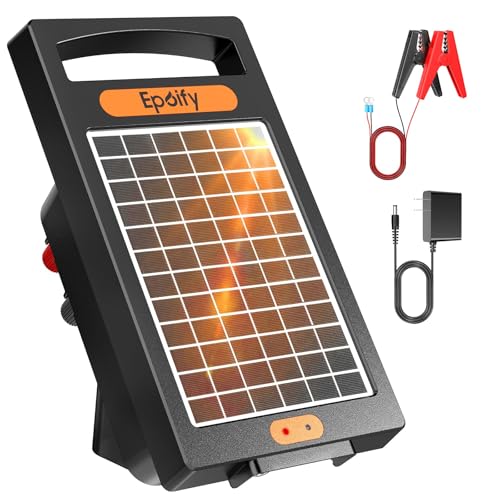
This charger delivers a consistent 0.18 joule pulse to contain cattle, goats, poultry, and deter predators. It covers up to 10 miles under favorable conditions with proper grounding and vegetation management. It runs continuously with daylight charging and overnight protection thanks to a built-in battery. Best for small to medium pastures that require reliable, low-energy operation. A limitation is that performance can drop in dense vegetation or poor grounding.
10 Miles Solar Fence Charger with Day/Night Mode (ANDMON)
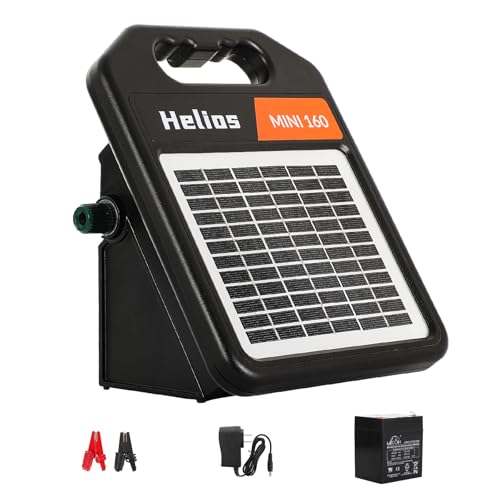
Ideal for strip grazing or temporary fencing needs, this unit energizes up to 10 miles and features day/night operation. It emphasizes portability and a robust solar panel plus internal GEL battery for reliable power in low light. Choose this if you need a compact, moveable solution that stays powered between cloudy days. A caution: verify fence wire layout and grounding to maximize efficiency in longer or multi-wire setups.
Solar Electric Fence Charger 1.2J, 45 Miles

This model stores 1.2 joules and delivers 7–11 kV pulses, designed for large pastures and multi-zone fencing. It can cover up to 45 miles under ideal conditions, aided by an upgraded solar panel and large-capacity battery for uninterrupted operation through weather changes. Best for ranches or farms with expansive fencing. Consider the higher energy needs of long, multi-wire deployments, which may demand robust grounding and regular maintenance.
Zareba Solar Electric Fence Charger – ESP5M-Z

Designed for up to 5 miles of fencing in ideal sun, this charger offers versatile mounting with a 360-degree rotation for optimal sun exposure. It stores energy to operate during cloudy periods, making it suitable for remote sites with varying daylight. Best for smaller or remote setups where sun exposure is variable. Limitation: shorter maximum range than larger units, so not ideal for very long perimeters without additional units.
ANDMON MINI400 30 Miles Solar Fence Charger
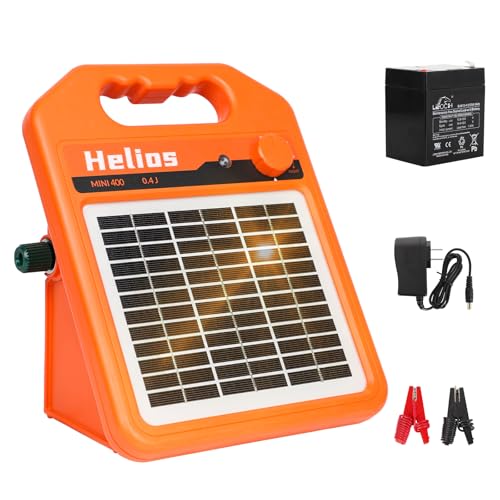
With 0.4 joule stored energy and up to 30 miles of coverage, this charger suits large pastures or rotational grazing. It features day/night mode for energy efficiency and easy installation for compatibility with Y, T, and wooden posts. Best for farms needing a balance of range and efficiency. Caution: heat and cold extremes can impact battery performance, so proper weather protection is advised.
Buying Guide
What size pasture are you protecting? For small to mid-size pastures, models like the 10 Miles ANDMON or the 24 Hour Epoify offer reliable day/night operation with straightforward setup. For large ranches or multi-zone systems, the 1.2J Epoify or the ANDMON MINI400 provide higher stored energy and wider coverage, improving reliability across long fences.
How important is portability? If you move animals between fields or need temporary grazing, choose a portable unit with a compact form and built-in solar panels, such as the ANDMON or Zareba options. In fixed facilities, a high-output unit with strong solar charging and a robust battery is preferred.
What about sun exposure and climate? Units with upgraded solar panels and larger batteries are more resilient in cloudy days and winter conditions. Look for systems advertised as maintaining operation through “days of cloud” or with long backup runtimes.
Grounding and fence design matter. A solid ground connection and appropriate wire, strand count, and post spacing are essential to get the promised voltage and deterrence. When choosing, consider the number of livestock and potential wildlife pressures in your area.
Ease of installation and maintenance also influence value. Some units offer all-in-one solar charging and built-in batteries with simple mounting on posts. Others may require additional components, such as mounting brackets or compatible posts, to achieve optimal sun exposure.
FAQ
- What is a good voltage for horse fencing? A typical effective pulse is in the range of 7–11 kV, sufficient to deter horses while remaining safe if wired correctly and grounded properly.
- Do solar fence chargers work year-round? Yes, with a suitable battery and panel. Some models emphasize day/night operation to maintain continuous protection through non-sunny periods.
- How far can a solar charger cover? Coverage varies by model and fence design. Small systems may reach up to 5–10 miles, while larger units can cover 30–45 miles under optimal conditions.
- What maintenance is required? Regular inspection of grounding, battery health, vegetation clearance, and fence integrity helps maintain performance and safety.
- Can I use a solar charger in very cold climates? Yes, but battery efficiency may drop; choose models rated for wide operating temperatures and consider extra insulation or winter-ready setups.
- Is a longer range always better? Not necessarily. Match range to fence length, terrain, and grazing strategy. Overbuilding can waste solar energy and complicate maintenance.