Best Electric Start Kit for Generator Options and How to Choose
When power is critical, an electric start kit can make starting a generator quick and effortless. This guide pairs top generators and electric-start accessories with practical buying criteria, so you can pick a setup that suits home backup, job sites, or outdoor activities. Below you’ll find five strong options, each with a quick overview and why it pairs well with an electric start system.
Summary of Selected Products
| Product | Brand | Fuel Type | Key Start Feature | Notes |
|---|---|---|---|---|
| WEN DF475T 4,750-Watt Dual Fuel Portable Generator | WEN | Gasoline / Propane | Electric start with key, 120/240V selector | Compact dual-fuel with wheel kit |
| Westinghouse 12,500 Peak Watt Dual Fuel | Westinghouse | Gasoline / Propane | Remote electric start (key fob) | Transfer switch ready, CO sensor |
| FDJ Electric Starter Kit for Honda GX Series | FDJ | Honda GX160/GX200 variants | Electric start upgrade kit | High-torque starter, comprehensive install kit |
| WEN DF1100T 11,000-Watt Dual Fuel | WEN | Gasoline / Propane | Electric start with key, 120/240V output | Heavy-duty 457cc engine, wheel kit |
| Westinghouse 12,500 Peak Watt Tri-Fuel | Westinghouse | Gas / Propane / Natural Gas | Remote electric start | Multiple fuels, robust safety features |
WEN 4,750-Watt Dual Fuel Portable Generator (DF475T)

The WEN DF475T combines portability with dual-fuel versatility and an electric start. Its 224cc four-stroke OHV engine powers through both gasoline and propane, offering 4,750 surge watts (gas) and 3,800 running watts, plus 4,350 surge watts (propane) and 3,500 running watts. A simple dial switches between fuels and 120V/240V output, making it adaptable for transfer switches and emergency backup. The electric start eliminates the need for manual cranking, while wheel kit aids mobility. This model suits small-to-midsize home backup, job sites, and recreational use where quick starts matter. It pairs well with a dedicated start battery and a basic transfer switch for seamless power automaticization.
Key features reference: dual-fuel operation; 120/240V output; electric key start; 224cc engine; portable design with wheels. For users prioritizing flexibility and simple startup, this generator provides a balanced mix of power and convenience.
Westinghouse 12,500 Peak Watt Dual Fuel

Westinghouse’s 12,500-peak-watt dual-fuel generator offers substantial backup power with remote electric start via included key fob. It delivers up to 9,500 running watts on gasoline and 11,200 peak watts, or 8,500 running watts and 11,200 peak watts on propane. A 6.6-gallon fuel tank provides longer run times, while multiple outlets (including transfer-switch-ready L14-30R and RV-ready outlets) expand compatibility for home and on-site use. Safety is augmented by rubber-outlet covers and CO shutdown features, with a digital hour meter and a robust 457cc OHV engine for durability. This is a strong choice for whole-house backup, workshops, or remote job sites where dependable electric-start capability is essential.
FDJ Electric Starter Kit for Honda GX160/GX200

This kit is aimed at Honda GX engines, including GX160 and GX200 variants. It includes a high-torque electric starter motor, solenoid, flywheel engagement, and a complete ignition-switch setup. The result is a reliable, quick start even in adverse conditions, with smoother operation compared to manual cranking. It’s ideal for people upgrading existing Honda-powered equipment—from generators to pressure washers or go-karts—where an electric start can significantly reduce starting effort. Proper installation is essential, and compatibility with specific engine models should be verified before purchase.
Electric Starter Kit Fits for Honda GX390/GX340

This kit targets larger Honda engines (GX390 13HP, GX340 11HP). It includes a complete electric start assembly with a flywheel, ignition coil switch, and charging components designed to retrofit heavier-duty generators and engines. Users gain a faster, easier start, especially useful for remote work sites or back-up systems. Compatibility with specific engine models (and possible need for professional installation) should be checked prior to purchase. The kit’s robust construction supports longer life under frequent starting cycles, making it a practical upgrade path for mid-to-large Honda-powered equipment.
WEN 5,600-Watt Dual Fuel Portable Generator

The DF5600X provides dual-fuel flexibility with 5,600 surge watts and 4,500 running watts on gasoline, plus 5,000 surge and 4,050 running watts on propane. It features electric start and a CO watchdog to mitigate carbon monoxide risk, helping prioritize safety in semi-enclosed spaces. While not the largest unit, it offers a compelling blend of power and convenience for medium-duty backup, tailgating, or light construction needs. The wheel kit and compact design improve mobility for use around a property or small job site, especially when paired with a reliable fuel source and routine maintenance.
WEN 11,000-Watt Dual Fuel Portable Generator
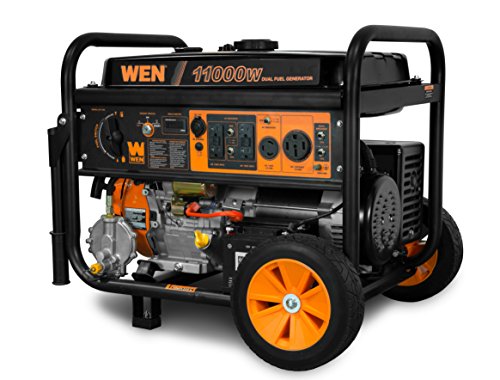
The DF1100T offers substantial power with 11,000 surge watts and 8,300 running watts on gasoline, plus 9,500 surge and 7,500 running watts on propane. The dual-fuel system expands fuel flexibility for long outages or remote locations. An electric start is included for quick startup, and a 457cc OHV engine provides reliable performance. The unit is wheel-enabled for improved portability to a garage, campsite, or job site. It is well-suited for larger homes or workshops that require sustained power without frequent refueling interruptions.
Westinghouse 12,500 Peak Watt Tri-Fuel

This tri-fuel option runs on gasoline, propane, or natural gas, delivering 12,500 peak watts with 9,500 running watts on gasoline, or 7,500 running watts on natural gas. It includes remote electric start and a robust transfer-switch-ready configuration. The versatility of fuel sources makes it suitable for homes tied into natural gas lines or households seeking multiple backup options. Combined with a compatible automatic transfer switch, it can provide a seamless power transition during outages and is designed with safety features like CO shutdown and weather-resistant outlets to handle diverse environments.
Buying Guide
Key purchase considerations
- Power needs: Calculate total wattage for essential circuits and appliances to determine the minimum running watts required.
- Fuel flexibility: Dual- or tri-fuel units offer more reliability during outages, especially if storage capacity or fuel prices vary.
- Starting method: Electric start is convenient, particularly during cold weather or after long storage periods. Consider battery quality and ease of recharging a backup battery if applicable.
- Transfer switch compatibility: If you plan to connect to a home electrical system, ensure the unit supports a transfer switch and has appropriate outlet configurations (e.g., L14-30R, 14-50R).
- Safety features: Look for CO shutoff, outlet covers, and automatic low-oil shutdown to protect equipment and occupants.
- Portability vs. power: Wheel kits and lighter units offer easier mobility but may compromise on sustained power. Balance weight, size, and noise expectations.
- Engine longevity and maintenance: Larger engines often require more maintenance but provide greater durability for frequent use.
Comparison perspective
- Best for compact spaces and easy starting: Smaller dual-fuel units with electric start and wheel kits.
- Best for home backup: Higher-watt models with remote start, transfer-switch readiness, and safety features like CO monitoring.
- Best for versatility: Tri-fuel options give you the widest range of fuel sources with robust output.
- Best for upgrades: Electric starter kits for Honda GX engines enable faster starts and improved reliability for legacy equipment.
When selecting an electric start solution for a generator, align the kit or unit with your typical usage patterns, space, and maintenance capability. A well-chosen setup can provide reliable, convenient power during outages, on camping trips, or at remote work sites, while remaining adaptable to evolving power needs.