Best Non Fusible Safety Switches for Reliable Electrical Isolation
When selecting a non fused safety switch, you’re choosing a rugged, code-compliant device that quickly isolates electrical power for maintenance or emergency stops. This guide highlights five top options that balance durability, ease of use, and clear operation indicators. It’s ideal for electricians, facility managers, and DIYers who need dependable outdoor or indoor non-fusible switches for 120/240V and 240V circuits. The table below summarizes the leading picks to help you compare at a glance.
Shopping summary
| Product | Brand | Voltage / Phase | Best For |
|---|---|---|---|
| 2P 60A 120/240V Non-Fusible Outdoor Safety Switch | S7 | 120/240V, 2P | Outdoor disconnects with padlock provisions |
| 2P 60A 120/240V Non-Fusible Outdoor Safety Switch | Hiweld | 120/240V, 2P | Budget outdoor safety switch with indicators |
| Siemens HNF361 30A 3 Pole Non-Fused Safety Switch | SIEMENS | 600V, 3P | Compact 3-pole, indoor/outdoor versatility |
| Siemens GNF221LLA 30A 2-Pole General Duty Safety Switch | SIEMENS | 240V, 2P | General duty, easy wiring |
| Siemens HNF362 60A 3 Pole Non-Fused Safety Switch | SIEMENS | 600V, 3P | Higher current, robust HD design |
2P 60A 120/240V Outdoor Non-Fusible Safety Switch — S7

This outdoor, non-fusible safety switch delivers quick-make, quick-break operation with 60 amp capacity. It features embedded ON and OFF indicators and padlocking provisions on the handle and door, aiding secure disconnection in field service. Best for commercial outdoor panels where clear status indication and secure locking are priorities.
Who it’s best for: technicians configuring outdoor feeders or service entrances that require a visible disconnect with lockout capability.
Why selected: robust mechanical action helps ensure positive disconnection, and the 2-pole design suits common 120/240V single-phase circuits.
Caution: Verify fault-current compatibility when pairing with specific fuses and ensure enclosure ratings meet local weather exposure requirements.
2P 60A 120/240V Outdoor Non-Fusible Safety Switch — Hiweld
This 2-pole non-fusible safety switch mirrors a compact, outdoor-ready design with status indicators and padlocking provisions. It’s suited for installations that require reliable isolation at 240V or less and emphasize straightforward wiring for quick maintenance shutdowns.
Who it’s best for: facility managers updating outdoor equipment disconnects where a clear ON/OFF indication matters for daily operations.
Why selected: similar feature set to the S7 version but offered by a different manufacturer, providing a competitive option for price-conscious buyers.
Caution: Ensure compatibility with your specific enclosure and local electrical code requirements for outdoor disconnects.
Siemens HNF361 30-Amp 3 Pole Non-Fused Safety Switch

This is a 30 Amp, 3 Pole, 600V, 3 Wire non-fused safety switch. It uses a quick-make, quick-break mechanism for reliable operation and features arc chutes to dissipate heat, extending switch life. Ideal where three-phase isolation with compact form is needed.
Who it’s best for: electrical rooms or outdoor spaces requiring a 3-pole disconnect for 3-wire circuits in medium-duty applications.
Why selected: robust Siemens design supports consistent operation and easier field wiring thanks to larger interior space.
Caution: Check available fault current and ensure the switch is correctly matched to the system’s protective fusing arrangement.
SIEMENS 2P 30A 240V Non-Fusible Outdoor Safety Switch

This 2-pole, 30A, 240V non-fusible safety switch offers a visible blade, double-break action, and oversized lugs for easy wire termination. Designed for general duty use, it pairs well with standard electrical panels and indoor or sheltered outdoor locations.
Who it’s best for: installers needing straightforward, reliable disconnection for 240V circuits in light-to-medium duty environments.
Why selected: the visible blade and robust lugs simplify wiring tasks while delivering dependable isolation.
Caution: Consider enclosure protection and mounting location to minimize exposure to adverse weather when used outdoors.
30 Amp Disconnect Box, 3-Pole, 120/240V, Non-Fusible — Sigrupery
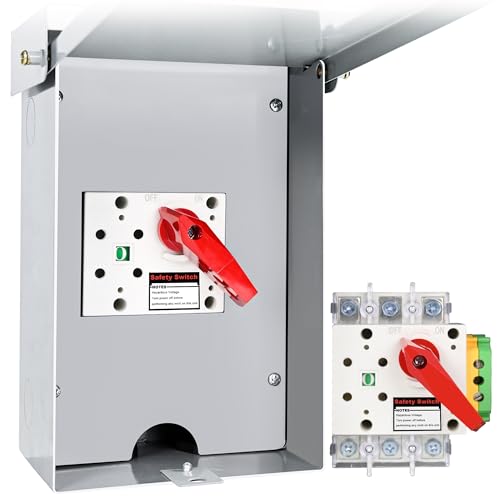
This 30 Amp, 3-pole non-fusible switch is designed for quick outages and reliable protection of critical equipment in industrial settings. It features pre-drilled mounting holes for flexible installation and a galvanized, weather-resistant body suitable for indoor and outdoor use.
Who it’s best for: facilities needing a durable disconnect with flexible mounting and corrosion protection for harsh environments.
Why selected: the pre-drilled holes and galvanized construction offer practical installation options and extended service life.
Caution: Verify that the enclosure rating (NEMA 3R) matches the installation site and weather exposure.
Siemens GNF221LLA 30A 2-Pole General Duty Safety Switch

This 30A, 2-Pole, 240V general duty safety switch emphasizes a large interior and oversized door for labeling and easy wiring. It’s intended for indoor use and standard 2-wire configurations, offering dependable disconnect capabilities for routine maintenance.
Who it’s best for: installers needing easy access and space for labeling in general-use panels or equipment rooms.
Why selected: the larger interior and labeling surface simplify inspection and service tasks, reducing installation time.
Caution: Suitability for outdoor use is limited; verify enclosure protection requirements if exposed to weather.
Siemens HNF362 60A 3 Pole Non-Fused Safety Switch

This 60 Amp, 3 Pole, 600V, 3 Wire non-fused safety switch uses a quick-make, quick-break mechanism to ensure positive operation, with arc chutes to dissipate heat and extend switch life. It’s well-suited for higher-current disconnects in industrial or large commercial settings.
Who it’s best for: installations requiring higher current handling and robust thermal management for continuous operation requirements.
Why selected: the combination of higher current rating and heat-dissipating arc chutes supports longer life in demanding environments.
Caution: Ensure proper wiring clearances and enclosure fit for a 60A, 3-pole configuration, especially in tight spaces.
Buying Guide: Key Considerations For Non-Fusible Safety Switches
- Voltage and current rating: Match the device to the system’s voltage (120/240V or 240V) and current requirements (30A, 60A, etc.). High-current models require sturdier enclosures and better heat management.
- Number of poles: Choose 2-pole for single-phase circuits or 3-pole for three-wire systems. Three-pole switches enable full disconnect of three-phase buses.
- Indoor vs outdoor use: Outdoor-rated units typically use galvanized steel and weather-resistant finishes; indoor units may require dedicated enclosure protection.
- Visible indicators and lockout: ON/OFF indicators and padlock provisions improve safety during maintenance and service work.
- Armature action: Look for quick-make, quick-break mechanisms for reliable positive disconnection and reduced arcing.
- Wiring and terminations: Oversized lugs and easily accessible terminals simplify installation and reduce wiring errors.
- Enclosure integrity: Ensure adequate NEMA or IP ratings for the installation environment and proper mounting options.
- Compliance and labeling: Choose units with clear labeling and design features that support code compliance and safe operation.
Frequently Asked Questions
- What is a non-fusible safety switch?
A non-fusible safety switch provides a mechanical means to disconnect power without internal fuses, suitable for rapid isolation of circuits.
- When should I choose a 2-pole vs 3-pole model?
Choose 2-pole for single-phase, 2-wire circuits; choose 3-pole for three-phase or when disconnecting all conductors is required.
- Are outdoor non-fusible switches rainproof?
Outdoor-rated models use weatherproof enclosures and coatings, but verify enclosure rating and installation location.
- What precautions ensure safe maintenance?
Use padlockable handles, verify the disconnect is de-energized, and follow lockout-tagout procedures.
- Do these switches support high fault currents?
Check the device’s fault-current rating and ensure compatibility with your protection scheme and available fault level.