Best Solar Fans for Attic Cooling and Ventilation
Targeted solar attic fans offer off-grid cooling, moisture control, and potential energy savings. This guide highlights five top-selling options, covering different power levels, speeds, and features. Each option is assessed by airflow, coverage area, durability, and smart or hybrid capabilities to help you pick the right fit for an attic, garage, or workshop.
| Product | Brand | CFM | Coverage | Notable Feature |
|---|---|---|---|---|
| iLiving Hybrid Ready Solar Roof Attic Exhaust Fan 14″, 40W | iLiving | 1150 | Up to 2900 sq ft | Smart thermostat control |
| Solar Attic Fan 32W 1600CFM by DC HOUSE | DC HOUSE | 1600 | Home, Garage, RV, Greenhouse | 100% off-grid operation |
| Remington Solar Builder Series 40W | Remington Solar | — | Attic cooling | Hybrid night operation option |
| Hon&Guan Solar Attic Fan 40W 12″ 2000 CFM | Hon&Guan | 2000 | Up to 2500 sq ft | Two operation modes |
| DC HOUSE 32W Solar Attic Fan 3000 Sq Ft | DC HOUSE | 2500 | Up to 3000 sq ft | Hail and weather resistant |
iLiving HYBRID Ready Smart Thermostat Solar Roof Attic Exhaust Fan

The iLiving unit combines solar power with smart thermostat control, enabling cooling across a wide attic area. It features a waterproof IP68 brushless motor and a 40-W system that delivers up to 1150 CFM. The design supports adjustable solar panel angles (0°, 15°, 30°, 45°) to optimize sun exposure and energy capture. It is backed by a 15-year warranty, making it a durable option for larger homes or spaces requiring consistent air exchange. The fan is suitable for cooling up to approximately 2900 square feet in practical scenarios, depending on insulation, venting, and climate.
Key considerations: ensure the attic has compatible mounting provisions, verify the thermostat’s temperature range (50°F–122°F) for auto-control, and confirm electrical integration if you plan hybrid or manual overrides. The solar panel angle adjustment helps maximize daytime airflow while preserving system longevity in varied sun conditions.
Solar Attic Fan 32W 1600CFM By DC HOUSE
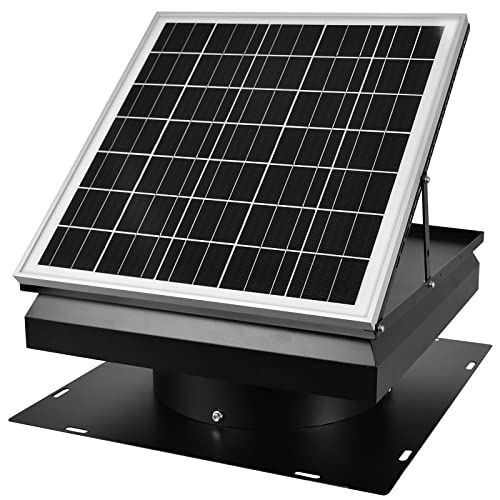
This model emphasizes off-grid operation with premium monocrystalline solar panels, delivering up to 1600 CFM. It activates at sunrise and self-powers down at dusk, eliminating ongoing electricity costs and minimizing wiring needs. The design claims attic temperature reductions of up to 30°F and is built to pair with existing vents for enhanced whole-house airflow. Its aerodynamically optimized blades withstand high winds and a broad temperature range, making it versatile for various climates, garages, workshops, and greenhouses.
Practical notes: pairing with other vents can optimize results, and consider wind exposure and roof structure to maximize performance. The unit is engineered for durable outdoor use, but ensure compatibility with your attic’s duct layout and space for proper clearance around the mounting area.
Remington Solar Builder Series 40 Watt Solar Attic Fan

Remington Solar’s Builder Series offers a 40-watt solar solution with an auto-run night option via a hybrid adapter (sold separately). The built-in humidistat and thermostat enable responsive airflow based on attic moisture and temperature. This model emphasizes moisture control to protect insulation and roofing structures while cooling the attic and supporting HVAC efficiency. The hybrid night option helps maintain ventilation during evening hours when daytime sun wanes, reducing moisture-related risks during off-peak hours.
Key considerations include evaluating the availability and cost of the night-run adapter, confirming compatibility with your existing attic wiring, and assessing the humidity profile of your space to determine if the humidistat will meet your needs. Adequate mounting clearance and corrosion resistance are also important for long-term performance.
Hon&Guan Solar Attic Fan With Thermostat
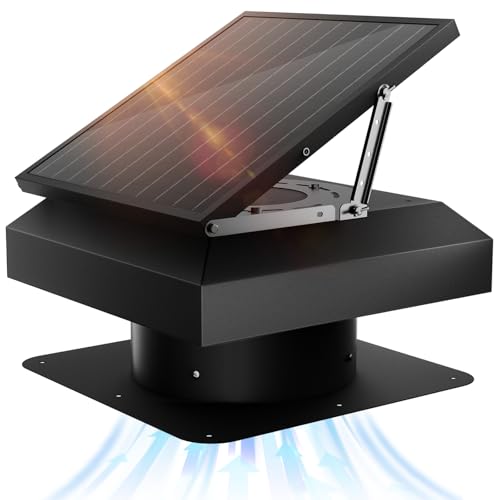
The Hon&Guan unit delivers up to 2000 CFM and can cool spaces up to 2500 square feet. It provides two operation modes: a solar-only energy-saving mode that adjusts with sunlight, and a performance mode where users can set a higher airflow. The system includes a thermostat to enable auto-start at a desired temperature (68–113°F) and an AC/DC adapter option for continuous operation. The adjustable 0–70° range allows both horizontal and vertical alignment for optimal solar capture and airflow distribution.
Design implications: this model suits mid-sized attics and semi-exposed roofs. When selecting, consider your climate’s sun exposure, required continuous operation needs, and whether you prefer a solar-only or hybrid operating approach to maintain airflow during overcast periods.
DC HOUSE 32 Watt Solar Attic Fan Up To 3000 Sq Ft
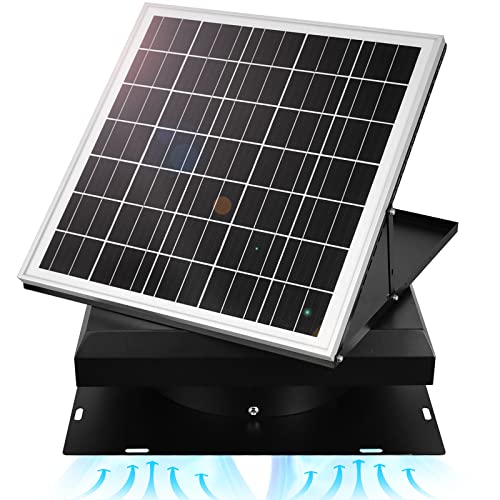
This DC HOUSE model emphasizes large-area cooling with up to 2500 CFM of airflow and the capacity to serve spaces up to 3000 square feet. It features a brushless motor housed in a durable metal shell and is designed to withstand hail and weather exposure. The unit is intended for daytime solar operation and offers reliable performance under different weather conditions, including wind and sun variability. The exhaust fan is positioned as a robust option for bigger attics, shops, and sunrooms requiring steady, daytime airflow to reduce heat buildup.
Purchase considerations include checking roof compatibility, ensuring the mounting footprint fits your attic opening, and evaluating whether the 2500 CFM rating aligns with your attic’s insulation value and heat load. Weather resistance and quiet operation may be important for living spaces above or adjacent rooms.
Buying Guide: Key Purchase Considerations
Airflow and coverage: Choose a model that matches your attic’s size, insulation quality, and typical heat load. Higher CFM supports larger spaces but may be overkill in well-ventilated attics.
Power source and reliability: Solar-only units save energy but may require adequate sun exposure. Hybrid options provide night-time or low-sun operation to maintain air exchange regardless of weather.
Thermostat and controls: A built-in thermostat allows automatic control based on attic temperature, improving efficiency. Smart controls or remote monitoring can simplify operation.
Durability and weather resistance: Look for IP-rated motors and corrosion-resistant housings for longevity in harsh sun, wind, or hail conditions.
Installation and compatibility: Confirm mounting dimensions, roof pitch compatibility, and wiring needs. Some units pair with existing vents for enhanced airflow.
Noise and comfort: Consider blade design and motor type for quieter operation, especially in living spaces adjacent to the attic.
Maintenance and warranty: Review maintenance requirements and warranty length to ensure long-term protection and serviceability.