Best Energy-Smart Water Heaters for Efficient Home Heating
Smart water heater controllers help homes save energy by learning routines, enabling remote adjustments, and reducing standby losses. This article highlights five reliable options that optimize hot water use without complex plumbing. Each product supports common storage or tankless setups and includes smart features like scheduling, remote control, and leak or temperature monitoring.
| Product | Brand | Key Feature | Type | Notes |
|---|---|---|---|---|
| Aquanta Digital Water Heater Timer | Aquanta | WiFi control with scheduling | Storage-style timer | UL safety certified |
| MOES Smart Water Heater Switch | MOES | Voice control and app scheduling | Smart switch | Supports high power; requires neutral |
| APUS Tankless Propane Gas | APUS | On-demand flow with smart display | Tankless gas heater | High capacity; precise temp control |
| Rinnai RX199iN Condensing | Rinnai | Smart Sense control; outdoor/indoor | Tankless gas | High GPM; compact footprint |
| Rinnai RX130iN Condensing | Rinnai | Smart Sense control; flexible installation | Tankless gas | Good for multi-fixture use |
Aquanta Digital Water Heater Timer

Aquanta’s digital timer is designed for storage-style water heaters, providing wireless control and scheduling to cut electricity use. The device learns your routine to automatically turn hot water on or off, reducing standby losses. It is UL safety certified and compatible with many storage heaters, offering convenient remote adjustments via a smartphone or smart home hub. Installation is described as quick and requires minimal plumbing changes, making it accessible for most DIY enthusiasts and service professionals alike.
Key features include: hot water when you need it, smart remote control, and compatibility with most storage-style water heaters. The timer emphasizes ease of use, with automated learning to align hot water availability with daily routines and integrated safety certifications for peace of mind.
MOES Smart Water Heater Switch

MOES offers a 20A smart switch designed for water heaters and other high-power devices. It supports scheduling and timer functions through the Smart Life app, with additional voice control via Alexa or Google Assistant. The tempered glass panel provides a modern look, while installation requires a neutral wire. The product supports features like Countdown, Schedule, Circulate, and Inching modes, helping users customize hot water delivery to save energy and align with daily routines.
Highlights include app-based control, voice compatibility, and versatile timer options that enable precise on/off cycling. The high-power support makes this suitable for most residential water heaters, though proper electrical wiring and professional installation are recommended for safety and performance.
APUS Tankless Propane Gas Water Heater
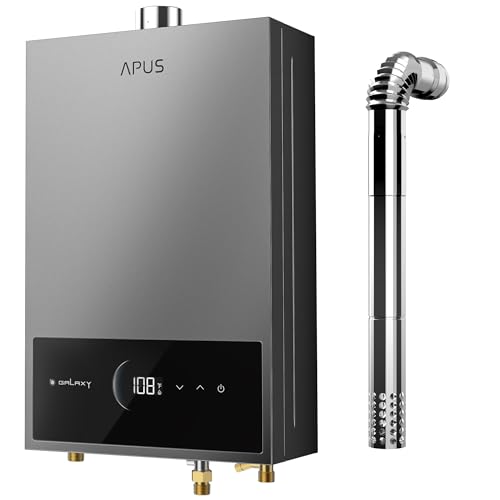
APUS presents a propane-powered tankless water heater with a 4.42 GPM flow rate and 95,000 BTU heating capacity. It uses 0.66 GPM low-flow start technology to maintain temperature across multiple outlets. Smart temperature control keeps outputs within a tight range, reducing temperature fluctuations during simultaneous usage. The unit emphasizes energy efficiency with a copper heat exchanger and segmented combustion technology, delivering strong performance while potentially saving energy compared with traditional tank systems.
Considerations include compatibility with gas supply and venting requirements, the need for proper venting in indoor installations, and ensuring adequate gas line capacity. The product targets households needing reliable, on-demand hot water with significant flow capacity for multiple fixtures.
Rinnai RX199iN Condensing Smart Sense

The Rinnai RX199iN is a compact, indoor/outdoor tankless water heater offering up to 11.1 GPM and 199,000 BTU. It features Smart Sense gas control and Versa Vent compatibility, enabling versatile installation. This model supports WiFi control through an additional module and is designed for high-demand households needing multiple hot water fixtures simultaneously. Its energy efficiency is highlighted by a high Uniform Energy Factor (UEF) rating and efficient combustion technology, contributing to lower energy usage relative to older models.
Considerations include the need for proper venting and the optional control module for WiFi connectivity. Its robust flow rate makes it suitable for larger homes or busy households with several simultaneous hot water needs.
Rinnai RX130iN Condensing Smart Sense

The RX130iN offers a compact, versatile tankless option with up to 7.1 GPM and 130,000 BTU. With Versa Vent and Smart Sense gas control, it supports indoor and outdoor installations. The unit is designed for energy efficiency, featuring a high UEF and quick-flush capabilities for maintenance. Control options include a WiFi-enabled Controlr module (not included), allowing remote monitoring and adjustments for optimized energy use.
Key considerations include installation flexibility, venting requirements, and whether a control module is purchased separately to enable WiFi control. This model suits households needing reliable hot water for several fixtures while maintaining a smaller footprint than some larger tankless systems.
Buying Guide: Key Considerations For Energy-Smart Water Heaters
- System type and compatibility: Storage-style vs. tankless; verify that the controller or switch works with your heater’s model and energy needs.
- Control methods: Apps, voice assistants, and auto-learning features help tailor usage to your schedule, potentially saving energy and reducing costs.
- Power requirements and wiring: Some devices require a neutral wire or specific breaker capacity; consult a licensed electrician for proper installation.
- Ventilation and gas considerations: Gas-powered tankless systems require appropriate venting and gas supply; ensure compliance with local codes.
- Safety features: Look for UL/ETL safety certifications, leak sensors, and overheat protection to protect your home and appliances.
- Remote monitoring and maintenance: WiFi-enabled controls can facilitate maintenance reminders and remote shutoff during outages or travel.
- Energy efficiency metrics: Compare UEF (Uniform Energy Factor) or similar efficiency ratings to prioritize models with lower energy usage per gallon.
- Installation impact: Some units install in minutes and require minimal plumbing, while others may need professional gas line or venting work.
- Budget and ROI: While prices vary, a cost-benefit analysis should consider anticipated energy savings, installation costs, and household hot-water demand.
In choosing an energy-smart water heater controller or system, consider your hot water demand patterns, whether you prefer remote control vs. automated scheduling, and how any additional sensors (like leak detection) might affect safety and efficiency. The listed options provide a spectrum from simple storage-style timers to advanced tankless systems with smart sensing and WiFi capabilities, allowing you to tailor your setup to your home and energy goals.