Best Solar Energy PV Panels for Home Off-Grid Power
Exploring solar energy pv panels helps homeowners and hobbyists plan reliable, scalable off-grid power systems. This guide spotlights five top options, spanning anti-shading N-Type panels, high-capacity ECO-WORTHY kits, and versatile modular systems. Each pick is evaluated for efficiency, shading resilience, and practical installation in American settings. Use the buying guide at the end to compare features and determine which kit aligns with your energy goals.
| Product | Brand | Key Strength |
|---|---|---|
| ShadowFlux Solar Panels, 25% Efficient 200W | Renogy | Anti-shading technology; compact design |
| 10000W Off-Grid Solar Panel Kit | ECO-WORTHY | High capacity system with integrated storage |
| 215W Anti-Shading Bifacial Panel | Callsun | Bifacial capture; strong shading resilience |
| 400W Solar Panels 4×100W Kit | ECO-WORTHY | Modular 4×100W panels; reliable under low light |
| 3000W 24V Solar Power System Kit | AUECOOR | All-in-one off-grid kit with MPPT and lithium storage |
Note: This article is for informational purposes and focuses on features, performance considerations, and suitability for common off-grid applications in the United States. Prices and availability may vary by retailer.
Renogy ShadowFlux 200W N-Type Panels

Renogy’s ShadowFlux 200W panels feature N-Type solar cells with 16BB technology and ShadowFlux anti-shading to reduce hot-spot risk. This design delivers improved efficiency in partially shaded conditions, such as areas shaded by trees or nearby structures. The panels are described as 25% efficient and designed to minimize micro-cracks, extending durability in typical outdoor environments. The unit is marketed as more compact and lightweight than comparable PERC panels, making it suitable for tight installations or roof mounts where space is at a premium.
Key considerations for this product include its shading resilience, efficiency, and physical footprint. For off-grid builds where space is limited or where shading is difficult to avoid, these panels offer a balance of power output and resilience. Performance in varied climates (hot summers, cold winters) can influence voltage and current, so pairing with an appropriate charge controller and battery system is recommended to maximize lifespan and energy yield.
ECO-WORTHY 10000W Off-Grid Solar Panel Kit
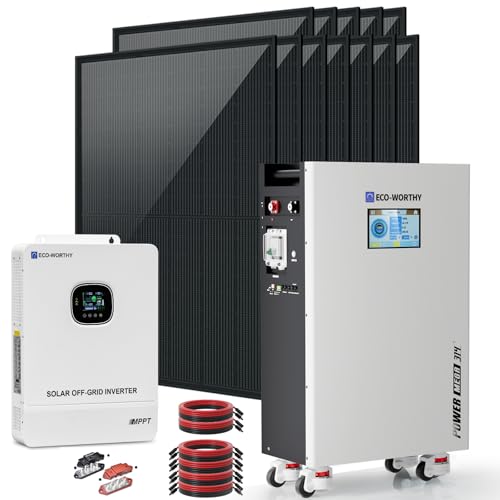
This all-in-one ECO-WORTHY system provides a substantial off-grid power solution with up to 10 kW of solar input capacity and a 48V 314Ah LiFePO4 battery offering 16.1 kWh of storage. It includes 12 panels totaling about 4,920W of PV capacity, supporting daily generation up to approximately 19.68 kWh under optimal conditions. The system is designed for home or RV applications and supports single-phase 120V/240V outputs, enabling reliable power for essential loads, appliances, and basic household use when grid power is unavailable.
Important considerations include the integration of a 60A MPPT controller, monitoring capabilities, and battery management. The LiFePO4 battery presents strong cycle life and safety features, with Bluetooth, Wi-Fi, and PC connectivity for monitoring. While the kit is robust, installation complexity and space requirements for multiple panels and electronics should be planned in advance. This option is best for users seeking a scalable, high-capacity off-grid solution with modern battery management.
VOU 600V Solar DC PV Combiner Box

The VOU PV combiner box consolidates module connections, offering protection and monitoring features that help extend system life. It includes four 15A DC fuses, a high-voltage arrester, and a 600V 63A circuit breaker, along with IP65 waterproof housing. Protecting panels and inverters from short circuits, surge, overvoltage, and environmental exposure is central to this unit, which also provides an easy way to isolate circuits for maintenance.
Considerations for using a combiner box include compatibility with your string layout, the number of strings, and the protection devices required for your array. It is well-suited for outdoor installations where dust, moisture, and temperature variability are concerns. Installing a reliable combiner box can simplify wiring, enable safer maintenance, and help optimize output under adverse conditions.
Callsun 215W Anti-Shading Bifacial Panel
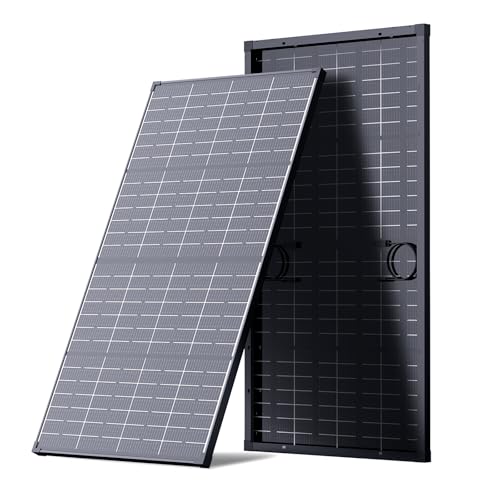
This Callsun 215W N-Type panel uses four independent power structures to maintain output even when one cell area is shaded. The bifacial design captures light from both sides, potentially adding 7-30% more energy depending on reflective conditions (snow, white roofs, etc.). With 25%+ efficiency and strong low-light performance, it is a solid option for RVs, marine applications, or off-grid homes where shading is a concern and space is at a premium.
When evaluating this panel, consider installation orientation and exposure to reflective surfaces, which influence bifacial gains. The bi-directional energy capture can improve daily energy yield, but results depend on mounting height, tilt, and ambient temperature. The panel’s shading resilience and efficiency make it attractive for compact installations with variable sunlight exposure.
ECO-WORTHY Y-Branch Parallel Connectors

This Y-branch parallel connector kit helps connect two panels in parallel or adapt multiple panels to a single array. Constructed with PPO and tinned copper, the connectors support 14-10 AWG cables and offer IP68 waterproofing for harsh environments. The kit simplifies wiring configurations and is compatible with a wide range of solar cables, making it a practical accessory for modular systems and expansion projects.
Choosing the right connectors affects system reliability and ease of maintenance. In parallel configurations, ensure proper matching of panel voltage and current, and consider cable losses over longer runs. High-quality waterproof connectors reduce corrosion and improve performance in moisture-prone settings.
Buying Guide: Key Purchase Considerations for Solar PV Panels
- System voltage and compatibility: Match panels with your battery bank, inverter, and charge controller. Common setups include 12V, 24V, or 48V systems. Ensure MPPT controllers are sized to handle the total current from your strings for efficient charging.
- Shade resilience and panel technology: Anti-shading designs like ShadowFlux and bifacial panels help mitigate power loss in partial shade. If your site has trees, buildings, or reflective surfaces nearby, prioritize shading resilience and real-world efficiency.
- Efficiency versus footprint: Higher efficiency panels deliver more power in smaller areas, but may come at a higher cost. For limited space, prioritize efficiency; for open spaces, larger wattage panels with robust warranties can be more cost-effective over time.
- Durability and environment: Look for IP ratings, weather sealing, and durable frame construction for outdoor installations. Temperature coefficients affect performance in hot climates; panel choice should consider local climate conditions.
- Storage and system integration: If off-grid, plan for a compatible battery system (lithium or lead-acid) and an inverter that meets your daily load. Battery management, monitoring interfaces, and remote alerts improve reliability and maintenance.
- Expandability: Modular kits (like 4×100W panels or all-in-one kits) let you scale gradually. Consider future energy goals and whether you may add more panels or storage, which influences initial layout and wiring needs.
- Maintenance and safety: Combiner boxes, fuses, and proper cabling simplify troubleshooting and safety. Ensure wiring and fusing are rated for the chosen PV array’s voltage and current to minimize risks.
- Cost of ownership: Compare not just the upfront cost but also expected lifespan, warranty terms, and potential performance degradation in your climate. Efficient systems may offer lower long-term operating costs through better energy yield.