Best Solar Battery Inverter System Solutions for Off-Grid Power
Answering the demand for reliable off-grid power, these solar battery inverter systems combine solar panels, batteries, and inverters into ready-to-use kits. They’re best for RV travelers, cabins, homes preparing for outages, and remote workshops. The featured options balance ease of installation, scalable power, and safety features. The following selections help buyers compare capacity, charging efficiency, and expandability to match different energy needs.
| Product | Type | Best For | Key Benefit |
|---|---|---|---|
| ECO-WORTHY 200W Starter Kit (2x100W panels) | All-in-one RV/off-grid kit | RV campers and beginners | Quick setup with integrated inverter and battery |
| Aninerel 12000W Hybrid Inverter | High-capacity, multi-portfolio inverter | Large loads and expansion | Dual MPPT, scalable up to 72kW |
| SUMRY 4000W Hybrid Inverter | All-in-one inverter with MPPT | Home energy systems | Battery-less or AGM/Li batteries support |
| ECO-WORTHY 200W Starter Kit (50Ah LiFePO4) | Beginner-friendly solar kit | Portable power for RVs and cabins | Includes modern LiFePO4 battery and 100W panels |
| ECO-WORTHY Powermega 48V Storage System | Home backup storage | Residential/off-grid backup | High-capacity 16.1kWh storage with 10kW inverter |
ECO-WORTHY 200W Complete Solar Panel Starter Kit for RV Off Grid
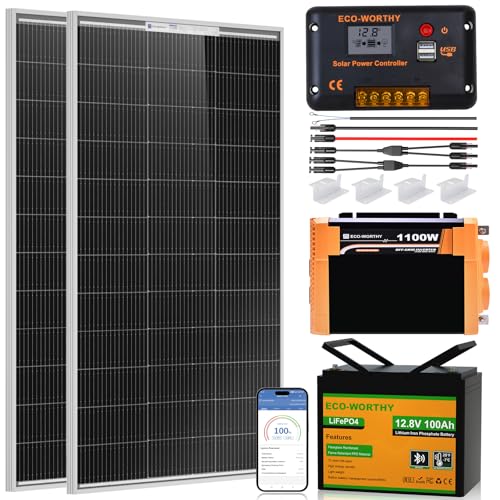
Best for beginners and RV users seeking a plug-and-play solar setup. This 200W kit includes two 100W panels, a 12.8V 100Ah lithium battery, an 1100W inverter, and a 30A PWM controller, delivering up to approximately 800Wh daily under favorable sun. It’s chosen for novice-friendly installation and its all-in-one approach, reducing the need for additional purchases. Limited by moderate power output, it’s best for lighter loads and mobile usage.
Who it’s best for: campers, small trailer setups, or households with modest daily energy needs. Why selected: complete system with essential components to get off-grid power quickly. Caution: ensure load planning matches the 800Wh daily output under sun conditions.
Aninerel 12000W Solar Hybrid Inverter

Best for power-heavy setups and expandable systems. This 12,000W continuous output inverter with dual MPPT controllers supports up to 24,000W peak and is designed for multi-battery configurations. It accommodates 48V systems and supports parallel connections, enabling higher total power for homes, RVs, or cabins. It’s ideal where substantial load management and future expansion are priorities.
Who it’s best for: users needing robust power for workshops, large appliances, or off-grid houses. Why selected: high continuous output and scalable design. Caution: configuration complexity may require more planning and electrical knowledge for safe parallel operation.
SUMRY Hybrid Solar Inverter, 4000W

Best for versatile home energy systems. This 4000W pure sine wave inverter includes a built-in 140A MPPT controller and supports PV inputs up to 5600W. It works with various battery types, including AGM and LiFePO4, and can operate with or without a battery in certain configurations. It’s chosen for solid efficiency, real-time data through its LCD, and flexible battery options.
Who it’s best for: homeowners and small cabins seeking a reliable hybrid inverter with flexible charging. Why selected: integrated MPPT and battery compatibility simplify system design. Caution: ensure PV input exceeds 120V and check battery compatibility for continuous operation without grid.
ECO-WORTHY 200W Starter Kit with 50Ah LiFePO4

Best for portable, beginner-friendly power. This kit features 100W panels plus a 50Ah LiFePO4 battery and a 600W inverter. It’s selected for easy, all-in-one setup that’s travel-friendly and suitable for RVs or boats. Limitations include moderate output suitable for small devices and limited long-term expansion without additional capacity.
Who it’s best for: new solar users, weekend campers, and small off-grid outlets. Why selected: simple assembly with modern LiFePO4 tech. Caution: daily energy output and inverter size may restrict high-power loads.
ECO-WORTHY Powermega 48V 314Ah Storage System
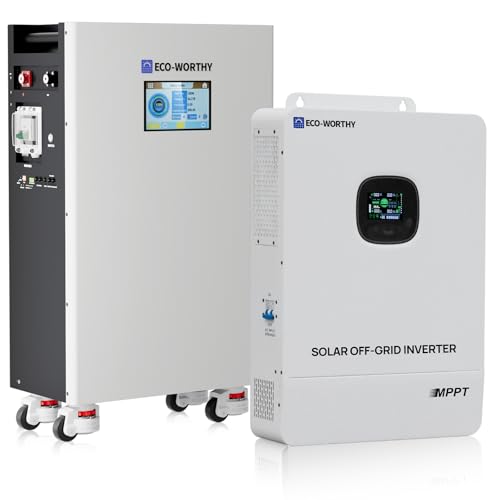
Best for home backup and larger off-grid needs. This system combines a 48V 314Ah LiFePO4 battery with a 10kW hybrid inverter, delivering 16.1kWh usable energy. It offers robust communication via RS485/CAN/RS232 and built-in Bluetooth/WiFi for monitoring. It’s picked for substantial storage, smart connectivity, and strong safety features.
Who it’s best for: homeowners seeking reliable backup power and smart system monitoring. Why selected: high capacity and integrated communications. Caution: larger footprint and higher upfront investment; plan for installation space and wiring needs.
Buying Guide: Key Considerations for a Solar Battery Inverter System
- Power needs: Determine daily energy usage and peak loads to choose inverter wattage and battery capacity. Higher loads require larger inverters and more battery storage.
- System type: Decide between all-in-one kits for simplicity or modular systems for future expansion. All-in-one solutions are faster to deploy; modular setups offer scalability.
- Battery chemistry: LiFePO4 offers longer life and stability; lead-acid is cheaper upfront but shorter-lived. LiFePO4 is often preferred for residential and mobile setups.
- MPPT vs PWM charging: MPPT controllers optimize energy harvest, especially in variable sunlight. PWM is simpler and cheaper but less efficient under changing conditions.
- Expandability: If you anticipate growing power needs, choose inverters and batteries that support parallel connections or multiple units.
- Monitoring and connectivity: Built-in Bluetooth/WiFi or app support helps track energy usage, battery health, and system status.
- Connectivity with loads: Ensure the inverter output is pure sine wave for sensitive devices and matches your voltage and plug types.
- Environment and safety: Look for UL or CSA certifications and built-in protections like over-charge, over-discharge, and thermal management.
FAQ
- What size inverter do I need for basic RV use?
For light RV loads, a 1000–2000W inverter with a suitable battery may be sufficient. For air conditioners or high-power appliances, consider 3000–5000W with appropriate surge capacity.
- Should I choose MPPT or PWM controllers?
MPPT controllers harvest more energy and perform better in variable light, making them advantageous for larger systems or limited space. PWM is simpler and cost-effective for small setups.
- What battery chemistry lasts longest in solar systems?
LiFePO4 generally offers longer cycle life and safer operation than traditional lead-acid, improving long-term system reliability.
- Can I run a solar system without batteries?
Some inverters can operate directly from PV input to loads, but this reduces stability during cloud cover and requires precise solar conditions. For consistent power, batteries are recommended.
- Is parallel connection safe for multiple inverters?
Parallel configurations can increase power and surge capacity but should be done following manufacturer guidelines and, ideally, by qualified professionals to ensure proper matching and safety.
- What maintenance does a solar storage system require?
Monitor battery health, check connections, and ensure ventilated installation. Avoid overcharging and rapidly discharging the battery to extend lifespan.