Best Smoke Detector Contractor Pack Options for Immediate Upgrades
When upgrading or expanding fire safety coverage in a home or small business, a contractor pack of reliable hardwired and battery-operated smoke detectors is essential. This guide highlights five top options that balance coverage, reliability, and ease of installation for contractors and property owners alike. Best for multi-room installs, remodeling projects, or new builds, these packs provide practical choices for various wiring layouts and power scenarios. The following selections include hardwired interconnect models and long-life battery units, helping ensure continuous protection even during power outages.
| Product | Type | Pack Size | Best For |
|---|---|---|---|
| First Alert BRK SMI100-AC Hardwired Smoke Detector with Battery Backup, 6-Pack | Hardwired | 6 | Whole-home coverage with battery backup |
| First Alert SMI100-AC, Hardwire Interconnect Smoke Alarm with Battery Backup, 12-Pack | Hardwired Interconnect | 12 | Large homes or multi-level builds |
| First Alert BRK SMI100-AC Hardwired Contractor 6-Pack | Hardwired | 6 | Contractor-ready installations |
| SITERWELL Smoke Detector, Hardwired Interconnected 6 Packs | Hardwired Interconnect | 6 | Maximized coverage with interconnection |
| SITERWELL Smoke Detector 10 Year Battery 6 Packs | Battery | 6 | Low-maintenance, battery-only setups |
First Alert BRK SMI100-AC Hardwired Smoke Detector with Battery Backup, 6-Pack

This 6-pack provides 120-Volt AC power with a battery backup, ensuring operation during outages. It includes tamper-resistant locking pins and a single button for silence and test. Best for: medium-to-large homes where multiple units are needed on separate levels or in bedrooms to ensure broad coverage. Caution: verify proper neutral connections during installation to avoid device malfunction in some junction boxes.
First Alert SMI100-AC, Hardwire Interconnect Smoke Alarm with Battery Backup, 12-Pack

This interconnect model uses Precision Detection technology to reduce cooking nuisance alarms while providing early warning of fires. The 12-pack is ideal for large homes or multi-level buildings. Best for: projects requiring synchronized alerts across many rooms; better for large floor plans where rapid notification matters. Limitation: ensure compatible wiring and control panels are in place to maximize interconnect functionality.
First Alert BRK SMI100-AC Hardwired Contractor 6-Pack
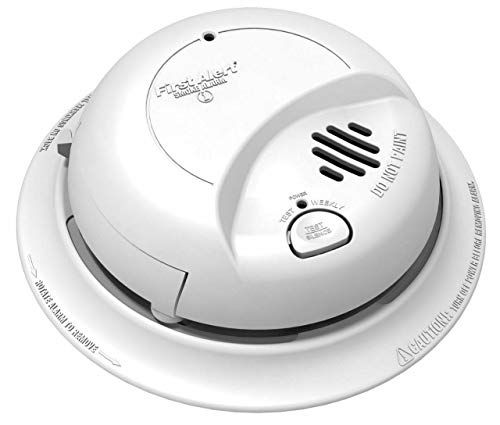
This contractor-focused 6-pack emphasizes reliable hardwired operation with a battery backup. It notes a potential issue with loose neutral connections in some junction boxes, so professionals should confirm wiring integrity before finalizing installs. Best for: contractor projects seeking a straightforward, multi-unit hardwired solution. Choose this if you need a budget-friendly pain point with quick deployment, but avoid if the electrical box wiring is uncertain or has known faults.
SITERWELL Hardwired Interconnected Smoke Detector, 6 Packs

These hardwired detectors connect up to 12 alarms and sound together on detection. With more than 85 decibels and a 10-year lifespan, they are designed to maximize coverage with minimal maintenance. Best for: larger homes or offices where interconnect reliability matters; better for reducing false alarms with enhanced sensing. Caution: ensure the 9V backup battery is installed properly and replaced when low.
SITERWELL 10 Year Battery Photoelectric Smoke Detector, 6 Packs
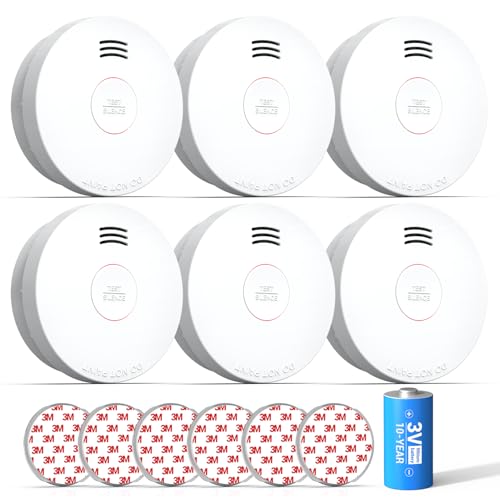
This battery-operated model uses photoelectric sensing and offers a 10-year battery life. It includes low-battery and fault warnings for maintenance, and it is UL217 listed. Best for: quick, low-maintenance installs in bedrooms or living spaces; better for rental properties or areas without easy wiring. Limitation: life expectancy is tied to the battery; replacement timing is critical for reliability.
Buying Guide: Key Considerations for Smoke Detector Contractor Packs
Power type and interconnection strategy matter. Hardwired units with battery backup provide continuous protection during outages, while battery-only models offer easier retrofits. Consider pack size based on home size and layout, including multi-level coverage and bedroom placement.
- Wired vs. wireless interconnect: Interconnected alarms improve collective warning but require compatible wiring or wireless protocols.
- Sensor type: Ionization sensors detect fast flaming fires; photoelectric sensors detect smoldering fires. In new builds, a combination or photoelectric emphasis is common for false alarm reduction.
- Power reliability: Battery backup is essential in hardwired units; verify battery replacement schedules or long-life batteries when selecting a model.
- Installation considerations: Neutral wiring, mounting locations on every level, and bedrooms improve safety coverage. Watch for notes about wiring quirks or potential faults in some models.
- Lifespan and maintenance: Long-life batteries reduce maintenance, but alarms require periodic testing and cleaning to prevent nuisance alarms.
Frequently Asked Questions
- What is the benefit of a hardwired interconnected smoke detector pack?
Hardwired interconnected packs ensure all alarms sound together on detection, improving occupant notice time across the home. - Do I need battery backup if I install hardwired detectors?
Yes. Battery backup keeps alarms functioning during power outages, maintaining protection. - Is ionization or photoelectric sensing better for homes with cooking noise?
Photoelectric sensors tend to have fewer nuisance alarms from cooking, making them preferable in kitchens and living areas. - How many detectors should I install on a multi-level home?
Place at least one on every level and in all sleeping areas; consider additional units for large rooms or open floor plans. - What maintenance is required for these detectors?
Test monthly, replace batteries as needed, and vacuum to remove dust; follow manufacturer-specific maintenance schedules. - Can I mix brands in a single system?
Interconnect capability varies by model; for best results, use compatible detectors or stick to a single brand family that supports interconnect across units.