Best Small Scale Solar Panels for DIY Projects
Small scale solar panels open up hands-on opportunities for classroom experiments, hobby builds, and compact charging solutions. This guide highlights five well-suited options, summarizing what each one does best, from tiny 5V modules for model toys to larger micro-panels for DIY power systems. Read on to compare sizes, outputs, and practical uses, plus a practical buying guide to help you pick the right panel for your project needs.
| Product | Output | Size | Ideal For |
|---|---|---|---|
| AOSHIKE 10Pcs Mini Panels | 5V 30mA each | 53mm x 30mm | DIY toys and simple models |
| Sunnytech Mini Panel | 5V, up to ~100mA | Small epoxy panel | Educational projects, charging tiny devices |
| FellDen Micro Panels (5V) | 200mA total per set | 110mm x 60mm | Home projects, low-power devices |
| Retisee 30 Pcs Mini Panels | 5V 60mA each | 68 x 37 mm per panel | Modular DIY charging systems |
| KEJNYT 10 Pcs Small Panels | 3V 150mA each | 55mm x 60mm | Compact light sources and toys |
AOSHIKE 10Pcs Mini Solar Panels Review
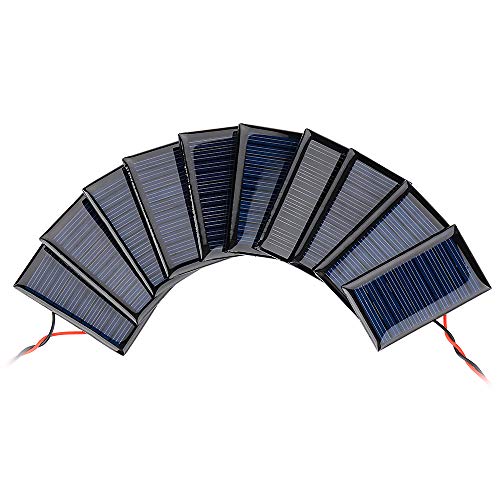
These compact polycrystalline solar panels deliver 5V at about 30mA per unit, with a size of 2.08 by 1.18 inches (53 mm by 30 mm). The set is designed for hobbyists building powered models, solar toys, or small displays. In bright sunlight, the voltage can exceed 5V, which is typical for small modules when tested under strong sun. The package includes ten panels, giving users flexibility to connect in series or parallel configurations for different current and voltage needs. AOSHIKE emphasizes a DIY-friendly experience, making it suitable for educational kits and lightweight solar projects. This kit is best for incremental builds and experiments with multiple tiny panels working together.
Key features include ready-to-use panels, applicability to model displays, and the ability to power lighted mini-projects. While ideal for demonstrations, users should plan for connectors and wiring and consider a blocking diode when combining several panels to prevent backflow. The product labeling reflects practical, low-power applications rather than high-load charging. Users should assess weather exposure and mounting options if the panels will be used outdoors for extended periods.
Sunnytech 0.5W 5V Mini Solar Panel Module

The Sunnytech module offers a practical 5V class panel with epoxy-coated construction for durability. It features a built-in blocking diode to prevent overcharging and backflow when used in multi-panel assemblies. The kit is designed for educational purposes, solar toys, and small DC battery charging. Joyful experimentation is supported by color-coded wiring and alligator clips, which simplify connections without soldering. A notable benefit is the two soldered tabs, making it easier to link multiple panels for higher voltage or current as needed. This panel is well-suited for classrooms, clubs, and hobby projects seeking an accessible, reliable energy source for small devices.
FellDen Micro Panels with Wire, 5-Pack

FellDen’s 5V micro solar panels come as a set of five, each rated for about 200mA, with overall dimensions roughly 110 by 60 mm. The kit includes wiring, facilitating straightforward integration into small projects such as solar-powered pumps, indicators, or educational demonstrations. The larger panel area relative to some tiny models makes it suitable for mounting on simple prototypes where more current is advantageous. The package supports DIY builds across a range of low-power DC appliances and is compatible with hobbyist experiments in solar charging and energy storage concepts.
Retisee 30 Pcs Mini Solar Panels Kit

The Retisee kit includes 30 flexible mini panels, each rated at 5V and about 60mA, with dimensions around 68 by 37 mm. The set is designed for modular solar charging systems and offers practical versatility for DIY enthusiasts. Panels can be connected in series or parallel to tailor voltage and current for specific tasks. The included 10 cm cable enhances ease of integration with battery chargers, small devices, or small-scale lighting projects. This kit suits learners building scalable, low-power solar assemblies and exploring how panel arrays perform under different sunlight conditions.
KEJNYT 10 Pcs Small Solar Panels

The KEJNYT set features ten panels rated at 3V and 150mA each, sized 55 by 60 mm. These epoxy-coated polysilicon panels offer a higher voltage per unit for compact devices, making them suitable for small flashlights, educational kits, or lightweight sensors. The product highlights include a usable output under moderate light and the ability to clip onto wires or other metal contacts. With a practical 3V operating target, configurations can be arranged in series to increase voltage or in parallel to boost current, depending on the project needs. An accessible option for beginners and hobbyists seeking more voltage per panel than tiny 2-3V units.
Buying Guide: Key Considerations for Small-Scale Solar Panels
- Power needs and configuration: Determine whether you need higher voltage or higher current. Smaller panels are easier to mount, but you may need multiple units in series or parallel to achieve your target.
- Panel type and efficiency: Polycrystalline panels are common for hobby kits and offer decent efficiency at a lower cost. Look for efficiency ranges around 15%–22% for educational kits, depending on size.
- Durability and enclosure: Epoxy-coated or encapsulated panels withstand light exposure and handling in hobby environments. Outdoors, consider weather resistance and mounting hardware.
- Wiring and connectors: Panels with pre-attached wires or tabs simplify assembly. Check for compatibility with clamps, alligator clips, or soldered connections used in your project.
- Storage and charging considerations: If you’re charging small batteries, ensure the panel’s voltage aligns with the battery chemistry and that diodes are used to prevent backflow and overcharging.
- Modularity and expandability: Sets of multiple panels enable scalable builds. Plan ahead for how you’ll connect multiple units and how the overall system will be charged or stored.
- Educational value: For classrooms and hobbyists, choose kits with clear labeling and straightforward assembly to maximize learning outcomes and engagement.
- Regulatory and safety notes: Use panels in well-ventilated, dry environments, and follow handling guidelines for electronics to reduce risk of short circuits or overheating.