Best Inground Hot Tub Heaters for Fast, Efficient Warmth
Answering the search for an inground hot tub heater, this guide helps buyers choose five reliable options suited for in-ground installations or dedicated spa setups. The top picks aim to deliver quick heat, stable temperatures, and ease of integration with pool systems. Best for homeowners upgrading an existing inground spa or installing a new system, these models balance performance and energy efficiency.
| Product | Best For | Key Benefit | Limitation |
|---|---|---|---|
| Hayward H-Series NG 150,000 BTU | Inground pools and spas up to 450 sq ft | Efficient gas heating with self-diagnostics | Requires natural gas line |
| Slsy SUPA 105,000 BTU Propane | Above-ground pools, hot tubs, and spas | Fast heating with portability | Propane dependency; best for portable setups |
| GRAT Full Inverter 75,000 BTU | Inground and above-ground pools and hot tubs | Full inverter energy savings with app control | Requires electrical installation |
| Mxmoonant 18KW 220V | Inground or above-ground pools and spas | High 18KW heating with touchscreen | Electrical hard-wiring needed |
| STPFFOT 11KW 220V | Inground/Above-ground pools with spa features | Digital touch screen and strong heating | Requires licensed electrician for 220V install |
Hayward Universal H-Series 150,000 BTU NG Heater

This natural gas pool heater is designed for inground pools and spas up to 450 sq ft. The control panel is intuitive, with a digital LED display to monitor temperature and performance, and self-diagnostic features for easier maintenance. Best for homeowners with a natural gas line seeking reliable, long-lasting heating for moderate-sized inground setups.
Best for: Inground pools/spas up to 450 sq ft using natural gas. Why: strong, consistent heat with straightforward operation and corrosion resistance. Limitation: Requires natural gas supply and proper venting; not a propane model.
Slsy SUPA 105,000 BTU Propane Heater

This propane-powered heater is built for above-ground pools, hot tubs, and spas, offering rapid heating and portability with wheels for easy repositioning. Best for temporary setups, rentals, or spaces without a fixed gas line. The unit supports outdoor heating with a focus on quick warm-up times.
Best for: Above-ground pools and portable spa setups. Why: fast heating and mobility. Limitation: Propane dependency; not ideal for fixed inground installations unless propane access is available.
GRAT Full Inverter 75,000 BTU Pool Heater

This 75,000 BTU unit uses full inverter technology to adjust output based on demand, delivering energy savings while maintaining warmth for hot tubs and pools up to large volumes. Best for energy-conscious owners who want steady temperatures with smart control via an app or panel. Limitation: Requires 220V electrical installation and cannot run on a standard outlet.
Best for: Energy-efficient heating with app-based control. Why: inverter technology reduces energy use while maintaining comfort. Caution: Needs proper electrical wiring by a licensed professional.
Mxmoonant SPA Heater 18KW 220V
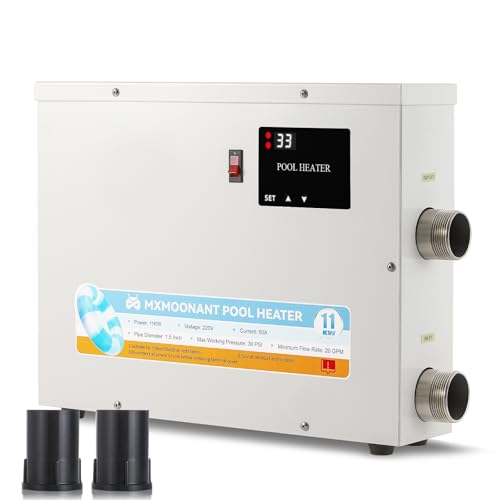
With 18KW heating power and 220V operation, this heater is designed for both inground and above-ground pools and spas. It includes a digital touchscreen display, automatic cycling to maintain preset temperatures, and 316 stainless heating elements for efficient heat transfer. Best for: mid-to-large spa and pool installations requiring robust heating and modern controls. Limitation: Installation must be wired and supported by adequate flow and pump setup.
Hayward H-Series 250,000 BTU Propane Heater

Designed for inground pools and spas up to 750 sq ft with propane, this model offers front-panel simplicity for operation and self-diagnostic display. Best for large inground systems requiring high heat output with manageable control. Caution: Propane model, so ensure propane supply and safe venting in the installation area.
Buying Guide: Key Purchase Considerations
- Fuel type and compatibility: Natural gas versus propane; choose based on fuel availability and running costs for your property.
- Pool/spa size and heat demand: Match BTU rating or kilowatt rating to your water volume and desired warm-up time.
- Electrical requirements: Many heaters require hard wiring at 220V; verify existing electrical capacity and permit requirements with a licensed electrician.
- Installation location: Ensure proper venting for gas models and adequate clearance around outdoor installations.
- Control features: Digital displays, self-diagnostics, and app controls help with maintenance and precise temperature management.
- Durability: Look for corrosion resistance, especially in outdoor spa environments with chemical exposure.
- Maintenance and serviceability: Availability of replacement parts and local service technicians can affect long-term performance.
- Energy efficiency: Inverter models can adjust output to save energy; consider your climate and usage pattern.
Frequently Asked Questions
- What size heater do I need for an inground hot tub?
Choose a heater with a BTU or kW rating that matches your spa’s water volume and desired heating speed. Larger tubs require higher output to reach and maintain temperature efficiently.
- Do I need a professional to install an inground hot tub heater?
Yes. Gas heaters require venting and gas line connections, while electric heaters require 220V wiring and circuit protection. A licensed installer ensures safety and code compliance.
- Can inverter heaters save energy for hot tubs?
Yes. Inverter technology adapts output to demand, reducing energy use during steady-state operation while maintaining comfortable temperatures.
- Is propane better than natural gas for hot tub heaters?
Both have pros and cons. Propane offers flexibility and portability, while natural gas can be cheaper to run if a fixed line is available. Availability and safety should guide the choice.
- Should I consider a portable heater for an inground spa?
Portable units are ideal for temporary setups or supplemental heating, but fixed inground spas benefit from permanently installed gas or electric heaters for consistent performance.
- What maintenance does a hot tub heater require?
Regular inspections of venting (gas models), water chemistry balance, and system diagnostics help prevent corrosion and ensure efficient operation.
This article presents five practical options for various inground and spa scenarios, emphasizing reliable heating performance, energy considerations, and ease of installation. Use the buying guide and product notes to compare how each heater aligns with your space, fuel choice, and wiring capacity.