Best Small 12 Volt Deep Cycle Batteries for Off-Grid Power
Choosing a compact 12-volt deep cycle battery means balancing size, weight, cycle life, and safety. This guide highlights reliable options designed for portable power needs such as RVs, boats, solar setups, and control systems. Read on to compare top models, their key features, and how to pick the right one for your scenario.
| Product | |||
|---|---|---|---|
| UPLUS 12V 20Ah Deep Cycle AGM Battery | AGM | Solar, mobility, small power systems | Maintenance-free with F3 terminal |
| Weize Deep Cycle AGM 12V 100Ah | AGM | RV, trolling motor, off-grid | Low self-discharge, long storage life |
| NERMAK 12V 10Ah LiFePO4 | LiFePO4 (Lithium) | Solar, lighting, small power needs | Built-in BMS, 2000+ cycles |
| KGIOO 12V 7Ah LiFePO4 | LiFePO4 (Lithium) | Emergency lighting, small devices | Built-in BMS, 4000+ cycles |
| GOLDENMATE 12V 10Ah LiFePO4 | LiFePO4 (Lithium) | Power wheels, camping, backups | IP67 waterproof, 5000+ cycles |
UPLUS 12V 20Ah Deep Cycle AGM Battery

The UPLUS LP12-20 AGM battery emphasizes advanced materials and a corrosion-resistant micro crystal structure. It is maintenance-free and leak-resistant, with a standard F3 terminal for straightforward installation. This model is designed to cover multiple applications—from lawn equipment to small solar setups—while delivering reliable, sealed storage for use in varied environments. With a broad compatibility range, it can replace several legacy 12V options in compact systems.
Weize Deep Cycle AGM 12V 100Ah Battery
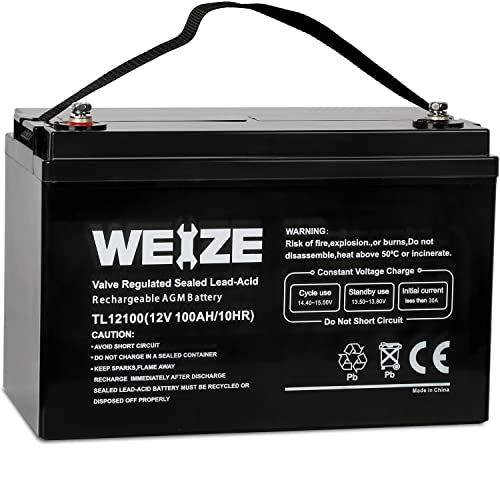
The Weize 100Ah AGM battery is a maintenance-free, sealed lead-acid option with a low self-discharge rate. It operates across a wide temperature window and supports longer storage between charges. Its left-positive/right-negative terminals are clearly labeled, and the battery is well-suited for RVs, trolling motors, and small off-grid systems where steady, reliable current is needed over extended periods.
NERMAK 12V 10Ah LiFePO4 Deep Cycle Battery

NERMAK’s LiFePO4 battery provides high energy density with a built-in BMS to prevent overcharge, over-discharge, over-current, and short circuits. It offers 2000+ cycles and low self-discharge, suitable for solar/wind power, emergency lighting, small UPS, and ride-on toys. The built-in protection and compact 12V form factor support portable, reliable energy storage with safer chemistry than many lead-acid options.
KGIOO 12V 7Ah LiFePO4 Deep Cycle Battery

The KGIOO 12V 7Ah LiFePO4 pack emphasizes 4000+ cycles with a built-in BMS for protection against overcharging, overdischarging, short circuits, and voltage imbalance. Its compact size and lightweight profile make it ideal for emergency lighting, small routers, RVs, fish finders, and other off-grid devices needing reliable, long-lasting power in a small footprint.
GOLDENMATE 12V 16Ah LiFePO4 Battery
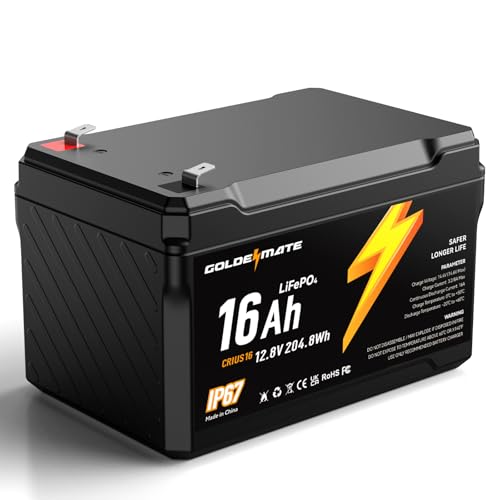
This 12V 16Ah LiFePO4 option features a built-in BMS and IP67 waterproofing for added resilience in outdoor environments. It supports 5000+ charge cycles, a lightweight build, and broad applicability—from solar backup to marine electronics and power wheels. The combination of long cycle life and rugged protection makes it suitable for users who need dependable power in rough or variable conditions.
Buying Guide
- Chemistry and cycle life: LiFePO4 (lithium) provides longer life and higher safety margins than standard AGM lead-acid, but at a higher upfront cost. Consider total cost of ownership and expected cycles (e.g., 2000+ cycles vs. 1000+ for some AGM models).
- Capacity and weight: Larger Ah ratings deliver longer runtimes, but heavier packs may hinder portability. Match capacity to your load and weight tolerance for the intended application.
- Form factor and terminals: Ensure the size fits your enclosure and that terminals (e.g., F3) and connector types are compatible with your system wiring.
- Self-discharge and maintenance: AGM and LiFePO4 both offer low self-discharge; LiFePO4 typically requires less maintenance and is safer in storage. Consider storage plans and climate when sizing.
- Environmental conditions: Temperature ranges affect performance. Some models tolerate extreme temperatures better; think about your outdoor or off-grid environment.
- Protection features: Built-in BMS, overcharge/over-discharge protection, and short-circuit safeguards are essential for lithium options and add resilience to portable systems.
- IP rating and waterproofing: For outdoor or marine use, IP67-rated batteries offer dust and water resistance, reducing corrosion risk in challenging conditions.
- Lifecycle costs: Although LiFePO4 batteries cost more upfront, they often outlast AGM by thousands of cycles, lowering replacement frequency and long-term expenses.