Best Server Rack Grounding Kits for Reliable, Safe Data Centers and Home Setups
When securing a server rack, a solid grounding strategy is essential for safety, EMI control, and equipment longevity. This guide highlights five top grounding kit options designed for 19-inch racks, cabinets, and related enclosures. It explains who each product is best for, why it stands out, and any important limitations to consider. Whether you’re outfitting a small home lab or a larger office rack, these kits offer practical grounding solutions for durable, interference-free operation.
| Product | Best For | Key Benefit |
|---|---|---|
| HIBUMFX 19 Inch Bus Bar Kit | Small to mid-size data racks | Complete copper bus bar with long grounding cable |
| NBUNYOU Grounding Plug Kit | Residential or light commercial walls and racks | Shielded extension for clean grounding connections |
| TXM 19″ Horizontal Copper Bus Bar | Two-post or four-post racks | Consolidates grounds with simple installation |
| Chatsworth Rack Grounding Kit | Professional data centers and install-ready environments | Standard 19″ busbar with robust construction |
| CablesAndKits Nexus Rack Kit | Cisco Nexus environments or similar fabric extenders | Model-specific compatibility with ground and ESD accessories |
HIBUMFX 19 Inch Bus Bar Kit

The HIBUMFX kit uses a C110 copper bus bar with a 3/16″ x 1.2″ x 19″ profile and includes a 4-foot 10 AWG tinned copper grounding cable, plus 38 pre-installed screws and mounting hardware. Best for small to mid-size racks that need a solid, all-in-one grounding assembly. This kit is chosen for users seeking a ready-to-install solution with a durable copper ground path and ample mounting hardware. A potential limitation is the fixed length of the grounding cable, which may require a separate extension for unusually deep enclosures.
NBUNYOU Grounding Plug Kit

This 6.6-foot 14 AWG shielded grounding extension targets residential and small-business wall-mounted racks. It’s best for setups where minimizing EMI and ensuring a stable Ethernet or equipment ground path is crucial. The shielding treatment reduces interference and signal loss, supporting reliable network connections. A caution: the product focuses on a grounding extension rather than a full busbar, so it may be best paired with a separate rack grounding point for larger enclosures.
TXM 19″ Horizontal Copper Bus Bar Kit

This 19″ horizontal copper bus bar (3/16″ thick, 1″ high) is designed to consolidate grounds across racks, suitable for 2-post or 4-post configurations. It’s best for users who want a robust, flat grounding path that can be isolated from the rack if needed. Selection is favorable for environments requiring a dedicated ground bus within a standard 19″ footprint. Limitation: isolation features depend on add-on accessories, which may not come with every order.
Chatsworth Rack Grounding Kit
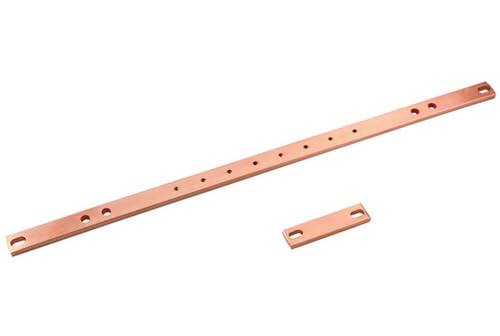
The CPI black 19″ rack grounding kit provides a horizontal busbar for consolidating equipment grounds. It’s best for professional installations in data centers or offices where a standard, heavy-duty grounding point is needed. Constructed to fit 19″ racks and designed for straightforward mounting, it serves as a reliable, industry-standard grounding option. Caution: ensure compatibility with your rack’s mounting hardware and spacing, as some setups may require adapters or isolators.
TRIPP LITE ESD Grounding Panel

The TRIPP LITE ESD grounding panel mounts in 1U of space on standard 19″ racks and enclosures and ships with 48-inch grounding wires for easy connection. It’s best for users who need a compact, ready-made panel that integrates with EIA-standard racks. Selection rationale centers on ease of installation and compatibility with common rack formats. A limitation may be the fixed 1U footprint, which may not accommodate larger grounding devices in dense installations.
CablesAndKits Nexus Rack Kit

This kit is designed for Cisco Nexus Nexus fabric extenders, including left/right rack mount brackets, a ground lug kit, and an ESD strap. It’s best for environments that rely on Nexus gear and require a model-specific replacement kit for secure rack installation and grounding. The kit’s value lies in its compatibility with Nexus models, facilitating straightforward upgrades or maintenance. Limitation: it’s specialized, so non-Nexus users should avoid this option for general-purpose grounding needs.
Buying Guide: Key Considerations For Rack Grounding
- Rack type and size: Determine whether you need a 2-post, 4-post, or open-frame enclosure, and select a kit that fits the 19″ standard.
- Consolidation vs. extension: Choose between a full busbar kit (consolidates grounds) and grounding extensions (for added flexibility in larger or irregular layouts).
- Material and conductivity: Copper busbars (especially copper alloys) offer high conductivity and corrosion resistance, essential for long-term grounding reliability.
- Compatibility: Ensure the kit aligns with your rack’s mounting hardware, hole spacing, and whether isolators or adapters are needed to avoid unintended grounding paths.
- Installation practicality: Look for included screws, mounting hardware, and pre-installed components to simplify setup and reduce install time.
- EMI and safety considerations: A shielded grounding extension can minimize interference, while a robust busbar ensures a solid ground path for safety and equipment protection.
- Future expandability: If you anticipate rack growth or additional devices, prioritize modular or extendable grounding solutions.
FAQ
- What is a rack grounding kit and why is it important? A grounding kit provides a solid electrical ground path for a server rack, reducing electrical noise and protecting equipment from static and surges.
- Can I mix grounding types in the same rack? Yes, but ensure there are no conflicting grounding paths and that all components share a common ground reference.
- Is copper the best material for grounding bars? Copper offers high conductivity and corrosion resistance, making it a common, reliable choice for grounding bars.
- Do I need isolators with a bus bar? Isolators help separate the bus bar from the rack if you want to prevent metallic contact in certain configurations; use as needed.
- What should I consider when choosing length for grounding cables? Choose cable length to reach a central ground point with some slack for flexibility and serviceability, avoiding overly tight runs.
- Is a shielded grounding extension always better? Shielded extensions reduce EMI risk in sensitive environments but may not be necessary in all setups; assess your EMI exposure.