Best SCR Control Options for Electric Heaters
For precise, safe temperature and power management in electric heating applications, silicon-controlled rectifier (SCR) voltage controllers are a practical choice. The selections below highlight high-power, adjustable controllers suitable for heaters, kettles, stoves, and related equipment. Each product features rugged construction, wide input ranges, and clear regulation to help maintain steady heat output while protecting circuitry.
| Product | Brand | Voltage Range | Max Power | Notes |
|---|---|---|---|---|
| AC Variable Speed Controller | SDRGEEK | 120V-220V | 400W (resistive load); up to 4000W max under resistive load | Grounded metal case; zero hysteresis; suitable for high-temp circuits |
| GRDM SCR AC Variable Speed Controller | GRDM | 120V-220V | 22A maximum | Digital display; premium SCR components |
| Hopoint 10000W SCR Controller | Hopoint | 110V-230V | 10000W (resistive load) | Intelligent PWM; upgraded cooling |
| vlmits 10000W SCR Board | vlmits | 10V-230V | 10000W (resistive load) | High-capacity unit; robust chipset |
| DiGiYes AC Motor Speed Controller | DiGiYes | 110V-220V | 4000W max; 9A rated | Stepless adjustment; bidirectional SCR |
These products were selected for their broad voltage support, high-power handling, and clear regulation interfaces that are particularly useful for controlling electric heaters and related appliances. The following sections present detailed product profiles with direct links to each Amazon listing.
AC Variable Speed Controller By SDRGEEK

The SDRGEEK AC Variable Speed Controller supports 120V and 220V inputs with a maximum current of 15A. Output voltage can be adjusted from 0 to 220V, with a limit power rating of 400W for typical loads; the device can handle up to 4000W under resistive load conditions. It uses high-quality SMD thyristors and aluminum heat sinks suitable for high-temperature operation. The metal housing includes grounding requirements, and the unit features zero hysteresis and a fast response to protect the thyristor elements from spikes. This model emphasizes safety features and robust construction for industrial or workshop use.
Key considerations for this model include ensuring proper grounding, acknowledging the safety warnings about live metal enclosures, and understanding the difference between resistive and inductive loads. It provides a straightforward knob-based regulation interface with a digital-friendly design for integrators who need reliable manual control in heating projects.
GRDM 10000W SCR AC Variable Speed Controller
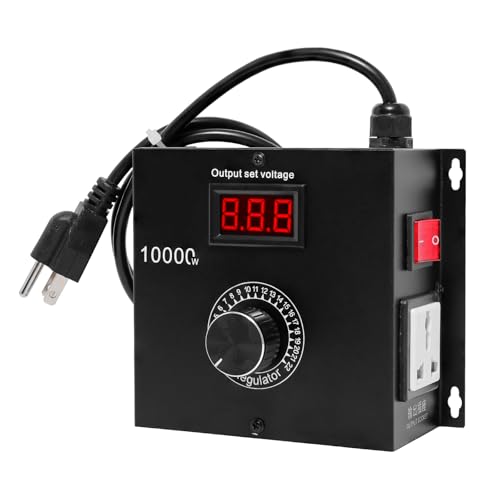
The GRDM controller supports 120V and 220V inputs with adjustable output up to 220V and a maximum current rating of 22A. It uses premium SCR components and high-voltage capacitors to endure elevated temperatures, making it suitable for heavy-duty heating and tool applications. The interface includes a regulation knob and a digital display, with clearly marked icons for temperature, light, speed, and voltage. This model is designed for users who need precise voltage control and reliable readouts in workshop or home-brew heating setups.
Considerations for use include thermal management in continuous operation, compatibility with inductive loads, and ensuring adequate venting for the device’s metal enclosure during high-power tasks. The digital readout provides immediate feedback on output voltage, aiding in fine-tuning heating performance.
Hopoint 10000W SCR Intelligent Dimming Controller

The Hopoint SCR voltage regulator is designed for 110V-230V operation with a robust 10000W rating for resistive loads. It features intelligent PWM-based dimming and thermoregulation, along with an upgraded cooling system (an enhanced fan). The unit’s aluminum shell and high-quality copper binding posts contribute to safe, efficient current handling and heat dissipation in demanding environments, such as large heating elements, kettles, or industrial heaters. The regulation experience is geared toward users who need precise dimming and reliable temperature stabilization at high power.
Users should consider ventilation needs and the impact of PWM control on purely resistive vs inductive loads. The PWM approach helps in achieving smooth power modulation, which is beneficial for heater stability and longevity of connected components.
vlmits 10000W High Power SCR Controller

The vlmits unit supports a wide 10V-230V voltage range with a maximum resistive load rating of 10000W. The product uses an all-aluminum shell and a tin-filled construction to manage heat generation under high current. The device includes robust regulation, high-voltage components, and a compact enclosure designed for industrial or heavy domestic heating installations. It is suitable for controlling either large heaters or other high-wattage resistive loads with good stability and protection against leakage or short circuits.
Potential considerations include ensuring proper grounding and confirming compatibility with inductive loads, as well as verifying that the wiring and enclosure meet local electrical codes for your installation. The unit’s design emphasizes resilience and long-term duty in demanding environments.
ayetea 10000W High Power SCR Controller

The ayetea regulator also presents a 10000W maximum for resistive loads, with voltage regulation from 10V up to 230V and a recommended starting point around 20V. The unit uses a customized SCR and high-voltage capacitors with an all-in-one regulation approach. Its dimensions and mass emphasize a compact yet sturdy module suitable for integration into larger heating systems or as a standalone controller for high-wattage heaters. It is designed for users seeking high-power control with clear voltage settings and reliable build quality.
When selecting this model, assess whether your heating load is mostly resistive and if the installation space allows the enclosure’s dimensions. Consider safety practices around high voltage control panels and the necessity of proper grounding and cooling in continuous operation.
DiGiYes AC Motor Speed Controller
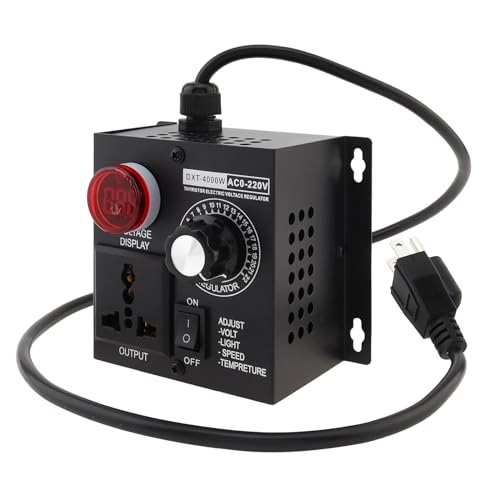
The DiGiYes controller is designed for AC motors and heating applications with a maximum 4000W load and an 18A peak capacity, though it is listed as 9A continuous. It supports input voltages of 110V and 220V with stepless output between 10-110V or 10-220V. It features a bi-directional high-power SCR and a rheostat-style adjustment for precise speed control, which translates well to controlling heating fans, routers, or heaters that rely on linear voltage changes. The device provides flexible control across various loads, enabling smoother ramping for temperature management.
Practical considerations include ensuring load compatibility (heating elements vs motors), confirming heat dissipation needs, and recognizing that the output voltage can appear higher with no load, requiring a load to observe actual voltage under operation.
Buying Guide: Key Considerations And Comparisons
When choosing an SCR-based controller for electric heaters, buyers should weigh several factors to match performance with safety and reliability:
- Power rating and load type: Heaters are typically resistive loads; ensure the controller’s maximum wattage comfortably exceeds the heater’s draw. Consider whether you may later connect inductive loads or motors, which behave differently and may require extra cooling or current management.
- Voltage compatibility: Look for a unit that accepts common mains voltages (110V, 120V, 220V, 230V). A wide input range offers flexibility for different locations and applications.
- Safety features: Grounding requirements, robust housings, heat sinking, and protections against spikes, short circuits, and RC absorption help extend device life and reduce risk.
- Regulation method and readouts: Analog knobs provide quick control, while digital displays improve accuracy and repeatability. PWM-based dimming offers smooth modulation for temperature stability.
- Thermal management: High-wattage controllers generate heat. Units with aluminum enclosures, built-in fans, and good ventilation perform better under continuous operation.
- Physical footprint and installation: Check enclosure size, mounting options, and whether the device requires dedicated grounding and proper electrical wiring adjustments according to local codes.
- Documentation and support: Availability of manuals, wiring diagrams, and safety notes can simplify installation and troubleshooting.
In practice, for high-power heating tasks, selecting a controller with a high resistive-load rating (10,000W class) provides headroom and reduces the risk of overheating. For applications that require precise, gradual temperature changes, PWM-enabled models offer smoother power transitions. Always ensure correct grounding and adequate ventilation, and consult a qualified electrician when integrating high-wattage controllers into home or workshop heating systems.