Best RV Trailer Electrical Connections for Safer Towing and Simple Wiring
Whether you’re wiring a new trailer or replacing a faulty connector, choosing the right 7-pin RV trailer electrical connection is essential for reliable lighting, brakes, and auxiliary power. This guide highlights five solid options, clarifying who each product is best for and why it’s a good fit. Practical, field-ready details help you compare compatibility, durability, and ease of use for American campers, boat trailers, and work trailers alike.
Summary of selected products:
| Product | Best For | Key Benefit | Notes |
|---|---|---|---|
| MECMO 7 Pin Trailer Plug Splice-in | Trailer owners needing a heavy-duty splice-in end | Reinforced nylon, waterproof seal | Water/dirt protection at wire points |
| CheeMuii 7 Way Junction Box | Organized wiring with color-coding | Color-coded terminals, weatherproof | Ideal for clean, modular setups |
| MECMO 7 Way Trailer Light Connector | Vehicle-side power and quick install | Rust-proof housing, sealed tubing | Great for quick conversions |
| Orpomea 7 Pin Plug Splice-in | Rugged, moisture-prone environments | Heavy-duty nylon with waterproof spacer | Similar to MECMO with noted robustness |
| CURT 58150 Vehicle-Side 7-Pin | Weather-resilient, ready-to-splice | Spring-loaded dust cover | Excellent protection against debris |
MECMO RV 7 Pin Trailer Plug Splice-in Replacement

The MECMO 7-pin blade-style male-end trailer connector is designed for the trailer side, providing a robust splice-in connection. It uses reinforced glass-filled nylon and includes a waterproof spacer at the back to protect the wires from water and dirt. This makes it a strong choice for heavy-duty trailer wiring and outdoor exposure. Best for: trailer owners who need a durable, splice-in plug that resists moisture and debris. Caution: verify compatibility with your trailer’s socket layout to avoid miswiring.
Best for
- Trailer owners performing direct wire splices at the trailer end
- Applications requiring water and dirt protection at termination points
Why selected
It combines a rugged housing with a rain/dirt barrier, helping to maintain a solid connection to taillights, brake lights, turn signals, and auxiliary power.
Caution
Ensure correct pin mapping to your vehicle’s harness to avoid lighting or brake issues.
CheeMuii 7 Way Trailer Junction Box

The CheeMuii junction box provides a centralized, color-coded wiring hub for trailer circuits. Its seven color-coded terminals help quickly identify functions, aiding organization and troubleshooting. The box is described as heavy-duty, waterproof, and sealed, with a thick reinforced plastic construction that resists water and dust. Best for: campers or fleet trailers that require orderly wiring and straightforward maintenance. Caution: ensure a proper seal in dusty or sandy environments to maintain long-term protection.
Best for
- Wiring trailers with multiple circuits that benefit from clear color-coding
- Outdoor installations where water or dust exposure is a concern
Why selected
Color-coded terminals simplify installation and future upgrades, especially when wiring extra lights or accessories.
Caution
Keep terminals clean and dry to maintain corrosion resistance and reliable connections.
MECMO 7 Way RV Trailer Light Connector Socket
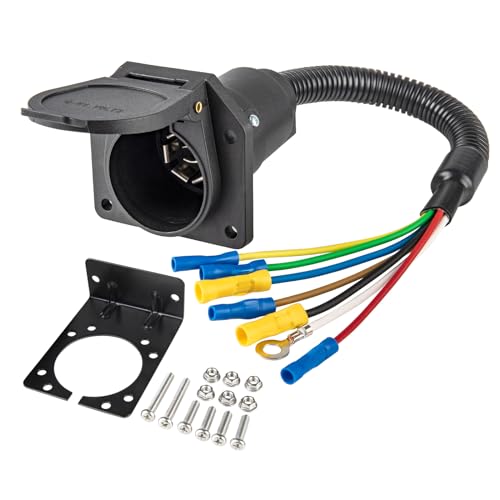
This MECMO 7-way vehicle-side connector delivers a complete power connection to taillights, brake lights, turn signals, reverse lights, trailer brakes, and auxiliary power. It features a quick-install pigtail harness and a weather-resistant housing with sealed tubing and copper terminals for better corrosion resistance. Best for: users needing a ready-to-wire trailer end with strong protection and quick installation. Caution: verify that the mounting bracket fits your vehicle’s under-vehicle clearance and mounting points.
Best for
- Vehicle-side installations needing a straightforward, quick-connect approach
- Environments where corrosion resistance matters
Why selected
The sealed housing and rust-resistant components support reliable performance across varied weather conditions.
Orpomea RV 7 Pin Splice-in Plug
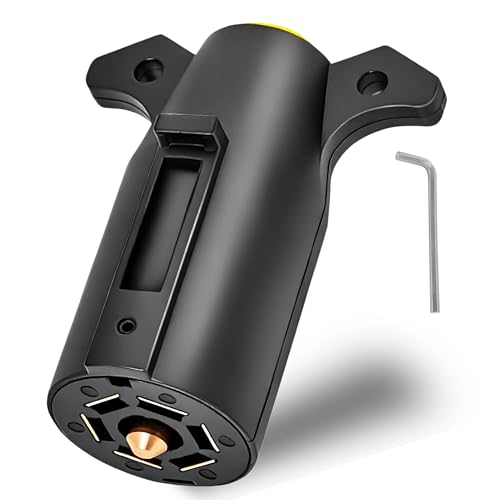
The Orpomea 7-pin blade-style connector is designed for the trailer side with a heavy-duty reinforced nylon body and a waterproof rubber spacer to protect wire terminations. It provides a reliable connection to power taillights, brake lights, turn signals, reverse lights, electric trailer brakes, and auxiliary power. Best for: users needing a robust, water-resistant splice-in unit. Caution: confirm that the connector matches your trailer’s 7-pin layout before purchase.
Best for
- Rugged, moisture-prone trailer environments
- Direct trailer-side splices needing durable materials
Why selected
Its waterproof spacer and reinforced nylon housing enhance long-term durability in challenging conditions.
CURT 58150 Vehicle-Side 7-Pin RV Blade
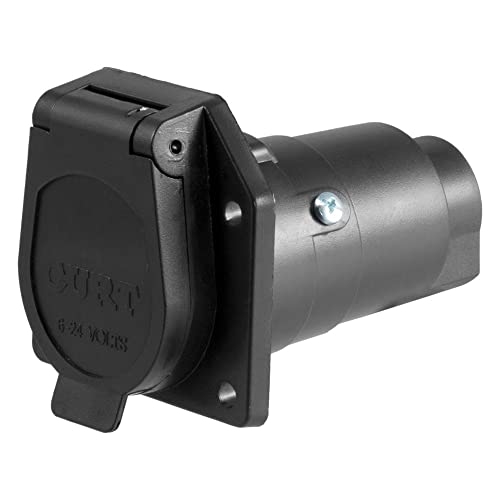
The CURT 58150 is a vehicle-side 7-pin blade socket designed to be spliced into existing wiring. It features a spring-loaded dust cover that protects the connection when not in use and a weather-resistant, concealed terminal design to shield against dirt and corrosion. Best for: users who want a protected, ready-to-splice option with strong environmental resistance. Caution: ensure compatibility with your truck’s wiring and existing harness to avoid misalignment.
Best for
- Vehicle-side installations where weather exposure is likely
- Those needing a protective cover to keep terminals clean
Why selected
Protected terminals and a durable cover help maintain consistent power delivery in adverse conditions.
Buying Guide: Key Considerations For RV Trailer Electrical Connections
What matters most when selecting a 7-pin trailer connector depends on your setup and environment. Below are practical factors to compare:
- Connection type: Decide between plug-and-play vehicle-side connectors or splice-in options for the trailer end. Vehicle-side units may offer quicker installation, while splice-in models provide robust, tailored wiring at the trailer.
- Durability: Look for reinforced nylon or rugged plastic housings and waterproof spacers or seals. These features extend life in dirt, water, and vibration-prone settings.
- Protection: Spring-loaded dust covers and sealed terminals reduce corrosion and debris intrusion, preserving signal quality for lights and brakes.
- Color-coding and organization: Color-coded terminals or junction boxes help with wiring accuracy and future maintenance, especially when upgrading lights or accessories.
- Compatibility: Confirm pin configuration and the trailer’s existing wiring layout to prevent miswiring and ensure all functions—taillights, brake lights, signals, reverse lights, brakes, and auxiliary power—work correctly.
- Installation effort: Evaluate whether a quick-install pigtail is preferable or if a more involved splice-in approach best suits your trailer’s frame and mounting.
FAQ: Quick Answers For RV Trailer Wiring
- Q: What is a 7-pin RV blade connector, and what does it control? A: It provides power and control for tail lights, brake lights, turn signals, reverse lights, electric trailer brakes, and auxiliary power.
- Q: Do I need a weatherproof connector for my trailer? A: Weatherproof designs protect against water, dirt, and dust, improving reliability in outdoor or coastal environments.
- Q: Should I use a junction box or a simple plug? A: A junction box helps organize multiple circuits and simplifies troubleshooting; a plug is easier for quick connections.
- Q: How important is color-coding on wiring boxes? A: Color-coding speeds installation and reduces the risk of miswiring, especially when adding accessories.
- Q: Can I install these myself, or should I hire a pro? A: Many of these options are designed for DIY installs, but seek professional help if you’re uncertain about vehicle wiring or electrical safety.
- Q: What maintenance helps extend connector life? A: Keep terminals clean, dry, and free of corrosion; inspect seals and covers periodically for wear.