Best Lithium Battery Solutions for Camper Trailers and RVs
Choosing the right lithium battery for a camper trailer can boost reliability, runtime, and safety on the road. This guide highlights five top picks, with real-time monitoring, durable construction, and cold-weather protection to keep essentials powered during trips. Each option is suitable for off-grid setups, solar integration, and long weekend adventures.
| Product | Brand | Key Feature | Approximate Capacity (Wh) |
|---|---|---|---|
| ECO-WORTHY 3584Wh Battery | ECO-WORTHY | Bluetooth real-time monitoring, Low temp cutoff | 3584 |
| ECO-WORTHY 2-Pack 280Ah | ECO-WORTHY | Bluetooth monitoring, dual-pack flexibility | 3584 |
| HRBEENERGY 100Ah | HRBEENERGY | 100A BMS, 100% protection, low-temp cut-off | 1280 |
| LiTime 2-Pack 100Ah | LiTime | Group 24 universal fit, expandable power | 1280 |
| LiTime 12V 100Ah (Self-Heating) | LiTime | Self-heating modes, Bluetooth monitoring | 1280 |
ECO-WORTHY 3584Wh LiFePO4 Battery With Bluetooth

The ECO-WORTHY 3584Wh 12V 280Ah LiFePO4 battery delivers robust deep-cycle performance for camper trailers and off-grid solar systems. It features a built-in 200A BMS with low-temperature protection, ensuring charging stops below 19.4°F (-7°C) and resumes above 32°F (0°C). Real-time monitoring via the ECO-WORTHY app helps track voltage, current, and remaining capacity for proactive maintenance. A high-strength metal frame inside provides shock stability and controlled compression for long-term durability—ideal for rugged campground use.
ECO-WORTHY 12V 280Ah 2-Pack LiFePO4 Battery

This pair extends off-grid capabilities with Bluetooth app monitoring for real-time data on voltage, current, and capacity. The dual-pack design can simplify wiring for higher current needs while maintaining the same 200A BMS and low-temperature protections. Durable construction and compression frame help withstand travel-induced vibrations, making it a strong candidate for camper trailers that regularly hit rougher roads.
ECO-WORTHY 12V 20Ah Lithium Battery
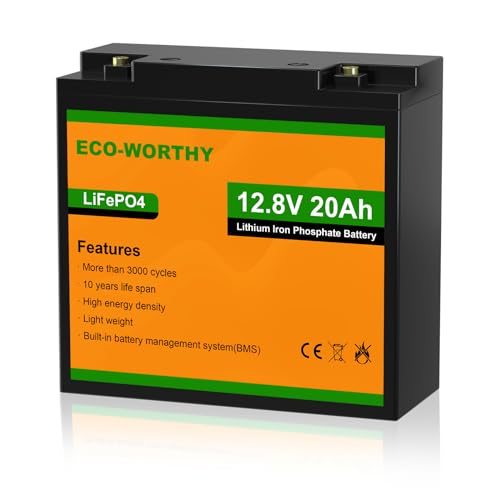
While smaller, this 20Ah LiFePO4 battery offers a lightweight option for auxiliary loads, charging peripherals, or powering individual accessories in a camper. It delivers over 3,000 deep cycles and includes a built-in BMS for protection against overcharge and short circuits. Its compact form factor makes it easy to place in tight spaces or as a supplementary power source to a larger system.
HRBEENERGY 100Ah LiFePO4 Battery

The HRBEENERGY 100Ah battery provides a 100A BMS with comprehensive protection and a low-temperature cutoff to prevent charging or discharging damage in cold conditions. Its 12V LiFePO4 chemistry offers long cycle life, reduced weight, and better efficiency compared to lead-acid options. The unit is designed to replace lead-acid batteries with minimal wiring changes and a smaller footprint for camper setups that need reliable power without weight penalties.
LiTime 2-Pack 12V 100Ah RV LiFePO4 Battery
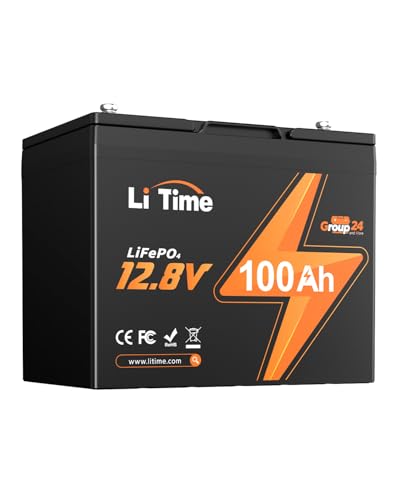
These LiTime batteries are designed for Group 24 RV applications, dropping easily into RVs to replace AGM units with no extra wiring. The 1.28kWh per battery support expandable power setups, enabling upgrades from single units to larger arrays as camper energy needs grow. Real-world benefits include lighter weight, higher energy density, and easier installation for camper trailers and backing up water heaters, lights, and cooking appliances.
LiTime 12V 100Ah Self-Heating Battery

This LiTime model adds self-heating capabilities with two modes to suit cold-weather usage. Bluetooth 5.0 real-time monitoring provides ongoing access to status and performance metrics. At 22.71 lbs, the battery is significantly lighter than a comparable lead-acid unit and occupies a smaller footprint, making it well-suited for compact camper trailers or tight battery bays.
NOCO Snap-Top BG27 Battery Box

For camper trailer setups, using a sturdy battery box helps protect lithium modules during transport and operation. The NOCO Snap-Top BG27 is designed for Group 27 batteries, providing a rugged enclosure with easy installation. It accommodates automotive, marine, RV, and other deep-cycle lithium-ion batteries, and features pre-drilled holes for mounting, reducing on-site complexity.
Buying Guide: Key Purchase Considerations For Camper Trailers
- Battery chemistry and cycle life: LiFePO4 offers long cycle life, stability, and safety for off-grid use. Compare depth-of-discharge ratings and warranty terms to estimate total available energy over time.
- Capacity and scalability: Assess daily power needs (lighting, appliances, water system) and plan for expandable configurations if future energy use grows. Look for modular or pack-based designs that support expansion.
- BMS protections: A robust BMS with overcharge, over-discharge, short-circuit, and low-temperature protections minimizes the risk of damage and reduces maintenance costs. Check temperature cut-off ranges.
- Cold-weather performance: For camping in winter or high-latitude trips, low-temperature cut-offs ensure safe charging and discharging. Self-heating and smart BMS features can help maintain usable capacity in the cold.
- Monitoring and connectivity: Real-time Bluetooth or app-based monitoring helps track voltage, current, capacity, and health. Ensure the communication range fits your installation and cabin layout.
- Weight and form factor: LiFePO4 cells are lighter than lead-acid. Check fit in your battery compartment, mounting options, and how weight distribution affects overall trailer handling.
- Durability and protection: Look for rugged frames, shock resistance, and weather sealing if the battery will be mounted outdoors or in rough terrain.
- Installation and accessories: Consider whether a battery box, mounting hardware, and wiring harnesses are included or available as add-ons. Ease of installation saves time and reduces wiring errors.
- Warranty and service: A solid warranty alongside accessible customer support helps address potential issues after purchase and during trips.
When selecting a lithium battery system for a camper trailer, balance capacity with weight, expansion potential, and protection features. Real-time monitoring and cold-weather reliability are particularly valuable for long camping seasons and off-grid adventures. The options above cover compact, scalable, and higher-capacity needs, allowing travelers to tailor a setup that fits their trailer size and energy philosophy.