Best RV Electrical Management System for Safe, Smart Power on the Road
Finding the right RV electrical management system (EMS) helps protect your gear, extend appliance life, and prevent dangerous power events. This guide presents five top-rated options, highlighting who each model is best for and why they were selected. It’s ideal for full-time travelers, weekend campers, and anyone who plugs into variable campgrounds. Below is a quick buyer snapshot and a deeper dive into each option.
| Product | Best For | Key Benefit |
|---|---|---|
| Progressive EMS-PT30X | 30A RVs needing solid surge protection | Integrated EMS with strong fault detection |
| Power Watchdog Smart 30A | Tech-savvy users who want real-time alerts | Bluetooth monitoring and wireless fault alerts |
| Progressive EMS-PT50X | 50A systems needing higher protection | High-capacity surge protection and advanced fault detection |
| CRTBETLIF 30A | Weather-ready protection with circuit analysis | Upgraded Joule rating and weatherproof housing |
| RVBASICS 30A with Bluetooth | Integrated EMS with app visibility | Built-in circuit monitoring and fault-disconnect |
Progressive EMS-PT30X Portable RV Surge Protector

This 30 Amp unit provides electronic safety to shield RV electronics from voltage fluctuations and surges. It includes a built-in electrical management system for safe operation and supports 30 Amp systems with a 3,600 W rating. With surge protection up to 1,790 joules, it helps prevent damage to appliances and equipment during travel.
Best for: RV owners who need reliable, compact protection for 30A hook-ups. The design emphasizes robust fault detection to guard against over/under voltage, miswired pedestals, and polarity issues. Caution: a high-wault surge rating is present, but it may not cover non-standard power sources beyond typical 120 V hookups.
Power Watchdog Smart RV 30A Portable Surge Protector

This 30A unit adds Bluetooth connectivity and real-time monitoring of voltage, amperage, and wattage. It includes a 90-second power-on delay after faults and wireless fault alerts. The device features a complete LED diagnostic set indicating open ground, open neutral, reverse polarity, open circuit, and mis-wired connections.
Best for: RVers who want smartphone-based visibility and proactive fault alerts. Choose this if you prefer wireless monitoring and rapid notification of dangerous conditions. Limitation: relies on Bluetooth connectivity for alerts, which requires a phone or compatible hub to access details.
Progressive EMS-PT50X Portable RV Surge Protector

This 50 Amp surge protector extends electronic safety and safe operation for higher-capacity RVs. It provides robust surge protection for 12,000 W and 3,580 joules, guarding against voltage fluctuations and surges to protect appliances and equipment during travel.
Best for: RVs with 50A service or future upgrades seeking enhanced surge protection. Better for: users who need stronger protection against higher wattage loads. Caution: 50A models are bulkier and may be over-spec for small trailers, so match to power service to avoid unnecessary weight.
CRTBETLIF RV Surge Protector 30A (2026 Upgrade)
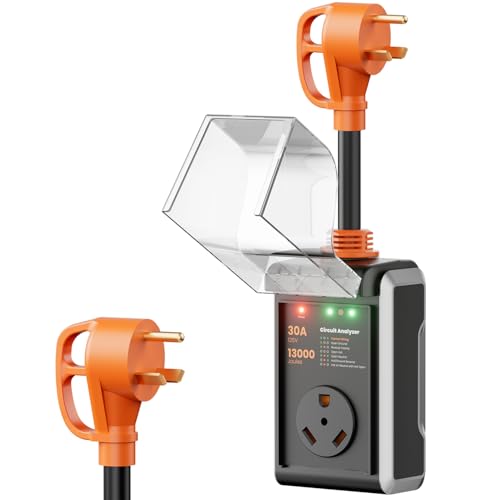
This 30A unit offers up to 13,000 joules of surge protection and continuously monitors power before connecting your RV. It includes a weatherproof housing and cover, supporting use in various outdoor conditions and preventing short circuits or fires.
Best for: campers who frequently operate in exposed environments and want a durable weatherproof option. Choose this if you value a high joule rating and an integrated circuit analyzer. Limitation: rugged design may come at a higher price point relative to basic 30A EMS models.
RVBASICS RV Surge Protector 30 Amp With Bluetooth

This 30A EMS unit combines surge protection with Bluetooth app visibility for monitoring the power supply. It features a built-in circuit analyzer that reports voltage, current, frequency, and fault codes. It can automatically disconnect power if dangerous conditions are detected, safeguarding the RV’s electrical system.
Best for: buyers who want app-based monitoring and automatic safety shutoff. Better for: those who want a compact, integrated EMS with telemetry. Caution: ensure the app connectivity is compatible with your preferred platform for ongoing updates.
Buying Guide: Key Considerations For Choosing An RV EMS
- Power rating compatibility: Match EMS units to your RV’s service (30A vs 50A) to ensure proper protection without unnecessary bulk.
- Surge protection level: Look for joule ratings that fit your typical exposure to storms and grid switching. Higher joules generally indicate stronger protection against spikes.
- Fault detection coverage: Prefer EMS models that monitor for open ground, open neutral, reverse polarity, miswired pedestals, and frequency issues for comprehensive safety.
- Connectivity features: Bluetooth or app-based monitoring can enhance real-time visibility but require a compatible device and app ecosystem.
- Durability and weather resistance: If you often park in exposed locations, a weatherproof housing and weather seals add resilience against rain and dust.
- Automatic power disconnection: EMS units that automatically disconnect when dangerous conditions are detected reduce risk but may require understanding the fault codes and disconnection behavior.
- Physical footprint and mounting: Consider the unit’s size and whether you need a portable unit or a fixed-mount version for your rig’s storage area.
Frequently Asked Questions
- What is an EMS and why do I need one for my RV?
An EMS combines surge protection with circuit analysis to safeguard RV electrical systems from faults, incorrect wiring, and voltage fluctuations.
- Can I use a 30A EMS on a 50A service?
Most 30A EMS units are intended for 30A service. Use a 50A EMS for 50A RVs to ensure adequate protection for higher loads.
- Is Bluetooth monitoring essential?
Bluetooth offers real-time visibility and alerts, but you can also rely on LED indicators or connected apps for status updates.
- What should I check before buying?
Confirm the joule rating, number of fault protections, weather resistance, and whether the unit provides a circuit analyzer and automatic disconnection.
- Are all EMS devices weatherproof?
Not all; choose units with weatherproof housings (IP-rated) if you’ll use them outdoors or in variable climates.
- Do EMS units protect against all power issues?
EMS devices protect against many common faults and surges, but never substitute for proper campsite electrical safety and inspection of wiring at the pedestal.