Best Room to Room Fans for Balanced Home Airflow
Looking for a simple way to balance temperatures between adjacent rooms without complex ductwork? These room-to-room fans move air between spaces to improve comfort and HVAC efficiency. They’re best for homes with uneven temperatures, rooms separated by walls, or spaces like bedrooms, kitchens, and laundry rooms where targeted airflow helps. The top picks below are chosen for different needs—quiet operation, easy remote control, easy installation, and adjustable airflow.
Summary of selected products:
- suplife 8″ Room to Room Fan with Remote – Best overall balance and remote control
- Apexicalo Room to Room Air Transfer Fan with Remote – Best for hardwired installations
- Windigaga 8″ Room to Room Fan with Remote – Best for reversible airflow
- Ehiair 8″ Room to Room Fan with Remote – Best value with multiple speeds
- VEVOR Room to Room Fan, Intake & Exhaust – Best dual-direction airflow
suplife 8″ Room to Room Fan With Remote

Best for: Homeowners seeking a strong, quiet transfer with straightforward remote control. This fan delivers 320 CFM and includes a 33-foot remote for easy operation. The EC motor with PWM control provides energy-efficient performance and longer life, making it suitable for bedrooms, living spaces, or hallways where you want quiet, reliable airflow. It’s well-suited for those who want to adjust direction, speed, and timer from across the room.
Why chosen: The 320 CFM rating balances effective airflow with low noise. The remote adds convenience, and the durable frame resists dust and debris for reliable long-term use. It’s a good all-around choice for most rooms needing cross-room ventilation.
Caution: Through-wall installation can require precise sizing and wall penetration; ensure your wall thickness matches the unit’s specs.
Apexicalo Room to Room Air Transfer Fan With Remote
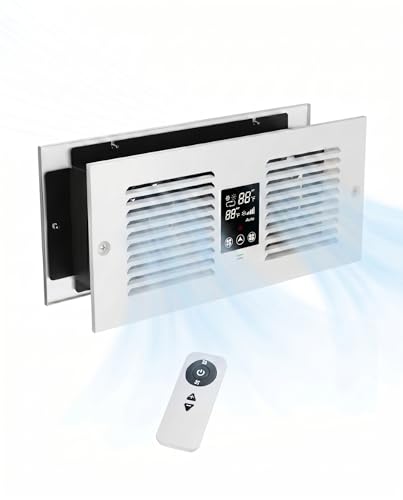
Best for: Homes preferring a hardwired installation and a flush, wall-integrated look. This 300 CFM unit is designed to fit walls from 3.8″ to 7.4″ thick with a sturdy, flush-mounted housing. It uses a thermostat and offers three modes (cooling, heating, continuous ventilation) for year-round comfort. Ideal for spaces where plugin outlets aren’t desirable, such as large kitchens or near wood stoves.
Why chosen: Hardwired setup provides clean aesthetics and continuous operation without a relay. The adjustable modes help balance indoor temperatures efficiently, especially when adjoining rooms have divergent heating or cooling demands.
Caution: Requires electrical wiring; not a plug-in solution. Ensure professional installation for safety and code compliance.
Windigaga 8″ Room to Room Fan With Remote
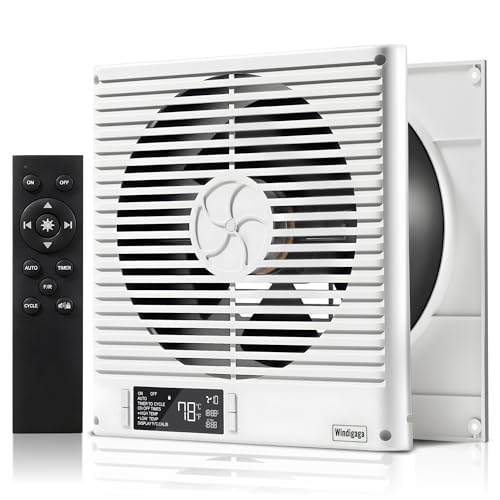
Best for: Users who want reversible airflow and a broad speed range. The Windigaga unit provides 320 CFM and a remote with up to 32.8 feet range, plus a reversible airflow design to switch intake and exhaust directions as needed. Useful for seasonal changes and variable room layouts like kitchens adjacent to living spaces.
Why chosen: Reversible airflow adds flexibility for cooling and heating seasons. Ten speeds allow fine-tuning, while quiet DC motor operation keeps noise to a minimum at lower speeds.
Caution: Higher speeds may produce noticeable airflow noise; choose a lower setting for quiet operation in bedrooms.
Ehiair 8″ Room to Room Fan With Remote

Best for: Shoppers seeking a balance of price and performance with multiple speeds. This 320 CFM unit includes ten speeds and a reversible mode via a remote, offering flexible cooling or heating between connected rooms. Suitable for living rooms, laundry areas, or kitchens where air balancing is needed without ductwork.
Why chosen: The combination of silent DC motor, remote control, and reversible function makes it versatile for year-round use. It helps relieve hot spots while keeping energy use reasonable.
Caution: As with most through-wall fans, ensure you match wall thickness and clearances before install to avoid interference with structure or finishes.
VEVOR Room to Room Fan, Two-Way Airflow

Best for: Households needing two-way airflow with quiet performance. This 8″ through-the-wall fan supports wall thicknesses from 3.5″ to 6.3″ and delivers up to 180 CFM with a quiet AC motor at ≤46dB. It’s a practical pick for bathrooms, bedrooms, or laundry where balanced cross-room ventilation is needed.
Why chosen: Dual airflow adjustment lets you direct air where it matters without moving the unit. The quieter operation makes it suitable for sleep spaces and living areas where noise is a concern.
Caution: Lower maximum CFM compared to higher-end models; best used where moderate airflow is acceptable or paired with additional ventilation in larger rooms.
VEVOR Room to Room Fan, Two-Way Airflow With Remote
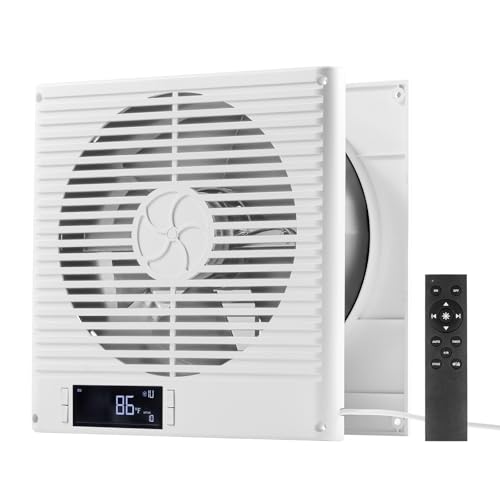
Best for: Homeowners needing precise directional control and temperature range management. This 305 CFM unit provides ten speeds, temperature control from 14℉ to 212℉, and dual airflow adjustment. Ideal for living spaces, bedrooms, and laundry rooms that require flexible ventilation and climate control.
Why chosen: The combination of wide temperature range control and dual airflow makes it adaptable to different climates and seasons, helping to optimize comfort and energy efficiency.
Caution: Like other wall fans, ensure correct wall thickness compatibility to avoid installation challenges or improper sealing.
Buying Guide: Room to Room Fan Essentials
- Airflow capacity (CFM): Higher CFM moves more air, useful for large spaces or stubborn hot spots. Choose 300 CFM+ for open layouts; 180–300 CFM can handle medium rooms.
- Installation type: Plug-in vs. hardwired. Plug-in models are easier for DIY; hardwired versions provide a flush look and may be required for certain wall configurations.
- Speed settings: More speeds allow finer control of comfort and energy use. Ten-speed options offer a wide range for day and night use.
- Remote control vs. wall controls: Remotes simplify operation in living rooms and bedrooms; built-in controls reduce risk of misplacing remotes.
- Direction control: Reversible airflow helps adapt to seasonal needs—cooling air transfer in summer, heat balancing in winter.
- Noise level: Look for units with DC motors or quiet AC motors to minimize disturbance in bedrooms and study spaces.
- Wall compatibility: Check wall thickness requirements and available space for flush installation. Ensure proper sealing to prevent dust intrusion or moisture issues.
- Energy efficiency: Motors with PWM control and EC or DC designs tend to be more energy-efficient and longer-lasting.
Frequently Asked Questions
- What is the main purpose of a room-to-room fan?
To transfer air between adjacent rooms to balance temperatures, reduce hot spots, and improve overall HVAC efficiency without ductwork.
- Do these fans require professional installation?
Some models are plug-in and DIY-friendly; others are hardwired and may require professional installation to meet electrical codes.
- Can a room-to-room fan replace central air?
No, these fans supplement HVAC by aiding airflow between rooms but do not replace a central cooling or heating system.
- Which feature matters most for bedrooms?
Low noise (quiet motor), multiple speed settings, and potential for remote control to adjust airflow without waking occupants.
- Is reversible airflow important?
Reversible airflow is beneficial for seasonal adjustments, allowing you to switch intake and exhaust flow as needed for cooling or heating efficiency.
- How do I choose the right CFM?
Consider room size, number of adjoining rooms, and existing HVAC load. Larger spaces generally benefit from higher CFM units.