Best Rheostat Variable Speed Control Solutions for AC Motors and Fans
Finding a reliable rheostat or variable speed controller for 120V AC motors and fans helps improve performance, reduce energy use, and extend equipment life. The following selections highlight models with overload protection, LED displays, and rugged construction suitable for home workshops, hydroponics setups, fireplaces, and general tools. Each option offers clear voltage readouts, safe shutoff features, and broad compatibility with resistive and inductive loads. Use this guide to compare build quality, safety features, and ease of installation before purchasing.
| Product | Brand | Voltage | Max Current | Key Feature |
|---|---|---|---|---|
| CDmall AC Motor Speed Controller | CDMALL | 110-120V | 15A Max | LED display and overload protection |
| KB Electronics 8811007 | KB ELECTRONICS | 115V | 6A Max | UL/CSA approved |
| ReeMoo AC Motor Speed Controller | ReeMoo | 110-120V | 15A Max | LED display and overload protection |
| VXCICC AC Motor Controller | VXCICC | 120-220V | 9A (max 15A) | Wide voltage range, overload protection |
| Midwest Hearth Kit | Midwest Hearth | 120V | Not specified | Pre-drilled mounting options |
CDmall 120V Variable-Speed Fan Controller
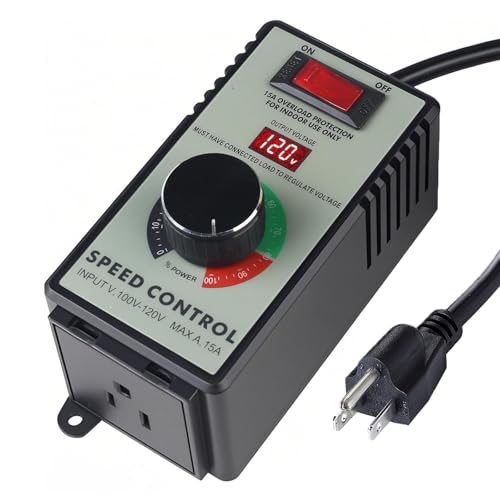
The CDmall unit provides a 15A maximum current with a 110-120V input, designed to control AC brushed motors and fans. It features a three-foot grounded power cord for compatibility with standard US outlets and an independent overload protection switch that cuts power if current exceeds 15A. The high-precision LED voltage meter allows quick voltage checks, aiding in setup and monitoring. This model suits hydroponics ventilation, inline duct fans, and ceiling fans where precise speed control is a priority. It should not be used with brushless motors, to ensure safe operation and warranty alignment.
Key technical notes include resistive loads up to 2000W and inductive loads up to 1500W, making it suitable for many residential and light commercial devices. Installation is straightforward for setups with standard outlets, though users should ensure proper wiring and grounding per local electrical codes. The device emphasizes user safety through automatic disconnection on overload, safeguarding both equipment and operators.
KB Electronics 8811007 Solid State Controller

The KB Electronics 8811007 is a compact, solid-state speed control designed for standard 2″ x 4″ electrical wall boxes. It supports up to 6.0 max amps at 115 volts and carries UL and CSA approvals for safety and reliability. This unit is not designed for capacitor-start or capacitor-run motors, which makes it most appropriate for simple brushed DC conversions or AC motor applications that don’t rely on capacitor-based starting methods. It is well-suited for hobbyist projects, small workshops, and compact motor applications that require stable speed adjustment without extra mechanical complexity.
With its standard enclosure compatibility and simple user interface, this controller emphasizes reliability and safety in a compact package. It is ideal for users who need straightforward speed control without integrated LED displays or additional protective features beyond standard electrical code compliance. As always, ensure the motor type aligns with the controller’s capabilities and consult an electrician for in-wall installations.
ReeMoo AC Motor Speed Controller With LED Display

The ReeMoo model presents a 100V-120V input range with a 15A maximum current and a 10A rated current. It features an LED voltage display and a back-clip for belt attachment, which can be handy for on-the-go adjustments in workshop scenarios. It also highlights a flame-retardant casing for added safety in environments with higher heat generation. The controller covers resistive loads up to 4000W and inductive loads up to 1500W, broadening its applicability to various tools and equipment beyond fans, including routers and drills in some configurations, provided compatible electrical characteristics.
Operation focuses on precise voltage control via a regulation knob, enabling low, medium, and high-speed settings depending on the equipment in use. The unit integrates overload protection that automatically cuts power if current exceeds 15A, a critical safety feature for protecting both devices and users. For professional settings, verify compatibility with your motor type and ensure proper enclosure and wiring practices during installation.
VXCICC Rheostat-Style AC Motor Controller

The VXCICC controller combines a rheostat-style interface with a robust 0-220V adjustable output, and claims an input range compatible with 120-220V systems. Rated current is 9A with a safety ceiling of 15A, and the device includes overload protection to shut off when demand exceeds safe levels. This makes it a versatile choice for bench testing, hobby projects, or light industrial tasks where a broad voltage range is beneficial. The controller’s features emphasize quiet operation and precise speed regulation, supporting applications from small fans to modest tooling.
Pros include a wide operating voltage range, strong safety measures, and a design geared toward high-precision control. Potential considerations are ensuring the motor type is compatible with a rheostat-based regulator and confirming that the load does not exceed the maximum wattage rating for resistive or inductive loads. The unit’s performance hinges on appropriate wiring practices and protection against electrical surges in demanding environments.
Midwest Hearth Fan Speed Control Kit

This kit provides a complete speed control solution for fireplace blower applications. It includes the speed control unit, a rheostat knob, and mounting hardware, with universal fit for most pre-drilled OEM rheostat holes in fireplaces and stoves. The design emphasizes easy installation and fine-tuning of blower noise and speed to achieve a comfortable ambiance while maintaining efficient airflow. The kit’s focus on compatibility and simple setup makes it a practical option for homeowners upgrading existing fireplace blowers or replacing worn controls.
Considerations for this product include its suitability for in-fireplace environments and the potential need for additional weatherproofing or mounting hardware, depending on the hearth design. The universal fit ensures broad applicability, but users should confirm the specific hole pattern in their unit before purchasing. Safety and proper clearance around hot surfaces remain important when integrating rheostat controls in fireplaces or wood stoves.
Buying Guide: Key Purchase Considerations
Performance, safety, and compatibility are the core pillars when selecting a rheostat or variable speed controller for 120V AC motors. Consider the following perspectives to choose confidently:
- Load Type and Power Rating: Determine whether your load is primarily resistive (heaters, lamps) or inductive (fans, motors). Match the controller’s wattage and current ratings to the device to prevent overheating or abrupt shutoffs.
- Voltage Range: Some controllers support broad input ranges (e.g., 120V up to 220V). Ensure the device matches your supply voltage and the motor’s nominal voltage to avoid inefficiency or damage.
- Control Interface and Display: LED displays provide real-time voltage readings, aiding setup and monitoring. A simple knob can suffice for basic adjustments, while a digital readout helps maintain precise speeds.
- Overload and Safety Features: Look for automatic current cutoff above a specified threshold (commonly 15A). A flame-retardant shell and surge protection are helpful for higher-risk environments and extended use.
- Installation Fitment: Some models mount in standard electrical boxes, while others are designed for in-vehicle or portable use. Check dimensions, wiring requirements, and enclosure compatibility for your installation.
- Compatibility with Motor Type: Brushless vs. brushed motors can require different controllers. Follow manufacturer guidance to avoid warranty voidance or equipment damage.
- Portability and Practicality: For workshop or field use, features such as back clips, mounting hardware, or easy-access control panels can simplify operation and reduce downtime.
When evaluating options, prioritize devices with verified safety certifications (UL/CSA where applicable), documented load ratings, and clear installation instructions. Reading user reviews and consulting a licensed electrician for in-wall or high-load installations can further reduce risk and ensure a durable setup.