Best Cheap Gas Powered Generators for Reliable Backups
If you need affordable gas-powered power on the go, these 5 generators balance cost with practical output for home backup, camping, and emergencies. This guide targets buyers seeking portable, budget-friendly options without sacrificing essential reliability. Each product is evaluated for who it suits best, with clear pros and minimal drawbacks.
| Product | Best For | Key Power | Notes |
|---|---|---|---|
| Aceup Energy 1,200W | Lightweight home backup and outdoor use | 1200 peak / 900 running watts | Compact 35.3 lb, EPA & CARB compliant |
| PowerSmart 1200W | Camping and tailgating with easy transport | 1200 surge / 900 rated watts | Ultralight 39 lbs, 1.1 gal tank |
| Oxseryn 4400 Watts Inverter | RV use and home backup with inverter tech | 4400 peak / 3400 running watts | Two 120V ports plus RV and 12V ports |
| Pulsar G1200SG | Compact, portable power | 1200 peak / 900 running watts | Carrying handle for easy transport |
| ZeHuoGe 900W | Essential home backup and camping | 900 surge / 800 rated watts | 5 hours of operation with 1.1 gal tank |
Aceup Energy 1,200W Gas Generator

This generator delivers 1200 peak watts and 900 running watts for essential devices. It uses a 71cc two-stroke engine with air cooling and a recoil start, and it provides a 120V household outlet with overload protections. Best for light home backup or portable outdoor use where weight and size matter.
Best for: Home use as a compact backup or for campers needing reliable power without heavy equipment. It is a good pick where EPA & CARB compliance is important.
Limitation: The two-stroke design typically consumes more fuel and may require maintenance considerations over time.
PowerSmart 1200W Portable Gas Generator

This model weighs about 39 lbs and offers 1200 surge watts with 900 rated watts from a 71cc 2-stroke engine. Its portable design emphasizes outdoor use—camping, tailgating, fishing, and emergency home power.
Best for: Outdoor enthusiasts who need a compact, easy-to-transport power source with a straightforward fuel profile.
Limitation: Running time depends on load; expect shorter runtimes at higher loads due to a small fuel tank.
Oxseryn 4400 Watts Inverter Generator
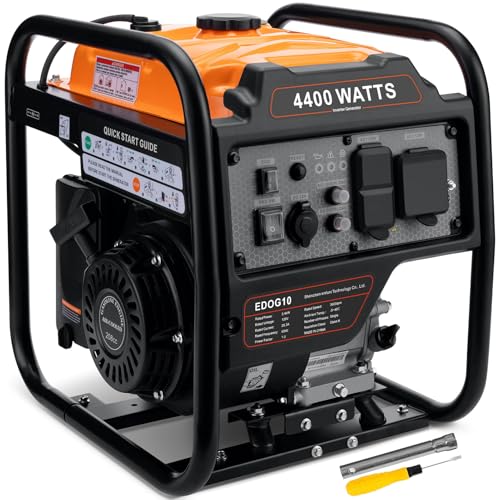
With 4400 peak watts and 3400 running watts, this open-frame inverter generator provides multiple outlets, including 120V ports and a 30A RV port. It offers long runtimes with an approximate 14-hour duration at low load and includes ECO mode for efficiency.
Best for: RV owners and home backup where higher wattage and essential electronics safety (inverter clean power) are priorities.
Limitation: Higher wattage means more size and weight than ultra-compact models, which may limit portability for some users.
Pulsar G1200SG 1,200W

This carrying-handle generator provides 1200 peak watts and 900 running watts in a compact form. It’s designed for easy transport and quick setup at outdoor sites or as a portable home backup option.
Best for: Users who prioritize portability and simple operation for occasional power needs outdoors or during light outages.
Limitation: Limited fuel capacity can constrain runtime under heavier loads, so plan for refueling on longer runs.
ZeHuoGe 900W Portable Generator
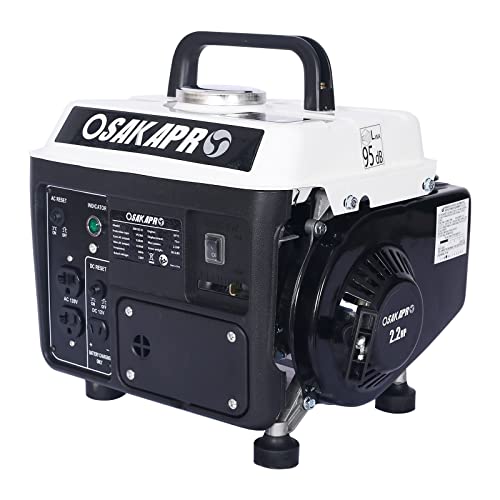
This 900W portable unit uses a 71cc 2-stroke engine and offers up to 5 hours of operation with its 1.1-gallon tank. It is EPA compliant and suitable for home backup, camping, or light outdoor use, with a focus on compact size and quiet operation.
Best for: Budget-conscious buyers who need a small, easy-to-carry model for short-duration outages or campsite power.
Limitation: Lower wattage means it cannot support heavy appliances or power-hungry tools simultaneously.
Buying Guide: Key Considerations For Cheap Gas Generators
What size generator do you truly need? Start by listing the essential devices you want to power and calculate total wattage. For light use, a 900–1200W unit can cover lights, fans, and small appliances. For RVs or home backup with more devices, a 3400–4400W inverter model may be more appropriate.
Fuel Type and Efficiency
Most budget-friendly options use gasoline. Two-stroke engines are common in compact units; they tend to be lighter and cheaper but may require more frequent maintenance and fuel mixing. Inverter technology helps provide cleaner power for electronics and longer runtimes at idle.
Portability vs. Power
Compact units with a carrying handle are easier to transport to campsites or nearby job sites. Heavier models deliver more continuous power but may require extra effort to move. Consider how often you will relocate the generator and whether a carrying handle is a priority.
Runtime and Fuel Capacity
A larger fuel tank extends runtime but adds weight. If you anticipate long outages, look for models with at least 1.1 gallons or more, or plan for frequent refueling with a small load to maximize uptime.
Noise Levels
Quiet operation is valuable in residential areas and campgrounds. Inverter generators generally run quieter than traditional open-frame units. Check the dB rating if noise is a primary concern.
Safety Features
Overload protection, low-oil shutdown, and circuit protection help protect both the generator and connected devices. RV-ready outlets and multiple receptacles improve compatibility with common equipment.
EPA Compliance and Emissions
EPA-compliant models meet emissions standards, which can be important for indoor or semi-enclosed spaces, and for environmentally conscious buyers.
FAQ
- What wattage should I look for in a budget generator? For basic home backup and small appliances, 900–1200W is often sufficient; for more devices or RV use, consider 3400–4400W inverter models.
- Are 2-stroke engines suitable for long-term use? They are common in inexpensive, portable units but require mixed fuel and may need more maintenance than 4-stroke engines.
- Is inverter technology important for sensitive electronics? Yes. Inverter generators provide cleaner, more stable power suitable for laptops, CPAP machines, and chargers.
- Do I need a propane option? Dual-fuel models offer flexibility if gasoline availability is limited, though propane adapters may add cost.
- How long should a budget generator typically run on a full tank? Runtime varies by load; many compact units run for 3–5 hours at half load, with larger tanks offering longer runtimes.
- What safety features should I prioritize? Look for overload protection, oil shutdown, and proper outlet protection to reduce risk during operation.