Best Residential Low Voltage Panel Protection and Wiring Solutions for Home Use
Direct answer: for residential low voltage panel protection, look for compact, adjustable low voltage protectors, simple mounting wall brackets, and reliable surge devices that fit typical 12–36V DC systems. The top picks below are best for homeowners securing solar storage, backup batteries, or low-voltage lighting. They range from digital low voltage protectors to modular panels and surge protectors. This guide explains who each product is best for, and why they’re suitable for home installations.
Buyer snapshot: the following five products cover protection, mounting convenience, and panel compatibility. A quick comparison helps decide who benefits most from each option.
| Product | Best For | Key Benefit |
|---|---|---|
| EPLZON 2 Pack Low Voltage Protection Module | Home solar or battery backups | Precise 12–36V protection with 0.1V control accuracy |
| DIHOOL Smart Circuit Breaker | Whole-home or subpanel protection | 19 customizable presets for over/undervoltage and overcurrent |
| Onyehn Low Voltage Cutoff Module | DIY battery banks and small systems | 4-pack value with 12–36V coverage and clear limits |
| Leviton 120/240V Panel Protector | Main panel surge protection | 4-mode surge protection with real-time diagnostics |
| QWORK Low Voltage Mounting Bracket | Flush installation of low-voltage panels | Adjusts to wallboard thickness; easy for compact setups |
EPLZON 2 Pack 12V-36V Digital Low Voltage Protector

Best for: homeowners with small solar or battery backup setups who need automatic disconnection at a preset voltage. The EPLZON module offers a precise 0.1V control accuracy and a DC input range of 12–36V, making it suitable for 12V and 24V systems as well as stabilized 36V configurations. It warns users not to exceed a practical current of 8A in normal operation due to the mini relay design, which helps prevent relay contact damage.
Why selected: this is a compact, cost-effective solution for preventing deep discharges that harm low-voltage equipment. Its auto-disconnect feature helps maintain battery health and protect sensitive electronics in a residential setting. The device’s small footprint and dual-pack option make it convenient for multi-battery configurations or distributed protection across a small grid.
Caution: the device data notes an 8A practical current limit for relay contacts; exceeding this can shorten relay life. Use with smaller loads or distribute current across multiple units if needed.
QWORK Low Voltage Mounting Bracket, 10 Pack

Best for: DIY installers needing flush installation and tidy framing for low-voltage panels and cables. These brackets accommodate wall panels up to 1 inch thick and support horizontal or vertical mounting, with oval holes that simplify final alignment. They pair well with a residential low-voltage distribution approach, ensuring clean, safe, and accessible wiring runs.
Why selected: mounting convenience matters in homes where aesthetics and safety are priorities. The adjustable frame makes it easier to align multiple panels and keep cables organized, reducing the risk of loose connections or accidental damage in busy living spaces.
Caution: designed for flush panel installations; ensure adequate clearance behind mounted boards to avoid pinched cables or restricted wiring space.
DIHOOL Smart Circuit Breaker With Adjustable Voltage Protection
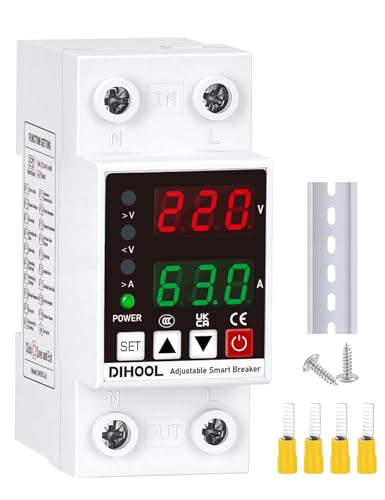
Best for: residential setups requiring comprehensive protection against overvoltage, undervoltage, and overcurrent. With up to 19 adjustable presets, this unit lets homeowners tailor the protection profile to specific circuits or devices, like home office power supplies or AV equipment in dedicated panels.
Why selected: the all-in-one approach reduces the need for separate devices, offering a centralized solution for multiple threat types. The protective shell is fire-resistant PC material, which adds a layer of safety in home installations where heat and electrical concerns are a priority.
Caution: advanced configuration is required to avoid nuisance tripping; consult the user manual for proper preset values before powering critical equipment.
Onyehn Low Voltage Cutoff Module (4 Pack)

Best for: small to medium residential systems with multiple battery banks or DC loads that need individualized protection. The 4-pack gives cost efficiency for distributed protection across several circuits or devices within a single home.
Why selected: clear voltage range (12–36V) and a documented 0.1V control accuracy support reliable, repeatable protection. The module’s caution about relay size and current limits mirrors other compact protectors, so plan load distribution accordingly.
Caution: relay contacts can be damaged if current exceeds 8A in normal operation, with a maximum of 10A below 12V, and under 8A above 12V. Use within these constraints to maintain reliability.
Leviton 120/240V Panel Protector

Best for: main or subpanel surge protection in light commercial or residential contexts. It supports 120/240V single-phase service with four protective modes and a high surge current rating. Real-time diagnostics help monitor protection status and trip history.
Why selected: Leviton is a recognized name for panel protection. This unit provides robust surge protection with a clear diagnostic indicator, which is helpful for homeowners who want ongoing visibility into their protection status without specialized test equipment.
Caution: intended for electrical panels in NEMA 1 enclosures; ensure compatibility with your specific panel design and enclosure clearances before installation.
Buying Guide: Low Voltage Panel Protection For Homeowners
What should you consider when choosing a residential low voltage panel protection solution?
- Voltage range and compatibility: Most home DC systems run around 12–36V. Ensure the protector supports your battery or solar voltage without excessive dropout.
- Protection type: Overvoltage, undervoltage, and overcurrent protections address different risks. A combined protector simplifies installation but verify that presets meet your load profile.
- Current rating: Leaf devices with mini relays may handle limited continuous current. Distribute loads if needed to avoid premature relay wear.
- Mounting and space: Flush mounting brackets and compact modules help in tight living spaces or under cabinets, with cable management features aiding neat installations.
- Safety certifications: For indoor residential use, seek devices with fire-resistant housings or recognized safety standards to reduce risk.
- Diagnostics and visibility: Real-time indicators help diagnose protection status and quickly spot tripping or wiring issues during routine checks.
Practical Setup Scenarios
Small solar cabin or shed: use EPLZON protectors in a pair to guard two battery banks, plus a QWORK mounting bracket for tidy panel insertion and cable routing. Add Leviton for main panel surge protection if mains and solar feeding through the same panel.
Home office backup: DIHOOL’s adjustable presets support customizing thresholds for critical devices, while Onyehn modules can protect individual DC loads or small battery banks to keep essential gear from deep discharge.
FAQ
- What is the main purpose of a low voltage protection module?
To automatically disconnect the battery or load when voltage falls below or rises above set thresholds, preventing damage to batteries and electronics. - Can these devices be used with solar panels?
Yes, most are designed for 12–36V DC systems common in solar-powered home setups. - Is a surge protector necessary in a home panel?
For homes with mains and solar backfeed, a surge protector reduces risk from transient spikes and protects sensitive equipment. - Should I buy a multi-pack or single unit?
A multi-pack is cost-efficient if you have multiple circuits or batteries; singles are suitable for focused protection on a primary circuit. - What installation considerations matter?
Ensure mounting space, ventilation, cable routing, and compatibility with enclosure types. Follow manufacturer guidelines for wiring and current limits. - Are these devices compliant with residential electrical standards?
Look for certifications or materials that meet local safety codes; consult a licensed electrician if uncertain.