Best Variable Speed Electric Motors With Controllers for DIY and Professional Projects
Choosing a reliable variable speed motor controller is essential for optimizing performance, extending equipment life, and achieving precise control across a range of applications. This guide reviews five proven options that pair well with common AC motors, offering overload protection, LED monitoring, and user-friendly designs. Whether you’re powering fans, drills, routers, or hydroponic systems, these controllers provide safe, adjustable performance for 110–120V setups.
Summary of Selected Products
- ZOWZEA AC Motor Variable Speed Controller 120V 15A 4000W
- KB Electronics 8811007 Solid State Variable Speed AC Motor Control
- CavalliFun AC Motor Speed Controller 120V 15A
- CDMALL AC Motor Speed Controller 120V 15A
- ReeMoo AC Motor Speed Controller 100V-120V 15A
ZOWZEA: 120V 15A Variable Speed Controller

The ZOWZEA AC Motor Controller is designed for quick, precise voltage adjustment on 110–120V systems. It supports a high max current of 15A and a robust 4000W resistive load, with an overload protection feature that automatically cuts power if the current surpasses 15A. Its flame-retardant housing adds safety for workshop environments. A back clip enables secure belt mounting, while a rotary knob and LED display help maintain exact voltage levels during operation.
Key considerations: suitable for high-demand resistive loads; easy on-the-go adjustments; safety features include overload cut-off and flame-retardant casing. This model is well-suited for users who need reliable, portable control in the field.
KB Electronics 8811007 Solid State Controller

Designed for a standard 2″ x 4″ electrical wall box, the KB Electronics 8811007 handles up to 6.0 max amps at 115V. It is UL and CSA approved, providing a compact, dependable solution for fixed installations. The unit is not intended for use with capacitor-start or capacitor-run motors, which is a critical constraint to consider when matching a controller to your motor type.
Key considerations: ideal for fixed-panel installations; compact form factor simplifies integration into control panels; ensure compatibility with your motor’s start method to prevent performance issues or safety concerns.
CavalliFun: 120V 15A Variable Speed Controller

The CavalliFun model focuses on resistive loads with a maximum 15A capacity and a 2000W resistive load rating, along with 1000W inductive load capability. It features an LED display for precise voltage readouts and a rugged, flame-retardant shell designed for safety and durability. The device emphasizes robust protections, including surge and spike safeguards and an overload shutoff when current exceeds 15A.
Key considerations: best suited for fans, heaters, and lamps in residential or light commercial settings; LED readout supports monitoring in dim environments; flame-retardant construction adds resilience in hotter workshops.
CDMALL: 120V 15A Fan Speed Controller

The CDMALL unit provides 15A max current with a 10A rated current for resistive loads, plus a 6-foot grounded power cord. It supports resistive loads up to 2000W and inductive loads up to 1500W. The design includes a dedicated fuse-based protection with overload and short-circuit safeguards. A three-position switch (off, low, full) allows quick speed adjustments, specifically for AC brushed motors—avoiding brushless configurations not suited to this controller.
Key considerations: ideal for inline duct fans, ceiling fans, or hydroponic exhausts with a simple 3-speed setting; ensure compatibility with brushed motors and plan for safe wiring in a control box or mounting surface.
IGEYAPA: 100V-120V 15A Controller with LED Display

The IGEYAPA controller emphasizes a multi-functional approach with overload and overvoltage protection, surge and RC absorption features, and an LED display showing real-time voltage. It supports up to 15A max current and a rated 10A, suitable for both resistive and some inductive loads within the provided limits. A robust ABS flame-retardant shell and 6-foot cord contribute to safety and convenience in shop environments.
Key considerations: balance between protection features and the max load; suitable for equipment requiring precise voltage tuning with visible readouts; confirm compatibility with the motor’s inductive characteristics before use.
GRDM: 1000W Variable Speed Controller
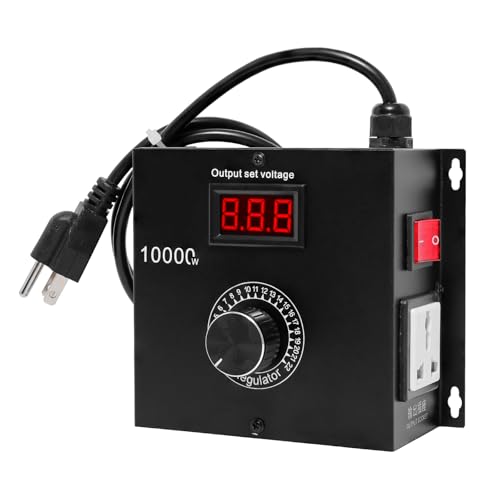
The GRDM model targets 120V systems with a broad voltage range and a current capability up to 22A, ideal for higher-demand tools and motors. This unit features an actual output voltage display, temperature indicators, and simple knob-based control. The high-current capability and bright digital readout make it a strong option for more demanding setups, such as shop tools or heating devices that require stable speed control under load.
Key considerations: suitable for heavier loads and higher power tasks; monitor voltage and temperature to prevent overheating; ensure the application remains within the device’s 120V electrical compliance and safe operating range.
Bemonoc: 300W Reversible Gear Motor With Controller

This compact 300W gear motor from Bemonoc delivers a reversible speed control with a broad 0–15 RPM range, along with a 1:90 reduction ratio and a substantial 390 lb-in of peak torque. The motor is designed for robotics, automotive, and industrial applications requiring precise, low-speed operation. The included controller box provides straightforward feedback and control for delicate tasks or positioning systems.
Key considerations: best for precision low-speed applications; verify compatibility with your mechanical gear train and load requirements; note the reversible feature for bidirectional motion control in conveyors or automated fixtures.
Buying Guide: Key Purchase Considerations
- Voltage and current compatibility: Most units operate at 110–120V with 10–15A rated currents. Match the controller to your motor’s voltage, current draw, and load type (resistive vs inductive).
- Load type and rating: Resistive loads (heaters, lamps, some fans) typically have higher wattage allowances; inductive loads (motors with startup spikes) require more cautious selection and sometimes lower continuous ratings.
- Protection features: Overload protection, short-circuit protection, surge and spike protection, and RC absorption help safeguard equipment and users. Flame-retardant housings add an extra safety layer for workshop environments.
- Display and control: LED displays and precise knobs aid monitoring and adjustment, especially in dynamic setups. Back clips or carrying features enhance portability for fieldwork.
- Mechanical compatibility: Some controllers are designed for fixed panel installations, while others emphasize belt mounting or tool-kit attachments. Ensure physical compatibility with your workspace.
- Motor compatibility: Not all controllers support speed control for all motor types. Some units specify “AC brushed motors only” or exclude capacitor-start motors. Verify motor type before buying.
- Installation considerations: Wired connections should follow local electrical codes. If unsure, consult a licensed electrician for panel integration and safe wiring practices.
- Application versatility: If you need a single solution for multiple tools (fans, drills, routers), choose a controller with a higher wattage rating and robust protection features to cover a wider range of devices.
In sum, the right variable speed controller blends safety, compatibility, and precise control to maximize performance across tools and machines. The selections above provide varied options for different use cases—from portable field work to fixed installations—while prioritizing overload protection and real-time monitoring.