Best Residential Electrical Panel Box Solutions for Homeowners
For home electrical panels, choose a panel that matches your space, load needs, and future expansion. This guide highlights five reliable, residential-friendly options and explains who they’re best for. Whether you’re wiring a new garage, upgrading a panel for a home office, or replacing an aging main lug box, these panels offer clear layouts, sturdy enclosures, and straightforward installation paths.
| Product | Spaces | Main Amp | Best For |
|---|---|---|---|
| Siemens E0408ML1125SU | 4 spaces | 125 A | Small homes or additions needing compact load distribution |
| Siemens SN Series 100 Amp | 20 spaces | 125 A | Expanding circuits in medium-size homes |
| Lovnewmax 12-Space 125A | 12 spaces | 125 A | Homes with multiple branches and organized circuit protection |
| Jindouzi THQL 12-Space 125A | 12 spaces | 125 A | Indoor installations requiring robust steel enclosure |
| Schneider Square D QO24L70SCP | 2 spaces | 70 A | Compact setups with surface-mount cover needs |
Siemens E0408ML1125SU 4 Space, 8 Circuit, 125-Amp
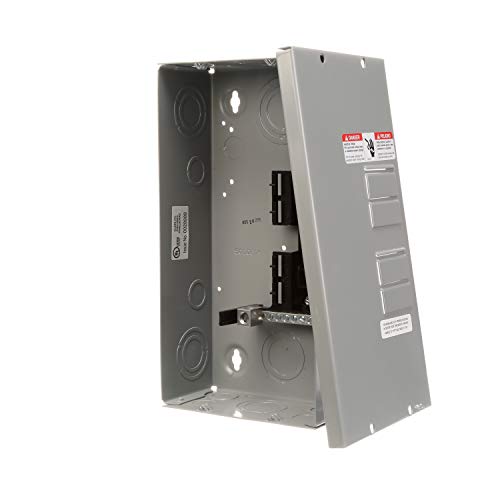
The Siemens E0408ML1125SU is a compact, indoor main-lug load center designed for surface mounting. It’s best for small homes or spaces where a compact panel is preferable. Its 125-amp rating supports essential residential loads while keeping wiring neat. A potential limitation is that this model caters to lighter expansion due to its 4 spaces.
Jindouzi THQL 8-Space, 125A Indoor Load Center
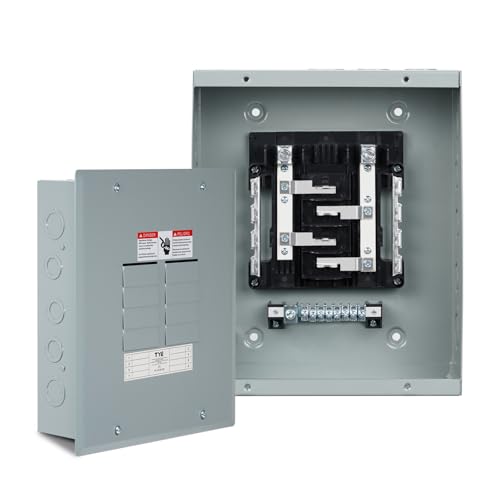
This 8-space Jindouzi THQL panel provides 125 amps and a robust steel NEMA 1 enclosure, suitable for indoor use in homes or light commercial spaces. It offers practical protection and a straightforward layout for mid-sized circuits. Choose this if you need solid protection with moderate expansion potential; avoid if you anticipate many future circuits beyond eight spaces.
Siemens SN Series 100 Amp Load Center

The Siemens SN Series 100 Amp load center offers 20 spaces and plug-on neutral features for quick installation. It’s well-suited for homes expanding circuit count and needing organized wiring with a secure installation. A limitation is that its 20 spaces may be more than required for ultra-compact spaces, which makes sizing important for cost-effective use.
Lovnewmax 12-Space 125A Indoor Load Center

Lovnewmax’s 12-space panel distributes 125 amps across up to 12 breakers, making it a practical choice for organized residential power distribution. It’s best for homes with multiple circuits spread across rooms like kitchens, workshops, and garages. A potential drawback is that limited spaces may constrain future expansion; plan ahead if more circuits are anticipated.
Jindouzi THQL 12-Space 125A Indoor Load Center
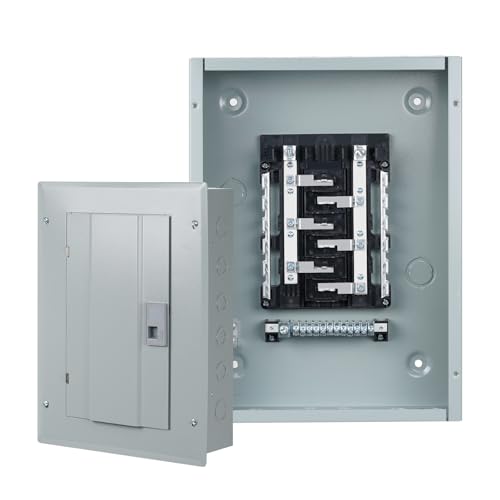
This 12-space Jindouzi panel suits indoor installations needing steadier circuit protection with a 125-amp rating. It’s a solid choice for homes leveraging multiple circuits while prioritizing indoor protection. If you need top expansion, verify that 12 spaces will cover expected future loads; otherwise, consider a larger enclosure now to reduce future substitutions.
Schneider Electric Square D QO24L70SCP

The QO24L70SCP provides a compact, 2-space option with a surface-mount cover. It’s ideal for spaces needing a small, easily accessible panel with a surface-mount option. It may not be suitable for larger homes or projects requiring many circuits, due to its limited capacity.
Buying Guide
Key purchase considerations help align panel choice with your home’s electrical needs:
- Space and expansion: Match the number of spaces to current circuits and anticipated future growth.
- Main amperage and service compatibility: Ensure the panel’s 125A or other rating aligns with your service entrance and main breaker capacity.
- Indoor vs. outdoor usage: Most listed options are for indoor use; outdoor-rated panels require weather protection.
- Enclosure type: NEMA 1 is typical for indoor, basic protection; consider NEMA 3R or higher for damp or outdoor environments.
- Ease of installation: Panels with plug-on neutrals or simple bus bar access can speed installation.
- Circuit protection needs: Larger homes or workshops may require more circuit spaces and robust mounting options.
- Cost vs. future-proofing: Balance upfront cost with potential future expansions to reduce later replacements.
Frequently Asked Questions
- What determines if a 125A panel is enough for a home? – Consider current electrical load, number of circuits, and potential future expansions. A service upgrade may be needed for larger homes.
- Is it better to choose a larger panel now or upgrade later? – If you anticipate multiple circuits and future devices, a larger panel can reduce future substitution costs and downtime.
- What is a main lug load center? – A main lug load center uses lugs to connect branch circuits without a separate main breaker, common in certain residential setups.
- What does “NEMA” rating indicate? – It specifies enclosure protection against dust, water, and corrosion; higher ratings suit more challenging environments.
- Can all panels be surface mounted? – Most indoor panels can be surface mounted, but check manufacturer specs for mounting options and clearances.
- Do I need a licensed electrician to install panels? – Yes. Electrical work involves safety risks and code compliance; professional installation is strongly advised.