Best Remote Control Unit for Ceiling Fans: Top Picks for 2026
Finding a reliable remote control kit can modernize an aging ceiling fan and enhance daily comfort. This guide reviews five widely compatible options that fit common brands like Hunter, Harbor Breeze, Westinghouse, and Honeywell. Each product supports 3-speed fan control, light dimming, and timer features, with varying receiver sizes and installation requirements. Read on to compare installation simplicity, signal reliability, and feature sets to pick the best remote kit for your ceiling fan setup.
| Product | Brand | Key Features |
|---|---|---|
| LPHUMEX Universal Ceiling Fan Remote Kit | LPHUMEX | 3-in-1 control, easy 5-wire install, works with multiple brands, strong signal |
| Universal Ceiling Fan Remote Kit (FAN-53T) Replacement | CENMING | 3-speed fan, light dimmer, compatible with many brands, not for DC motors |
| Small Size Universal Ceiling Fan Remote Kit | Smekitlly | Very compact receiver, 4 fan controls + light, broad compatibility |
| Humpptom Ceiling Fan Remote Kit | Humpptom | Ultra-small receiver, timer up to 8 hours, minimal buzz/noise |
| Ceiling Fan Remote Control and Receiver Kit (Taigeguang) | Taigeguang | 4 timing options, 3-speed fan control, strong signal |
LPHUMEX Universal Ceiling Fan Remote Kit
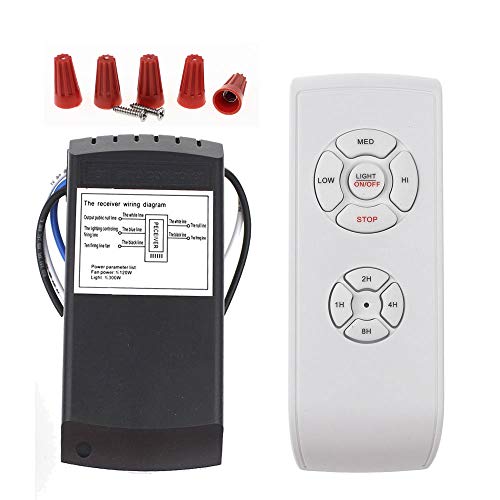
The LPHUMEX kit is a 3-in-1 remote control system designed for AC ceiling fan motors. Installation is described as straightforward, requiring only a basic 5-wire hookup without removing the light kit or blades. It supports fan speed control and light management, compatible with common brands such as Hunter, Harbor Breeze, Westinghouse, and Honeywell. The kit emphasizes strong signal transmission, allowing operation from separate rooms or floors, and is positioned as a convenient upgrade or replacement option for existing remotes.
CENMING Universal Ceiling Fan Remote Kit (FAN-53T)
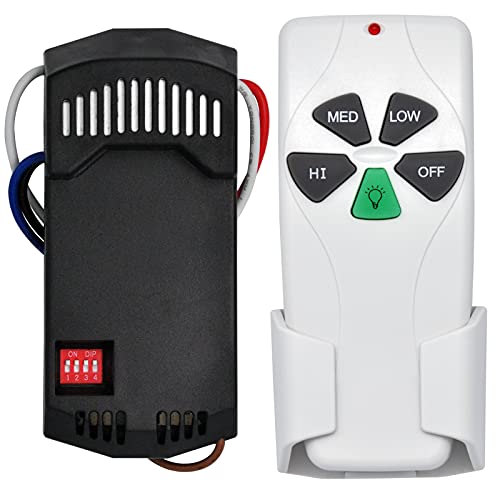
Designed to replace or upgrade many 110V 3-speed AC ceiling fan remotes, this kit targets Harbor Breeze, Hampton Bay, Hunter, Litex, and similar brands. It provides HIGH/MED/LOW speed control plus a dimmable light function, though the remote itself lacks a reverse option. The product notes caution about LED dimmability and advises that the light dimming works best with incandescent or compatible bulbs. A common choice for users seeking a straightforward 3-speed plus dimming experience.
Smekitlly Small Size Universal Ceiling Fan Remote

Smekitlly offers a compact receiver that fits many fan bases, making it a practical option for tight canopy spaces. It supports 3 fan speeds plus an ON/OFF light control, with a light dimmer function suitable for incandescent bulbs. The kit is marketed as broadly compatible with brands like Hampton Bay, Harbor Breeze, Westinghouse, and Honeywell. Its small size helps preserve canopy space while delivering reliable remote operation.
Humpptom Ceiling Fan Remote Kit
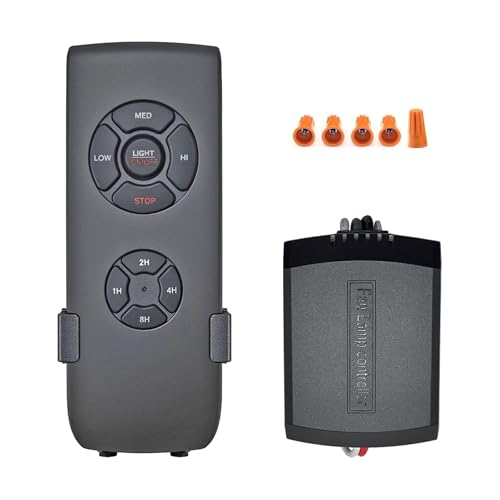
The Humpptom kit highlights a mini receiver designed for compact canopy spaces, ideal for fans from Hunter, Harbor Breeze, Westinghouse, and other major brands. It includes a timer feature for sleep schedules (1–8 hours) and emphasizes zero buzzer noise. The installation focuses on ease and compatibility, making it suitable for upgrading older remote systems without noticeable disturbance or wiring complexity.
Taigeguang Ceiling Fan Remote Control Kit

This universal kit from Taigeguang replaces traditional ceiling fan remotes with a 3-speed fan control, separate light on/off control, and 4 timing options (1H, 2H, 4H, 8H). Marketed as compatible with a broad range of fans including Honeywell, Westinghouse, and Hunter, it emphasizes a strong signal and timely support. It is suited for users seeking flexible timing profiles alongside routine speed and light management.
CENMING Universal Ceiling Fan Remote Kit (FAN28R/HD)

Another CENMING option focuses on FAN28R/HB/Hunter compatibility, offering a robust receiver and remote with fan speed control and light dimming. The model emphasizes a powerful receiver (up to 240W) and a focus on compatibility with multiple brands. The kit is presented as a long-lasting upgrade with improved dimming control, relying on dual-relay technology to enhance performance and longevity.
Buying Guide: Key Purchase Considerations
- Compatibility: Verify that the remote kit supports your fan’s brand and model, as some remotes are universal while others replace specific receivers. Confirm that the receiver is compatible with 110V/120V AC motors and that LED lights will work as intended with dimming features.
- Control Features: Decide which controls you need — fan speed (HI/MED/LOW), light on/off, dimming, and timer functions. Some remotes include execution for timing (1H, 2H, 4H, 8H) which can automate shut-off or sleep modes.
- Installation and Canopy Space: If your fan canopy is compact, favor a small receiver model. Some kits advertise “easy installation” with minimal wiring; ensure your wiring layout matches the product’s installation instructions.
- Signal Reliability: Look for models noted for strong, stable signals that function from different rooms or floors. This is important if the fan is far from the remote or if walls may attenuate the signal.
- Bulb Compatibility: Light dimming varies with bulb type. Many remotes dim incandescent bulbs reliably, while some LED bulbs may flicker or not dim fully. Check the manufacturer guidance for your bulbs.
- Reverse Function: Some remotes lack a reverse button; if your fan relies on a reverse switch, ensure the fan’s own reverse capability pairs with the remote’s limitations.
- Power Handling: Receivers rated for higher wattage tend to support more dimmable bulbs and longer light strings. This matters if your fan light uses multiple bulbs.
- Durability and Support: Favor remotes with documented customer support and clear replacement policies in case of compatibility issues or receiver failure.
When selecting a remote control kit, balance installation ease with long-term reliability. For homes with tight canopy spaces, prioritize the smallest receivers. If you have a wide-range living space or multi-story layout, a kit noted for strong wireless signal can prevent misfires. Lastly, ensure the kit’s frequency and model compatibility align with your existing remote and receiver brand codes to avoid conflicts.