Best Drivers for DC Motors: Top Picks for Smooth, Reliable Control
The right DC motor driver can dramatically improve control accuracy, efficiency, and motor life. This guide highlights five dependable options designed for a range of voltages and current needs, from compact hobby setups to more demanding projects. Each pick brings distinct features such as bidirectional control, PWM speed regulation, and protective circuitry to fit different applications—from robotics to CNC and automation tasks.
| Product | Brand | Voltage Range | Current Rating | Notable Feature |
|---|---|---|---|---|
| MDDS30 2-Channel SmartDriveDou | Makermotor | 7V–35V | 30A per channel (80A peak) | Quiet 18 kHz switching |
| MD20A Bi-Directional | Makermotor | 6V–30V | 1 channel | Overcurrent protection, current limiting |
| DROK Dual H-Bridge | DROK | 6.5V–27V | 7A per port | Dual drive for two motors, optocoupler isolation |
| Teyleten DRV8871 Driver | Teyleten Robot | 6.5V–45V | 3.6A peak | PWM capable, compact module |
| SDRGEEK PWM Motor Controller | SDRGEEK | 9V–60V | 0–20A | 1200W rated, speed/power control with knob |
MDDS30 2-Channel SmartDriveDou DC Driver

The MDDS30 from Makermotor provides two independent channels with up to 30A continuous current per channel (80A peak). It supports a wide voltage range from 7V to 35V, making it suitable for a variety of DC motors. On-board MOSFETs switch at 18 kHz, enabling quiet operation and reduced audible noise. This module is well-suited for robotics, automated systems, and any dual-motor application requiring reliable current handling and simple integration.
WWZMDiB L298N Dual H-Bridge Driver Board
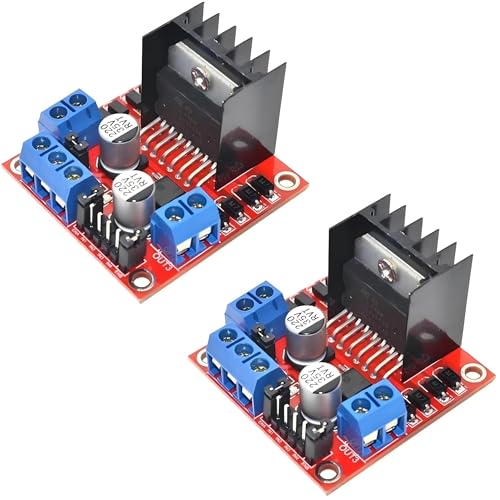
The L298N-based WWZMDiB board is a classic dual H-bridge controller capable of driving two DC motors or one dual-phase stepper. It operates at 5V logic with a current handling suitable for smaller hobby projects. While straightforward and cost-effective, it’s best for lighter loads and educational experiments, offering easy integration with microcontrollers such as Arduino and Raspberry Pi.
DROK DC Motor Driver Dual H-Bridge

The DROK driver uses dual H-bridges to control two DC motors simultaneously, with a voltage range from 6.5V to 27V. Each channel supports up to 7A, and the module includes optocoupler isolation for enhanced electrical noise immunity. This makes it a solid choice for compact robotics and projects requiring independent motor control with additional protection features.
Teyleten DRV8871 Motor Driver
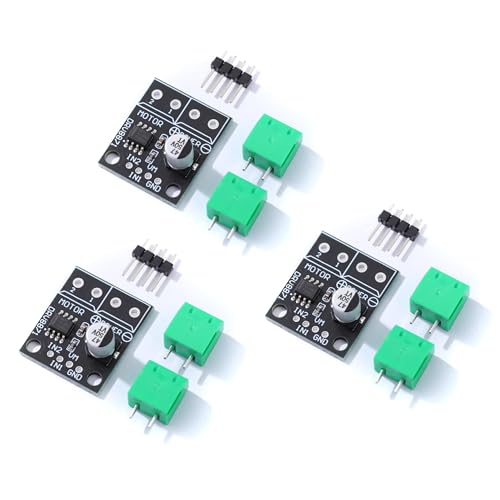
The DRV8871-based module from Teyleten Robot supports voltages from 6.5V to 45V and provides a 3.6A peak drive capability. It is compact and suitable for small to medium-sized DC motors where a balance of voltage range and current is needed. PWM compatibility allows smooth speed control, making it useful for hobbyist robotics and CNC-related projects.
SDRGEEK DC Motor Speed Controller

The SDRGEEK module handles voltages from 9V to 60V with a generous 0–20A output range and a 1200W rating, designed for high-power PWM regulation. It includes a knob for real-time speed adjustment and a switch for on/off control. This makes it a practical option for larger DC motors in automation and robotics where precise speed tuning is required.
Buying Guide: Key Considerations For Choosing A DC Motor Driver
Choosing the right DC motor driver depends on motor type, power needs, and control requirements. Consider the following perspectives to select a suitable option:
- Voltage Range and Current Capacity: Ensure the driver’s voltage window and continuous/peak current align with your motor’s ratings. Running a motor beyond its rated current can cause overheating and shortened life.
- Number of Channels: Single-channel drivers are adequate for one motor; dual or multi-channel boards suit synchronized or independent control of multiple motors in robotics or automation.
- Control Interface: Look for PWM support, direction pins, and ease of integration with microcontrollers (Arduino, Raspberry Pi) or PLCs for industrial setups.
- Protection Features: Overcurrent/current limiting, thermal protection, and optocoupler isolation help protect both motor and controller in noisy environments.
- Noise and Heat: Higher switching frequencies can reduce audible noise, but may increase switching losses. Heat sinking and proper ventilation improve reliability for continuous operation.
- Size and Mounting: Compact modules fit small enclosures, while larger boards may be easier to wire and cool for higher-power applications.
- Integration With Other Systems: Some drivers combine controller and driver functions, while others are better suited for standalone motor control with external controllers.
For projects that require precise speed control and redundancy, dual-channel drivers with current limiting offer a robust solution. For educational or light-duty tasks, affordable L298N-based modules provide an accessible starting point. Always verify compatibility with your motor’s voltage, current, and wiring scheme before purchase.