Best Propane Gas Line Underground Kits for Safe Outdoor Installations
When choosing an underground propane gas line, look for CSST and flexible stainless options designed for outdoor use, corrosion resistance, and easy cut-to-fit installation. This guide highlights five top picks—chosen for durability, compatibility, and clear installation guidance—so you can match the right line to grills, heaters, and whole-home systems. Best for professional setups, DIY projects, or retrofits in outdoor spaces.
| Product | Size / Length | Best For |
|---|---|---|
| CSST Gas Line 70Ft 3/4″ (Vruelia) | 70 ft, 0.875″ ID | Whole-home or large outdoor appliances |
| CSST Gas Line 70Ft 1/2″ (Vruelia) | 70 ft, 0.625″ ID | Outdoor grills and fire pits |
| 38ft 1/2″ CSST Gas Line Kit (JURPLIX) | 38 ft, 0.625″ ID | DIY cuts, tight spaces, outdoor grills |
| Kinchoix 70ft 3/4″ CSST | 70 ft, 0.625″ ID | Natural gas or propane feeds with no mid-pipe interface |
| Grehitk 100ft 3/4″ CSST | 100 ft, 0.63″ ID | Long runs to outdoor equipment and remote areas |
CSST Gas Line 70Ft 3/4″ — Vruelia
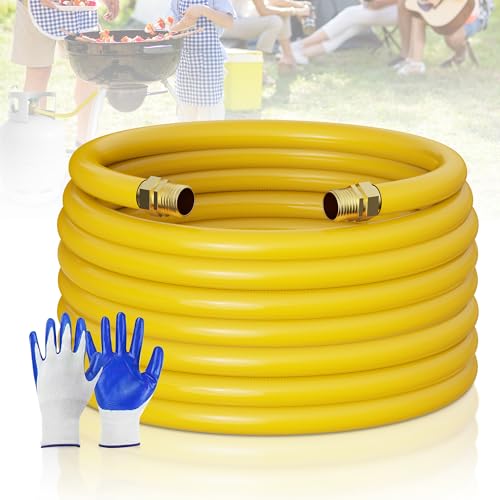
Best for large outdoor installations, this 70-foot CSST line supports up to 150K BTU with a 0.875″ ID for whole-home or high-BTU outdoor equipment. It ships with two brass NPT connectors and can be cut to fit complex routes. The tubing is designed to precisely match fittings to prevent leaks.
Who this is for: homeowners upgrading to entire outdoor gas setups or running long lines to grills, fire pits, or patio heaters. Caution: ensure proper burial and protection of the line per local code; additional fittings may be required for multiple runs.
CSST Gas Line 70Ft 1/2″ — Vruelia
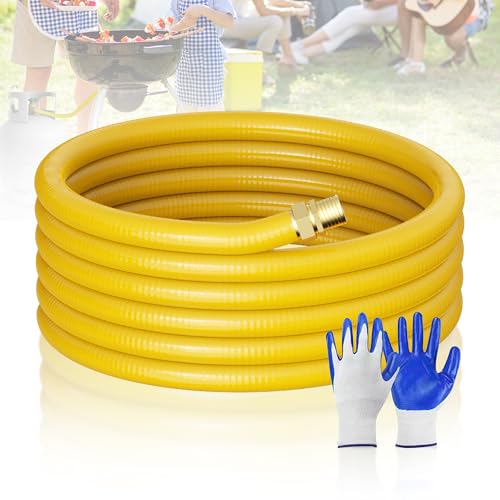
Ideal for outdoor grills and fire pits, this 70-foot line uses a 0.625″ ID to support up to 65K BTU. It’s the same precise sizing and DIY-friendly cut-to-fit approach as the 3/4″ version, with the included brass connectors for straightforward assembly.
Who this is for: smaller, spline-free outdoor setups or upgrades where space and BTU requirements are moderate. Caution: verify that the 65K BTU rating covers your appliance capacity to stay within limits.
38ft 1/2″ CSST Gas Line Kit — JURPLIX

Contractor-grade safety with a 304 stainless steel core and UV-resistant yellow jacket, this 38-foot line is designed for underground installation and can be cut to fit. It includes true-to-spec 1/2″ diameter and brass adapters for leak-free connections. The kit is suitable for grills and higher-BTU equipment in outdoor spaces.
Who this is for: DIY installers needing a compact, durable underground run. Caution: careful routing is needed to avoid kinks and ensure full gas flow in tight spaces.
Kinchoix 70ft 3/4″ CSST

This 70-foot stainless CSST line uses a 0.625″ ID and features robust brass connectors to minimize leakage points. It emphasizes an uninterrupted inner flow by avoiding mid-pipe interfaces, and the included fittings are designed for weather resistance.
Who this is for: users prioritizing reduced connection points and strong outdoor performance. Caution: confirm that the line length and BTU rating align with your outdoor equipment’s needs.
Grehitk 100ft 3/4″ CSST

Designed for long outdoor runs, this 100-foot 3/4″ line provides up to 150,000 BTU/hour capacity. The corrugated stainless steel tubing is protected by a yellow PE jacket and brass fittings. It is flexible and can be cut to length, with the caveat that burial requires appropriate conduit protection.
Who this is for: homeowners extending gas lines across larger yards or to remote outdoor equipment. Caution: do not bury directly underground; use a non-metallic conduit at least ½” larger than the tubing.
Buying Guide: Key Considerations For Underground Propane Gas Lines
- BTU requirements: Match line capacity to the highest BTU draw of connected appliances. Higher BTU lines (e.g., 150K BTU) are better for whole-home outdoor feeds or multiple devices.
- Pipe ID vs. length: A larger ID supports more gas flow; longer runs benefit from 0.875″ or 0.63″ IDs depending on model. Consider cut-to-fit flexibility for complex routes.
- Material and fittings: CSST with brass fittings reduces leak risk. Stainless steel cores offer durability in outdoor environments.
- Burial and protection: Underground runs generally require protective conduit. Do not bury directly; follow local codes and NFPA guidelines.
- Ease of installation: Look for DIY videos, plug-and-play connectors, and pre-attached brass adapters to simplify setup.
- Safety and compliance: Ensure products are designed for outdoor use, and check NFPA54 or local code requirements for gas piping.
- Able to cut-to-fit: The ability to trim to exact lengths helps. Verify that you can reattach ends securely after cutting.
Frequently Asked Questions
- What is CSST and why choose it for underground propane lines?
CSST provides flexible routing for outdoor gas lines with safety-coated jackets; copper or stainless steel cores reduce leak risks if properly installed. - Can CSST be buried underground?
Yes, but it should be protected by a non-metallic conduit and not buried directly in soil without protection, per code requirements. - What size should I choose for my outdoor grill?
For standard grills and fire pits, 1/2″ or 3/4″ CSST with appropriate BTU rating is typical; check appliance BTU draw and line length. - How do I determine the right BTU rating?
Sum the BTU requirements of connected devices and select a line that exceeds that total to allow for pressure drop and future additions. - Do I need professional installation?
For underground runs and high-BTU systems, professional consultation is recommended to ensure safe connections and compliance. - What are the risks of using a poorly installed gas line?
Leaks, fire hazards, and system failure can occur; use proper materials, secure fittings, and follow manufacturer guidelines.