Best Meter-Base Transfer Switches for Home Power Backup
Finding the right meter-based transfer switch can simplify powering a home during outages, especially when using a portable generator or an automatic system. The products below are selected for compatibility with meter-mounted setups and for broad residential use. Each entry notes key capabilities, installation considerations, and durability in real-world conditions.
Overview of Selected Products
| Product | Amperage | Type | Key Benefit | Power Connection |
|---|---|---|---|---|
| GenerLink 30 Amp | 30A | Automatic | Direct meter mounting, up to 200A service | L14-30 cable |
| GenerLink 40 Amp | 40A | Automatic | Higher generator capacity, dependable outdoors | L14-50 straight |
| EZ Generator Switch | Manual | Manual | Original, UL/CSA approved | Manual transfer lever |
| Reliance 31406CWK | 30A | Manual/Pro | Six-circuit compatibility for HVAC and more | Corded-electric power source |
| MARSTEK 63A | 63A | Automatic/Manual | LED display and dual operation | DIN rail mounting option |
GenerLink Automatic Transfer Switch for Home Generator – 30 Amp

The GenerLink 30 Amp meter-mounted transfer switch provides automatic power switching between a home’s electrical panel and a portable generator. It is designed for 30 Amp service and connects via a 20-foot GenerLok Power Cable with an L14-30 plug. The unit supports services up to 200 amps and mounts behind the power meter, enabling a seamless and tidy transfer to the entire breaker panel without external cords or rewiring. It is built for outdoor durability with UV-resistant housing and weatherproof installation, suitable for various environments and inverter or traditional generators alike.
GenerLink Automatic Transfer Switch for Home Generator – 40 Amp

The 40 Amp GenerLink model expands generator support for residents with higher backup loads. It features a 20-foot GenerLok Power Cable with an L14-50 straight connector and a rugged, weather-resistant housing for outdoor use. Like the 30A version, it mounts behind the power meter and backs a home’s entire breaker panel up to 200 amps. This switch is designed for quick installation, enabling reliable automatic transfer without extensions or rewiring, and it remains a robust option for larger standby systems or frequent outage scenarios.
EZ Generator Switch – The Original

The EZ Generator Switch represents a patented manual transfer option, designed and assembled in the USA. It carries UL/CSA/ETL approvals and emphasizes practical, straightforward operation with real-world customer support. Ideal for users who prefer manual control, this switch ensures a reliable transfer of power from a main utility source to a generator without complex electronics, while maintaining compliance with safety standards. It is suited for owners who want a trusted, no-fruss setup for emergency power.
Reliance Controls 31406CWK – 30 Amp 6-Circuit Kit
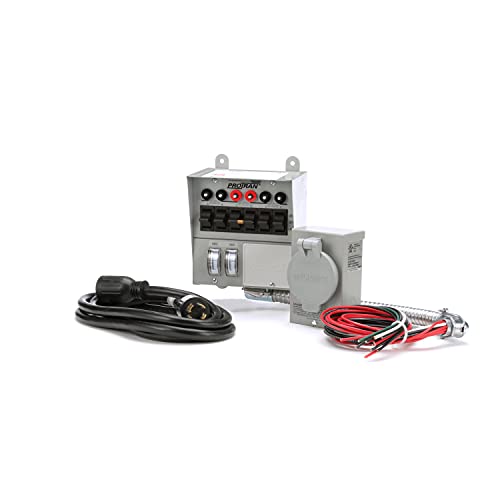
Reliance Controls’ 31406CWK kit delivers a 30 Amp transfer switch with six circuit controls, suited for managing essential circuits while keeping a compact footprint. It’s a corded-electric system that helps users tailor which appliances or HVAC components rely on backup power. While it targets a broader range of installations, its 10-foot hose length and adaptable design can work in many residential settings where a reliable, multi-circuit transfer solution is needed, especially for HVAC and critical loads.
MUJURUR 100A Generator Transfer Switch

This 100 Amp transfer switch provides a robust option for larger homes or properties with substantial backup requirements. With a 100A capacity and a 24000W capability, it supports seamless switching between the utility and an auxiliary power source. The unit uses a rugged housing designed for outdoor use and features NEMA 3R compliance, ensuring weather resistance. It is well-suited for homes with higher power demands and can handle multiple circuits while maintaining dependable power transfer even during severe weather events.
Buying Guide
Key Considerations
- Type: Choose automatic transfer switches for hands-free operation during outages, or manual types for simple, cost-effective control.
- Amperage and service compatibility: Match the switch to your generator’s output and your home’s service size (e.g., 30A, 40A, 63A, or higher).
- Meter mounting: Meter-mounted switches streamline installation by connecting behind the power meter and feeding the entire breaker panel without external cords.
- Load management: Some models offer load management or multiple circuit options to prioritize essential loads like sump pumps, HVAC, and lighting.
- Weather resistance: Outdoor installations require UV-resistant housings and weatherproof components to withstand sun, rain, and temperature changes.
- Wiring and safety: Check for UL/CSA/ETL approvals, grounding requirements, and compliance with local electrical codes. Consider professional installation for complex or larger systems.
- Future scalability: If you anticipate expanding loads or upgrading to higher-wattage generators, select a unit that supports higher amperage or service capacity.
Comparison at a Glance
- Automatic vs Manual: Automatic units minimize manual intervention, while manual switches are typically simpler and more economical.
- Single vs multi-circuit: Some models tackle just essential circuits, others offer multi-circuit load management for HVAC and other key loads.
- Outdoor durability: Outdoor-rated enclosures, UV resistance, and weatherproof installation extend the life of meter-mounted systems.
- Installation footprint: Meter-mounted switches reduce clutter and simplify wiring by attaching directly behind the meter.
In selecting a meter-based transfer switch, prioritize compatibility with your generator, service size, and whether you want automatic operation or a straightforward manual process. Ensure the unit matches your home’s critical load profile and consider future upgrades to improve resilience during outages.