Best Power Generator Transfer Switches for Safe, Reliable Backup Power
When planning a home backup power solution, a transfer switch is essential to safely move power between the electric grid and a generator. This guide covers five top options, highlighting who they’re best for, why they stand out, and practical considerations. The right switch protects your appliances and prevents backfeeding, while offering simple operation during outages. This selection suits homeowners seeking durability, ease of installation, and clear circuit control.
| Product | Circuits | Capacity | Best For |
|---|---|---|---|
| EZ Generator Switch | Various (Single unit, UL listed) | Patented manual, non-automatic | Simple, USA-made reliability |
| MUJURUR 100A 24000W | Up to 10 circuits | 100 A, 24,000 W | Whole-home backup with rugged outdoor use |
| Nature’s Generator 12-Circuit | 12 circuits | 50 A | Hybrid grid/storage integration |
| VEVOR 50-Amp 10-Circuit | Up to 10 circuits | 50 A | Prewired inlet and watt meter simplicity |
| Reliance 30 Amp 6-Circuit | 6 circuits | 30 A | Compact, economical backup |
EZ Generator Switch

This is the original, patented manual transfer switch, made in the USA. It provides a secure, non-automatic method to connect a generator to a home electrical system, offering straightforward operation and real-life customer support. It is UL/CSA/ETL approved and designed for reliable, simple backups.
Best for: Homeowners who want a trusted, domestic product with strong support and clear, manual control. It’s a solid choice when you prioritize proven design and compliance over advanced automation.
Caution: Lacks automatic transfer features, so a manual action is required during outages. Ensure compatibility with your panel size and breaker types before purchase.
MUJURUR 100A 24000W Transfer Switch

This 100-amp, 24,000-watt transfer switch supports whole-home backup. Its robust aluminum connections, weatherproof NEMA 3R enclosure, and simple mechanical design emphasize long-term reliability in outdoor or indoor settings. It’s best for larger homes with higher power needs and where durability matters most.
Best for: Homes with high electrical demand, requiring a capable, sturdy switch that can handle full-house loads when grid power is unavailable.
Limitation: Higher upfront cost and installation complexity compared to smaller, lighter-duty models. May require professional wiring for proper panel integration.
Nature’s Generator Manual Transfer Switch 12-Circuit

This 50-amp, 12-circuit non-automatic kit supports flexible configurations, including twelve 120V circuits or six 240V circuits. It also offers hybrid options with stored energy systems, letting selected circuits run on stored energy while others stay on the grid. It is ideal for users seeking energy storage compatibility and modular circuit control.
Best for: Homeowners integrating storage or solar with a backup generator, aiming to optimize energy use and reduce grid dependence during outages.
Limitation: Not a high-amp powerhouse; best for moderate loads unless paired with an ample storage system or solar array.
VEVOR Manual Transfer, 50-Amp 10-Circuit

This 50-amp, 10-circuit prewired transfer kit includes a CS6375 inlet with a built-in watt meter, enabling real-time load monitoring. The NEMA 3R weatherproof enclosure supports outdoor use, and the configuration allows reliable transfer of essential circuits during outages. Great for households needing practical monitoring and outdoor resilience.
Best for: Users who want integrated meters and an outdoor-rated setup with clear load awareness to prevent overloading the generator.
Limitation: May be overkill for small homes; ensure your generator’s output matches the 50-amp capacity.
Reliance Controls 30 Amp 6-Circuit Kit
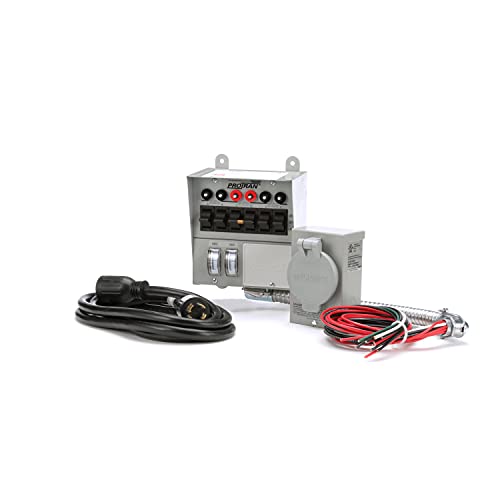
This 30-amp, six-circuit transfer switch is a compact option for smaller homes or limited back-up needs. It’s designed to be straightforward to operate and install with standard corded power sources. A practical choice when space and cost are primary constraints.
Best for: Smaller homes or occasional outages where a simple, cost-efficient switch is adequate. It’s easier to fit into existing panels and charging setups.
Limitation: Limited circuit capacity means fewer high-demand appliances can run simultaneously; plan circuits accordingly to avoid overloads.
Buying Guide: How To Choose The Right Transfer Switch
- Power capacity vs. loads: Match the switch rating to your home’s essential loads. Larger homes with high-draw appliances require higher amperage (50–100 A). Smaller homes can operate on 30 A or 60 A systems.
- Number of circuits: Consider how many circuits you need to back up. More circuits offer greater control but require a larger panel and wiring setup.
- Manual vs. automatic: Manual switches give simple operation and robust reliability. Automatic models switch automatically during outages but add complexity and cost.
- Outdoor vs. indoor installation: Outdoor-rated switches (NEMA 3R) tolerate weather; indoor units are simpler but require coverage from the elements.
- Inlet and meter integration: Some kits include built-in inlets and watt meters for real-time load monitoring, which helps prevent generator overloads.
- Compatibility with energy storage: If you plan to pair with batteries or solar, look for switches compatible with stored-energy operation and hybrid grids.
- Installation considerations: Ensure panel space, wiring gauge, and breaker compatibility align with your home’s electrical system. Professional installation is advised for high-capacity or outdoor setups.
Frequently Asked Questions
- What does a transfer switch do? It safely routes power from a generator to your home and prevents backfeeding into the utility grid.
- Do I need a professional to install a transfer switch? For high-capacity or outdoor installations, professional wiring is recommended to meet electrical codes and safety standards.
- Can I use any generator with a transfer switch? Compatibility depends on the switch’s amperage and outlet configuration. Check generator output and inlet compatibility before purchase.
- What is a NEMA 3R enclosure? It is a weatherproof enclosure rated for outdoor use that protects electrical components from rain, dust, and corrosion.
- Is a manual transfer switch safer than an automatic one? Both are safe when used correctly. Manual switches reduce complexity and potential electronic failure points, while automatic switches offer immediate response during outages.
- How many circuits should I back up? Prioritize essential circuits like refrigeration, lighting, heating/cooling, and medical needs. Start with a smaller setup and expand as necessary.