Best Pipe Heat Trace Cables for Freeze Protection and Safe Operation
Winter weather can threaten water lines, but modern pipe heat trace cables provide efficient, self-regulating protection. This guide highlights five top options for both metal and plastic pipes, focusing on safety, energy efficiency, and reliable freezing prevention. Each product adapts heat output to temperature, reducing energy waste while keeping water flowing down to extreme subzero conditions. Read on to compare features, installation notes, and how to choose the right cable length, power, and certification for your home or business needs.
| Product | ||||
|---|---|---|---|---|
| HEATIT 60ft Pipe Heat Cables | 60 ft | 3 W/ft | ETL Listed | Pipes up to 60 ft, general freeze protection |
| MAXKOSKO 6 Ft Heating Cable | 6 ft | 5 W/ft | UL Full-Cable Certified | Short runs, tight spaces |
| HEATIT 30ft Self-Regulating Cable | 30 ft | 3 W/ft | ETL Listed | Medium-length residential lines |
| Wufoty 3FT~160FT Heat Tape | 3–160 ft | 5 W/ft | UL Full-Cable Certified | Flexible length options, broad compatibility |
| SZFY 100FT Heat Tape | 100 ft | 5 W/ft | UL Certified (overall) | Long runs, roof, gutter, farm use |
HEATIT 60ft Pipe Heat Cables

The HEATIT 60ft cable is designed for metal and plastic pipes, providing 3 W/ft of energy-efficient heat. It maintains water flow at temperatures as low as -40°F and includes a 2 ft power cord with multiple length options. The product emphasizes full ETL certification across the entire heating cable, not just the plug, ensuring compliance and safety in North American installations. It is backed by liability insurance for added buyer confidence. This cable suits longer pipe runs and projects seeking robust, certified protection.
MAXKOSKO 6 Ft Heating Cable

The MAXKOSKO unit provides 5 W/ft with self-regulating heating technology, preventing overheating while protecting metal and plastic pipes. The kit includes a 3 ft power cord, and the design supports straight, spiral, or overlapped installations for versatile routing. It is UL full-cable certified, with a focus on energy efficiency and rapid response to freezing conditions down to -40°F. It is well-suited for shorter runs, tight spaces, or areas where a compact heater is required.
HEATIT 30ft Self-Regulating Cable
This 30 ft option mirrors the 60 ft model with 3 W/ft, offering ETL-listed safety for the entire heating cable. It includes a 2 ft power cord and supports pipe materials from copper to PVC. The self-regulating element reduces energy usage by turning on as temperatures dip, helping to keep water flowing during cold snaps. As with other HEATIT cables, complete certification is emphasized to ensure safety and performance across installations.
Wufoty 3FT~160FT Heat Tape

The Wufoty line offers extensive length options from 3 to 160 ft and 5 W/ft, with UL full-cable certification. It uses a copper core and high-density heating to keep pipes 10–15°F above ambient in -40°F conditions. The design includes a thermostat for automatic on/off cycling and metal retainers to secure the heater along the pipe, addressing common installation challenges in longer runs and exposed environments.
SZFY 100FT Heat Tape
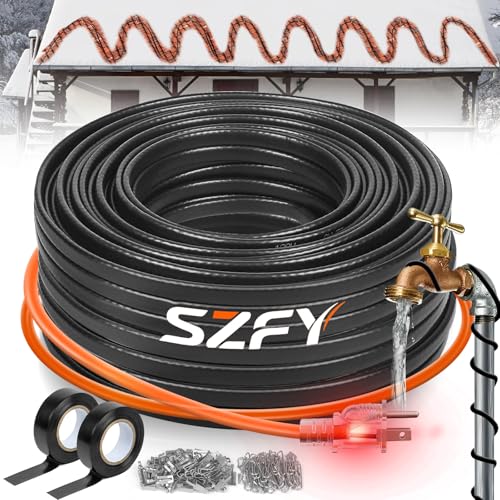
SZFy’s 100 ft heat tape emphasizes ultra-high heating efficiency, claiming 18 W/ft in testing and a copper wire core for rapid response. The construction includes multiple rubber layers around copper and a durable jacket for UV and chemical resistance. It ships with a 5 ft grounded plug and offers long-range coverage suitable for roofs, gutters, farms, and extended pipe runs. With extensive length, it is ideal for larger installations needing consistent heat along lengthy pipes.
Buying Guide
When selecting a pipe heat trace cable, consider these key factors:
- Length vs. pipe run: Match cable length to the total pipe distance plus a little extra for splices or turns.
- Wattage per foot: Higher wattage provides faster warm-up but increases energy use; choose 3–5 W/ft based on pipe length and climate.
- Material compatibility: Ensure the cable works with metal and/or plastic pipes in your system (copper, PVC, stainless steel, etc.).
- Certification: Look for full-cable ETL/UL certification rather than plug-only certification for safety and compliance.
- Installation method: Straight, spiral, or overlapped wrapping methods may affect performance and ease of installation; plan for secure mounting with metal retainers if needed.
- Thermostat control: Self-regulating cables with built-in thermostats minimize energy use by activating only as temperatures fall.
- Durability: Jackets and insulation should resist UV, moisture, and chemicals for outdoor or exposed installations.
- Insurance and warranty: Check product liability coverage and manufacturer warranties for peace of mind.
For residential needs, short to medium runs (3–60 ft) with 3 W/ft cables provide reliable protection and energy efficiency. For longer runs or outdoor exposure, longer cables such as 100 ft or 160 ft options can cover extensive piping, but verify power supply availability and outlet proximity. Always follow installation guidelines and ensure complete certifications for safety.