Best Phosphate Filter for Ice Machines and Water Systems
When protecting ice machines and linked water systems, phosphate filtration helps prevent mineral scale, corrosion, and downstream damage. The following selections prioritize hexametaphosphate crystal cartridges and dual-function media that combine scale inhibition with taste and odor reduction. This guide compares five top options, focusing on compatibility with ice makers, ease of installation, and maintenance needs.
| Product | Brand | Core Benefit |
|---|---|---|
| Pentair PCC212 Phosphate Water Filter | Pentek | Hexametaphosphate crystals for scale and rust control |
| Pentair PCC-1 Phosphate Water Filter | Pentek | Gentle, slow-dissolving phosphate protection |
| Pentair PCC218 Phosphate Water Filter | Pentek | Scale prevention for multiple equipment types |
| Omnipure Q5486 Q-Series GAC and Phosphate Water Filter | Omnipure | Dual-action filtration: carbon plus crystalline phosphate |
| Neo-Pure Inline 2×6 Phosphate Filter | Neo-Pure | Inline filtration with GAC and phosphate media |
Pentair PCC212 Phosphate Water Filter

The PCC212 cartridge uses hexametaphosphate crystals to inhibit lime scale and rust buildup in ice machines and other equipment. Its 10-inch replacement format fits standard #10 housings, making it a straightforward upgrade for many under-sink and point-of-entry systems. The media reduces scale formation while addressing common corrosion concerns, supporting reliable ice production and equipment longevity. This filter is commonly recommended for ice makers, vending machines, water heaters, and air-conditioning components, aligning with typical commercial and residential filtration needs.
Pentair PCC-1 Phosphate Water Filter

The PCC-1 cartridge is a 10-inch hexametaphosphate crystal replacement designed to inhibit scale and rust in a variety of water-processing equipment. It is particularly suitable for ice makers, coffee machines, vending equipment, water heaters, and air conditioning systems. The slow-dissolving phosphate crystals provide ongoing protection, helping to maintain appliance efficiency and reduce maintenance frequency. The unit fits standard #10 filter housings, making it a versatile option for many installations.
Pentair PCC218 Phosphate Water Filter

The PCC218 is another 10-inch cartridge model designed for hexametaphosphate crystal delivery to prevent scale deposits and corrosion in ice makers, coffee machines, and related equipment. Its broad compatibility with common filter housings makes it suitable for both residential and light commercial setups. As with other phosphate options, the filter aims to minimize mineral buildup and maintain system efficiency while supporting consistent ice production.
Omnipure Q5486 Q-Series GAC and Phosphate Water Filter
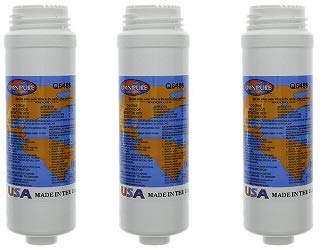
The Q5486 combines granular activated carbon with crystalline phosphate for dual-action filtration. This makes it effective at removing chlorine, tastes, and odors while inhibiting scale buildup in ice makers, coffee machines, distillers, and water heaters. The compact 2.5 by 8-inch design fits under-sink spaces, and a 6-month service interval supports predictable maintenance, which is valuable in busy commercial environments such as cafes and small restaurants. The unit’s slow-dissolving phosphate helps maintain consistent equipment performance.
Neo-Pure Inline 2×6 Phosphate Filter

The Neo-Pure inline filter provides a 6×2 inch design suitable for inline filtration in residential and small commercial water systems. Its media includes premium granular activated carbon and phosphate components that help reduce tastes and odors while inhibiting scale and sediment downriver. The inline configuration supports straightforward installation in line with most ice makers and beverage equipment, offering compatibility with a broad range of filter housings that service ice-making systems.
Buying Guide: Key Considerations for Phosphate Ice-Machine Filters
- Filter media and mechanism: Look for cartridges that combine phosphate crystals with carbon or other filtration media to balance scale control with taste and odor improvements.
- Compatibility and fit: Confirm the cartridge size (often 10-inch or 2.5″ by 8″), housing type, and connectivity (1/4″ or 1/2″ fittings) to ensure seamless installation with your ice maker.
- Flow rate and pressure: Ensure the filter supports your system’s flow rate and pressure. Ice machines typically require steady low to moderate flow with consistent filtration.
- Maintenance interval: Many phosphate filters specify service life, commonly around 6 months for commercial settings. Plan for scheduled changes to avoid pressure drops or filter bypass.
- Effect on TDS and taste: Phosphate filters reduce scale and odors but may not lower total dissolved solids. If TDS reduction is critical, pair with a separate taste/odor or carbon stage.
- Installation ease: Inline and under-sink options vary in complexity. Preference for twist-tap valves or quick-connect fittings can simplify maintenance and reduce spill risk.
- Durability and build: Aluminum or robust housings resist moisture exposure in ice-making environments, improving long-term performance.
- Cost of ownership: Consider cartridge price, availability, and expected service intervals to estimate ongoing costs for your operation.
- Application scope: While many filters target ice machines, verify suitability for related equipment (coffee makers, water heaters, vending machines) to protect broader systems.
- Certifications: NSF/ANSI certifications for taste and odor reduction, along with chlorine removal, may be important for compliance and consumer expectations.
Across the selections, a common goal is preventing mineral scale inside ice machines and auxiliary equipment, which can dramatically impact efficiency, ice quality, and maintenance frequency. When choosing, evaluate the specific equipment in use, the water supply characteristics (hardness, chlorine content), and the desired balance between scale control and taste improvement. For facilities with multiple appliances, a dual-media approach—combining carbon with phosphate—often yields the most comprehensive protection while maintaining clean, clear ice.