Best 48V Phantom Power Supply Options for Condenser Microphones
Looking for a reliable 48V phantom power supply for condenser mics? This guide highlights five solid choices, each best suited for different setups: home studios, portable recording, multi-mic rigs, and on-the-go locations. Read on to compare features, compatibility, and what makes each option stand out. The following table summarizes the key details to help you decide quickly.
| Product | Best For | Power Type | Channels | Notes |
|---|---|---|---|---|
| Neewer 1-Channel 48V Phantom Power Supply | Home studios with single-mic setups | AC Powered | 1 | Includes XLR cable |
| Xvive P1 Phantom Power | Remote or portable recording | Rechargeable Battery | 1 | Up to 40 hours; compact |
| Mackie M48 48V | Compact desktop rigs | AC or 9V Battery | 1 | Transparent, noise-free |
| FIFINE PM48 | Travel-friendly setups | USB-C power | 1 | Wide compatibility |
| StudioMan PS200 | Two-mic studio or podcasting | AC Powered | 2 | Dual-channel, reliable power |
Neewer 1-Channel 48V Phantom Power Supply

Best for solo vocal and instrument mics in a small home studio. The Neewer unit delivers reliable 48V phantom power and routes the mic signal to a sound card via a compact, durable plastic housing. It uses a universal XLR input/output setup compatible with most condenser mics and recording gear. Includes one high-quality XLR cable for immediate use. This single-channel design is straightforward for users who need dependable power with minimal setup.
Who it’s best for: beginners or desk setups requiring a simple, compact phantom power solution. Why chosen: proven, simple operation and included cable reduce extra purchases. Caution: limited to one mic channel; not ideal for multi-mic rigs without a second unit.
Xvive P1 Phantom Power
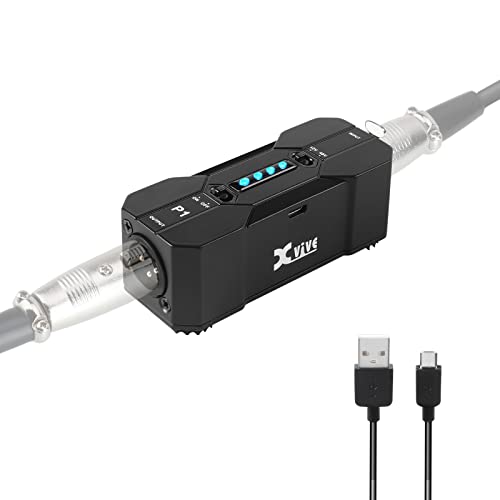
Best for portable recording and on-location work. The Xvive P1 is a rechargeable phantom power supply that runs on an internal battery, offering up to 40 hours of operation. Its small footprint (1.7” x 1.3” x 4.1”) and 12V/48V operation fit most condenser mics and devices needing phantom power. It charges in about 2.5–3 hours and is ideal for home studios, podcasts, streaming, and remote shoots.
Who it’s best for: mobile creators and field recording. Why chosen: eliminates power outlets during shoots; battery life is long enough for extended sessions. Caution: ensure battery life aligns with your recording duration, and plan for recharging during longer sessions.
Mackie M48 48V Phantom Power

Best for compact desktop studios needing clean, noise-free power. Mackie M48 provides XLR input and output with transparent operation. It can be powered by the included AC adapter or a 9V battery, offering flexible power sources for different environments. The unit emphasizes quiet performance, making it suitable for critical vocal and acoustic mic setups.
Who it’s best for: small studios and mobile rigs requiring a dependable, space-efficient phantom supply. Why chosen: simple two-power-source option adds reliability. Caution: battery operation may be less convenient for long studio sessions without frequent replacements or charges.
FIFINE PM48

Best for travel-friendly setups needing universal compatibility. FIFINE PM48 uses a standard 48V supply with USB-C connectivity for power delivery to devices and power stability. It supports a broad range of condenser mics and is noted for its sturdy metal construction combined with compact form. This model suits podcasters and field performers who need easy USB-C powered phantom support.
Who it’s best for: mobile podcasters and performers who rely on USB-C devices. Why chosen: broad compatibility and convenient USB-C power. Caution: exposed USB-C power components may require careful handling in rugged environments.
StudioMan PS200

Best for multi-mic studios or podcast setups requiring two mic channels. The StudioMan PS200 features dual XLR input/output and a switchable 12V/24V/48V power supply. It’s designed for on-desk or portable use, with a durable build and dedicated channels for MIC-1 and MIC-2. The DIR function allows passthrough when mixers provide phantom power, adding flexibility for alternative power arrangements.
Who it’s best for: dual-mic recording environments such as podcasts or small music projects. Why chosen: two-channel capability simplifies multi-mic configurations. Caution: larger footprint than single-channel options; ensure space fits your workflow.
Buying Guide: Key Considerations For 48V Phantom Power
- Number of channels: Do you need single-channel power or a dual/multi-mic setup? Choose accordingly to avoid bottlenecks in your recording chain.
- Power source: AC-powered units are steady; battery-powered models offer portability. Consider your typical recording environment and preferred workflow.
- Compatibility: Verify XLR compatibility with your condenser mics and any accessories (mixer, audio interface, etc.).
- Build and portability: For on-the-go use, prioritize compact, rugged designs with protective housings.
- Additional features: Look for indicators (LED), passthrough options, and ease of use (on/off switches) that fit your setup.
- Interference and noise: Models with built-in filtering and stable voltage delivery minimize noise in the signal path.
FAQ
- What does 48V phantom power do? It provides a consistent power supply to condenser microphones so the internal circuitry can operate correctly.
- Do I need phantom power for dynamic mics? No, most dynamic mics do not require phantom power, though some preamps use it for other internal reasons.
- Can phantom power damage a microphone? When used with compatible mics and proper cabling, phantom power is safe; always ensure your mic supports 48V power.
- Is USB-C power enough for all mics? USB-C powered units support most standard condensers, but verify the mic’s specific power requirements.
- Should I buy a dual-channel phantom supply? If you frequently run two condenser mics simultaneously, a dual-channel model can simplify setup and airflow.
- What’s the best option for travel? Battery-powered or USB-C powered compact units are ideal for mobile use and on-location work.