Best pH Meters for Liquids: Accurate, Fast Reads for Food, Water and More
Finding the right pH meter for liquids means balancing accuracy, ease of use, and durability across kitchen, home, and hobbyist projects. The following five models are designed to measure pH in water, fermentation liquids, sauces, soups, and nutrients in hydroponics or aquariums. Each option includes a spear or standard probe, practical calibration features, and reliable readings to help you maintain quality and safety in liquid samples.
Summary table of chosen products:
| Product | Brand | pH Range / Accuracy | Best For | Key Feature |
|---|---|---|---|---|
| YINMIK Digital pH Meter for Food | YINMIK | 0.00-14.00 pH; ±0.1 | Sourdough, Fermentation, Cosmetics | Spear probe for solid/liquid samples |
| VIVOSUN Digital pH Meter | VIVOSUN | 0.01 pH resolution | Hydroponics, drinking water, pools | UL certified, pocket-sized with backlit LCD |
| GIDIGI pH Meter for Food | GIDIGI | 0.00-14.00 pH; 0.01 pH | Fermentation, sauces, dairy | Cal kit included; spear sensor; app connectivity |
| Smart pH Meter for Food, GIDIGI pH03A | GIDIGI | 0.00-14.00 pH; 0.01 pH | Food testing, canning, fermentation | Smart app data storage |
| YINMIK Water pH Meter (4-in-1) | YINMIK | 0.00-14.00 pH | Hydroponics, aquarium, drinking water | 4-in-1: pH, EC, TDS, temperature |
YINMIK Digital pH Meter For Food

The YINMIK model features a spear pH probe designed for testing sourdough fermentation and semi-solid samples. Its broad pH range (0.00-14.00) and ±0.1 accuracy support precise monitoring during bulk fermentation, sausages, salami, and even cosmetic testing. The spear tip enables quick insertion into samples without creating slurries, delivering stable readings once the probe equilibrates. This versatility makes it a practical choice for both culinary applications and occasional cosmetic measurements.
Key considerations for this model include probe durability in wet environments, simplicity of calibration, and the ability to test a variety of liquid and semi-solid samples. Users should note that proper cleaning between sample types helps maintain accuracy and prolongs probe life. The compact form is convenient for home kitchens and small labs alike.
VIVOSUN Digital pH Meter

This compact pH tester is designed for home and commercial use across water, pools, spas, and hydroponics. Its 0.01 pH resolution ensures precise readings, while the backlit LCD makes results easy to read in various lighting conditions. The meter’s pocket-size design and lightweight build support easy transport between tanks, kitchens, and labs. Standard calibration procedures keep measurements consistent, especially when monitoring nutrient solutions in hydroponic systems or ensuring safe drinking water.
Considerations for using this meter include battery life, the impact of temperature on readings, and the need to calibrate with fresh buffers for reliable results. Its simple interface suits both beginners and experienced users who want a straightforward tool for frequent measurements across multiple liquid environments.
GIDIGI pH Meter For Food
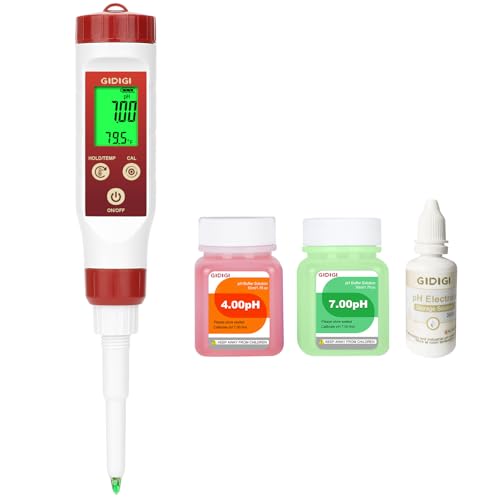
The GIDIGI food pH meter emphasizes reliability for fermentation projects such as sourdough, hot sauces, salsa, dairy, and beverages. It includes a calibration kit with 7.00 and 4.00 buffers, plus an electrode protection solution to extend probe life. The spear probe supports testing semi-solid and liquid samples, and the device provides a clear digital readout that’s easy to interpret in busy kitchen or lab scenes. The kit’s bundled calibration solutions reduce setup friction, helping ensure accurate baselines from the start.
Strengths of this model include its comprehensive calibration kit and the ability to store and compare data with consistent readings. While testing a wide range of foods, consistent calibration reduces drift and improves confidence in pH decisions during fermentation or safety checks.
Smart pH Meter For Food, GIDIGI pH03A

The GIDIGI pH03A model introduces smart features that connect to a mobile app, enabling automatic data storage, trend monitoring, and notes that can be shared with others. The meter measures 0.00-14.00 pH with 0.01 pH resolution and also captures temperature readings, which is valuable when testing foods with variable conductivity or heat exposure. The upgraded glass electrode, faster data transmission, and app-based data management support more controlled fermentation and canning workflows. It’s particularly useful for home canners and hobbyists tracking fermentation progress over time.
Users should consider whether app connectivity adds meaningful value to their workflow and whether they want to maintain a digital log of measurement history for quality control or educational purposes. The spear probe continues to support solid-liquid testing, making it a versatile kitchen and fermentation tool.
YINMIK 4-in-1 Water pH Meter

This multifunction instrument combines pH, EC, TDS, and temperature measurements in a single handheld unit. It’s designed for hydroponics, reservoir monitoring, brewing, and aquarium maintenance. The inclusion of EC and TDS readings helps users balance nutrient solutions and water quality, while temperature data improves interpretation of pH readings in dynamic environments. The device ships with calibration liquids and six buffers, enabling ongoing accuracy for extended use in home labs or classrooms.
Considerations for this model include ensuring that EC and TDS calibration materials align with your testing needs, and recognizing that more parameters can increase device maintenance. The 4-in-1 approach is valuable for users who want a single tool covering multiple aspects of water quality.
Divolight Digital PH Meter

The Divolight pH meter is designed for household drinking water, pools, aquariums, RO systems, spa, and hydroponics. It emphasizes straightforward use, with a calibration mode that supports common standards (pH 4.00, 7.00, and 9.18) for reliable calibration. A simple two-step process and a stable probe enable easy measurements after submersion and gentle stirring. This model suits users who want a reliable, low-friction tool for quick checks in a range of liquid environments.
Practical considerations include calibration frequency, ensuring you have fresh calibration solutions, and verifying that the probe stays clean between samples to prevent drift. It’s a solid option for homeowners who test water quality across multiple contexts without needing extensive data logging.
Buying Guide: What To Look For In A Liquid pH Meter
- Accuracy and range: Look for readings in the 0.01 pH resolution range with a broad 0.00-14.00 pH span for versatility in food, water, and fermentation contexts.
- Probe design: Spear probes excel with semi-solid and viscous samples, while flat or rod probes are versatile for liquids. Consider durability and ease of cleaning.
- Calibration: Kits with 4.00, 7.00, and 10.00 buffers help ensure accuracy across sample types. Some models include storage solutions to extend electrode life.
- Temperature compensation: ATC or automatic temperature compensation improves accuracy in fluctuating temperatures common in kitchens and hydroponics.
- App connectivity: Some meters connect to mobile apps for data logging and sharing. This can be beneficial for long fermentation projects or scientific tracking.
- Multi-parameter options: If you test water for irrigation or hydroponics, meters that also measure EC, TDS, or temperature can be valuable, reducing the need for multiple devices.
- Durability and ease of use: Waterproofing, sturdy housings, and straightforward calibration menus help ensure reliable performance in busy environments.
- Maintenance: Regular cleaning and proper storage (with electrode storage solutions) extend probe life and keep readings stable over time.
In summary, the best pH meter for liquids balances precision with practicality across your typical use cases—whether you’re fermenting sourdough, brewing, testing pool water, or maintaining a hydroponic setup. Each model above provides distinct advantages, so select based on your primary setting, preferred features, and how much data you want to track over time.