Best PDU With 208V Input and 120V Output for Data Centers and Racks
When searching for a PDU that accepts 208–230V input and delivers 120V outputs, choose units designed for reliability, easy mounting, and correct outlet configurations for servers and network gear. The top options below are best for small to mid-size rack environments, IT closets, and telecom setups. This guide highlights who each product is best suited for, along with clear considerations to help you decide.
| Product | Brand | Best For | Key Outlets |
|---|---|---|---|
| CyberPower PDU30BHVT8R | CyberPower | Small data closets needing 10 ft cord and flexible 1U mounting | 6 C13, 2 C19 rear |
| Vertiv VP0N3100 | Vertiv | Balanced 12-outlet configuration for mixed gear | Combination C13/C19 |
| APC AP7541 | APC | Tool-less 0U or 1U installation with multiple outlets | 20 C13, 4 C19 |
| Eaton Metered PDU | Eaton | 2U metered distribution for power monitoring | L6-30P input, 10 ft cord |
Source data for each option reflects configurations commonly requested in 208–230V environments. Use the comparison cues in each product section to decide which unit best fits your rack depth, available space, and the number of devices you need to power from a single PDU.
CyberPower PDU30BHVT8R Basic PDU
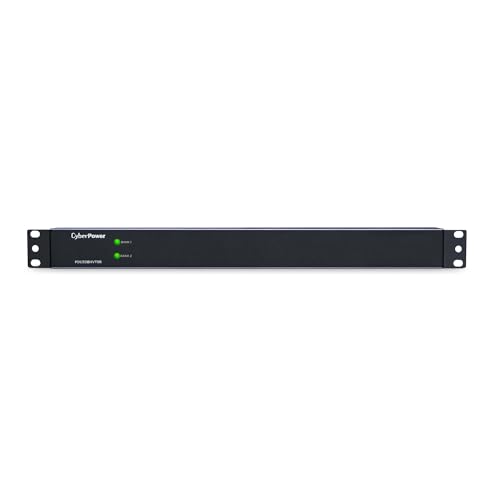
Model: PDU30BHVT8R. Brand: CyberPower. Input: 208–230V at 30A, derated to 24A. Output: Six IEC-320 C13, two IEC C19 outlets. Cord: 10 ft power cord. Mounting: 0U vertical or wall mount; 1U horizontal, vertical, wall mount options. This unit is best for compact rack rooms needing robust power distribution with flexible mounting options for a mix of servers and network gear. Consider this when your 208V supply is common and you need reliable 120V outputs with a shorter footprint.
Best for: Small data closets or cabinet depths where 1U or 0U mounting flexibility is essential.
Why chosen: Combines multiple outlet types (C13/C19) with a twist-lock input for stable 208V supply and a compact footprint.
Caution: Ensure your equipment’s outlet type matches the PDU’s available receptacles; plan for enough C13/C19 load distribution to avoid overloading the 24A derated limit.
Vertiv VP0N3100 30A PDU

Model: VP0N3100. Brand: Vertiv. Input: 120V/208V options with 30A capability. Outlets: 12 C13-C15 combination outlets. Mounting: Horizontal rack-mount capable. This PDU suits environments where a mix of C13 and C15 receptacles are required to support servers, storage devices, and networking gear. It’s best when you need a modular approach to outlet types while maintaining steady 120V or 208V distribution.
Best for: Data rooms that use a blend of devices requiring different outlet styles, especially where space is a concern in horizontal mounting.
Why chosen: The combination C13/C19 approach supports devices with varying receptacle needs, increasing versatility in compact racks.
Caution: If your devices primarily need C19 outlets, verify the exact receptacle mix to ensure compatibility with your gear.
APC AP7541 Basic PDU

Model: AP7541. Brand: APC. Input: L6-30P 208V; 0U mounting with tool-less installation. Outlets: 20 C13, 4 C19. This option is designed for 0U and 1U mountings, offering a robust power distribution framework ideal for small to mid-sized racks that require dense outlet configurations. Best used when your deployment includes a mix of servers and network devices with a need for simple, tool-less mounting.
Best for: Environments needing concise, tool-free installation with a diverse outlet set for a compact rack footprint.
Why chosen: The combination of many outlets and tool-less mounting simplifies installation and reduces downtime for cable management.
Caution: Verify that the 208V input matches your facility supply as mismatches can limit performance or require an up-front step-down solution.
Eaton Metered Input Rack PDU

Model: Metered Input Rack PDU, 2U. Brand: Eaton. Input: L6-30P; 10 ft cord. Load: Metered distribution with 200–240V range. Mounting: 2U profile for larger racks. This unit is best for environments that require active power measurement at the outlet level to monitor and manage load, especially in more demanding rack configurations with multiple devices.
Best for: Racks that demand power monitoring and detailed load data for capacity planning and energy efficiency.
Why chosen: The metered design provides visibility into power usage, enabling proactive management of critical devices in larger rack setups.
Caution: The 2U form factor may limit deployment in shallower racks; ensure adequate depth and clearance for installation.
Buying Guide: Choosing the Right 208V Input, 120V Output PDU
What should you consider when selecting a PDU for 208V input and 120V outputs?
- Count the devices you’ll power and match to C13, C19, or mixed receptacles. A larger mix provides flexibility, but verify your devices’ plug requirements.
- 0U/1U versus 2U and horizontal versus vertical mounting affects space use and airflow. Choose based on rack depth and cabinet layout.
- Confirm the facility’s supply (208V/30A needs) and ensure the cord length fits your rack location without strain on the plug.
- Metered PDUs show real-time load. This helps prevent overloading and supports capacity planning in growing racks.
- Look for units built for data-center-grade environments; twist-lock inputs can offer secure connections in high-density racks.
Frequently Asked Questions
- What is the difference between C13 and C19 outlets? C13 is for lower-power devices, while C19 supports higher current draws. Check device specifications to avoid overloading a single outlet type.
- Why choose a metered PDU? Metered PDUs provide load data, helping prevent overloading and enabling better power management in multi-device racks.
- Is 208V input common in data centers? Yes, many data-center and telecom environments use 208V for efficiency and distribution reasons.
- What mounting option should I pick? Choose based on available rack depth and whether you need front-access vs. under-mhelf mounting, plus cable management preferences.
- Can a PDU be configured for 120V outputs from 208V input? Yes, many PDUs are designed to provide 120V outlets from a higher-voltage input, but verify each model’s outlet ratings and derating if applicable.
- Do I need a twist-lock input plug? Twist-lock inputs are common in professional PDUs for secure connections in dynamic environments but ensure your power source supports the connector.