Best Outdoor Fire Alarm Bell Solutions for Noisy Environments
Find reliable outdoor fire alarm bells that cut through warehouse, factory, or campus noise. This guide highlights five top options, suited for different voltages, environments, and installation needs. Best for facilities needing loud, durable evacuation signals and for buyers balancing cost with reliability. This article helps facility managers, safety officers, and maintenance staff choose the right bell for outdoor or high-noise settings.
| Product | Brand | Voltage / Power | Key Benefit | Best For |
|---|---|---|---|---|
| Safeguard Supply 6 Inch 12V DC Loud Fire Alarm Bell | Safeguard Supply | 12V DC | Over 85dB, easily connects to ERA receivers | Small to mid-size noisy spaces, integration with existing 12V systems |
| Red Fire Alarm Bell 10 Inch 120 Volt | ARGCO | 120V AC | Large, unmistakable signal; long service in schools/hotels | Public-facing areas, large rooms, schools |
| Fire School Safety Fire Alarm Bell, 24V | Sonew | 24V | High decibel output (>90dB) and rugged construction | Educational facilities, outdoor entrances, rugged sites |
| CB-6B 95dB 5.9in Electric Round Fire Alarm Bell | Hopoint | AC 110V | Clear 95dB alarm; aluminum base for durability | Industrial, construction, and factory settings |
| Electric Round Alarm Bell, 150mm / 5.9in, AC110V | Yosoo | AC 110V | Reliable, durable aluminum base; up to 95dB | Industrial and construction environments |
Safeguard Supply 6 Inch 12V DC Loud Fire Alarm Bell

12V DC operation makes this bell compatible with smaller, existing 12V notification networks. It produces a powerful ringing sound rated over 85dB, designed to cut through warehouse and industrial noise. Best for smaller facilities or as a secondary alert in noisy environments. Choose this if your system uses 12V outputs and you need straightforward integration with Safeguard Supply ERA receivers. Caution: lower voltage may limit range in extremely loud areas or outdoor cold conditions.
Red Fire Alarm Bell 10 Inch

This 10-inch, 120-volt bell is commonly used in schools and hotels, offering a broad, attention-grabbing signal. It’s a good fit for larger indoor or semi-outdoor areas where a loud, public-facing bell is beneficial. Best for facilities needing a proven, long-servicing bell with standard 120V power. Be mindful of the correct voltage in your installation to avoid compatibility issues.
Fire School Safety Fire Alarm Bell, 24V
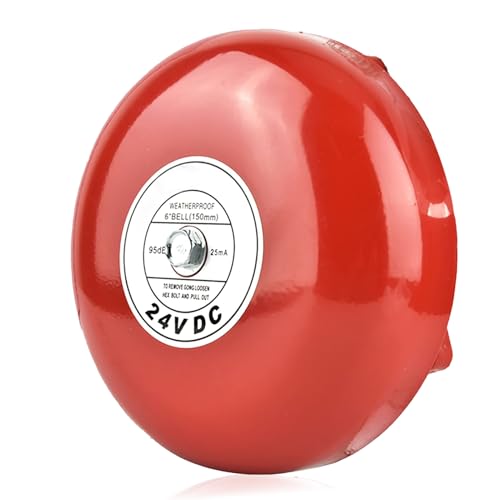
With a decibel level above 90dB and weatherproof, rugged construction, this bell is designed for outdoor or semi-outdoor school and campus settings. The 24V power requirement aligns with many building alarm networks and ensures stable operation in varying temperatures. Best for institutions requiring high visibility, durable metal hardware, and reliable performance in challenging environments. Use caution in environments where weatherproofing of the electrical circuit is not up to standard.
CB-6B 95dB 5.9in Electric Round Fire Alarm Bell

Equipped with a rugged aluminum base, this 110V bell promises durability and a loud, clear signal up to 95dB. It suits industrial settings, elevators, and factory spaces where a robust floor or wall-mounted bell is required. Best for environments where a sturdy metal shell supports frequent use. Caution: ensure voltage compatibility with existing electrical infrastructure to avoid mismatch.
Electric Round Alarm Bell, 150mm / 5.9in

Designed for industrial and construction uses, this 110V alarm bell features a durable aluminum base and a maximum output near 95dB at 1 meter. Its design aims for low electromagnetic interference, supporting stable operation in demanding sites. Best for users needing reliable performance and a sturdy, long-lasting bell. Choose this if you require a robust, high-decibel signal with durable construction.
Buying Guide: Key Considerations for Outdoor Fire Alarm Bells
What voltage fits your system?
Outdoor alarm bells come in 12V, 24V, and 110-120V formats. Select a model that matches your existing power supply or control panel. Lower-voltage bells can be easier to integrate with doorbell or notification networks, while higher-voltage bells are common for larger spaces and public-facing alarms.
How loud should the bell be?
Decibel ratings vary from 85dB to 95dB or more. In busy warehouses or outdoor campuses, aim for at least 90dB at the source to ensure the signal is audible over ambient noise. Consider local regulations and hearing protection policies when choosing decibels.
Durability and weather resistance
Outdoor or semi-outdoor use requires rust-resistant housings, weatherproofing, and robust mounting. Aluminum bases and stainless or enamel finishes help resist corrosion in varying climates. Check for IP ratings or weatherproof labels if exposure to rain or dust is likely.
Ease of installation and compatibility
Consider whether the bell is designed for plug-and-play with standard power sources or requires separate wiring and enclosures. If integrating with existing alarm networks, verify compatibility with controllers, receivers, and existing 12V or 24V outputs to avoid voltage mismatches.
Maintenance and service life
Opt for bells with proven durability and simple maintenance. Availability of spare parts, ease of mounting, and a sturdy construction often correlate with longer service life in high-use or outdoor environments.
Application context
For schools, hospitals, or hotels, prioritize clearly audible signals with secure mounting and aesthetic considerations. For warehouses and factories, choose rugged, high-visibility devices with strong aluminum or steel components and high decibel outputs.
Safety and compliance
Ensure the selected bell complies with local electrical codes and standards. Check voltage requirements and installation guidelines to maintain safe operation in crowded spaces and near exits.
FAQ: Outdoor Fire Alarm Bells
- What is the typical loudness of outdoor fire alarm bells? Most durable outdoor bells range from about 85dB to 95dB at close range, with higher-decibel models useful in very noisy environments.
- Can these bells be wired into existing alarm systems? Yes, many models are designed to connect with 12V, 24V, or 110V systems and can work with compatible receivers or controllers.
- Are outdoor bells weatherproof? Many are built with weather-resistant housings and metal bases; verify IP rating and enclosure materials for outdoor use.
- What voltages should I pick for a large outdoor space? For larger spaces, 110V bells are common, offering strong audible signals across big areas, while 24V or 12V units suit smaller outdoor zones or integrated networks.
- Is higher decibel always better? Higher decibels improve audibility in noisy environments, but consider hearing safety, local codes, and the time it takes to evacuate people safely.
- What installation considerations matter? Ensure proper mounting, secure wiring, weatherproof enclosures, and compatibility with the building’s electrical layout to prevent shorts or false alarms.