Best Off Grid Solar Power System Kits for Reliable Home Backup
If you’re evaluating off grid solar power systems, these five kits provide scalable energy for homes, cabins, RVs, and remote sheds. Each option targets different use cases—from full home power in 120V/240V split-phase setups to compact RV-ready kits. This guide highlights who each kit is best for, plus practical considerations to help you choose. A compact buyer’s table follows the introduction for quick comparison.
| Product | Typical Use | Output Style | Best For |
|---|---|---|---|
| ECO-WORTHY 10KW Output 9.36KWH Off Grid System | Home, shed, cabin, farm backup | High-capacity inverter + 12/120/240V | Large power needs & high daily use |
| ECO-WORTHY 10000W Complete Off-Grid Kit | Home backup with scalable storage | 10kW inverter, 10620W PV, 32.2kWh LiFePO4 | Max daily usage with expansion potential |
| Renogy 400W Premium Kit | Small to medium off-grid installs | MPPT controller, 400W panels | Easy setup and reliable daily output |
| ECO-WORTHY 48V LiFePO4 Storage System | Home backup, mixed energy storage | 10kW hybrid inverter + 48V LiFePO4 | Smart monitoring with strong safety features |
| ECO-WORTHY 800W RV Off-Grid Kit | RVs and small off-grid cabins | 800W kit with UPS charging | Portable, easy to install for travel use |
The following sections dive into each kit’s strengths, who should buy, and practical trade-offs. Each product section includes a direct, clickable Amazon link for quick access and a concise rationale to help you compare at a glance.
ECO-WORTHY 10KW Off Grid System Overview

This kit delivers up to 9.36KWh per day under 4 hours of sun, supporting 120V/240V AC output. It’s best for home, shed, or cabin environments needing reliable daytime power for appliances like refrigerators, TVs, and coffee makers. The system supports parallel expansion up to six units (60kW) and includes a WiFi module for remote monitoring. A caution: parallel operation requires careful wiring and compliance with local electrical codes.
ECO-WORTHY 10000W Complete Off-Grid Kit

This all-in-one system includes 10620W PV capacity and two 48V 314Ah LiFePO4 batteries with 32.2 kWh storage. It supports a 10kW continuous inverter with 120V/240V split-phase output and Bluetooth/WiFi monitoring. It’s best for households seeking scalable storage and strong daily energy generation. Consideration: the 15-unit parallel battery plan implies higher upfront complexity and wiring demands for very large setups.
Renogy 400W Premium Kit

This kit combines four 100W panels with an efficient MPPT charge controller and a complete mounting and wiring package. It’s best for individuals seeking a reliable, compact off-grid solution with straightforward setup and 22.5% panel efficiency. A limitation: lower total output means less headroom during cloudy periods or for high-energy appliances.
ECO-WORTHY 48V LiFePO4 Storage + Hybrid Inverter
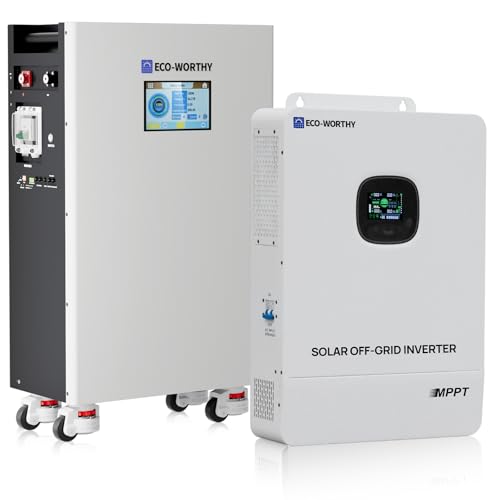
Pairing a 48V 314Ah LiFePO4 battery with a 10kW hybrid inverter, this kit delivers 16.1kWh usable energy. It is ideal for home backup with robust monitoring via RS485, CAN, and RS232, plus built-in WiFi/Bluetooth. It suits buyers desiring advanced BMS safety features and remote management. Caution: higher capacity systems require careful ventilation and temperature management to maintain safety and longevity.
ECO-WORTHY 800W RV Off-Grid Kit

This RV-oriented kit offers 800W of solar power and 3000W UPS inverter charging. It’s best for travelers and campers who want portable, plug-and-play energy for essential RV appliances. A potential limitation is its smaller solar array, which may require daily sun optimization or supplemental power on cloudy days.
Buying Guide: Key Considerations For Off-Grid Solar Power Systems
What should you evaluate when choosing an off-grid solar system?
- Power needs: Assess daily watt-hours and peak loads. Larger homes or multiple high-draw devices require bigger inverters and more storage.
- Storage capacity: LiFePO4 vs other chemistries affects safety, cycle life, and usable energy. High capacity storage supports longer outages.
- Inverter type: Pure sine wave inverters provide clean power for sensitive electronics; consider split-phase vs single-phase outputs for home loads.
- Expandability: If future growth is likely, choose systems that support parallel units and scalable batteries.
- Monitoring and connectivity: Built-in WiFi/Bluetooth, RS485/CAN, and mobile apps help track performance and battery health.
- Installation complexity: Some kits include complete mounting kits, wiring, and controllers; others are modular and may require professional wiring.
- Safety certifications: UL 1741/UL 9540A and regional compliance affect safety and market access.
- Maintenance: Battery longevity, temperature management, and periodic firmware checks impact long-term reliability.
Frequently Asked Questions
- What is the difference between 120V and 240V outputs in off-grid kits?
– 120V single-phase is common for small loads; 240V split-phase supports larger appliances and typical home usage. - Can I parallel multiple inverters?
– Yes, many kits allow parallel operation for higher power, but follow manufacturer guidelines and wiring standards. - Are LiFePO4 batteries safer for home use?
– LiFePO4 offers strong thermal stability and safety, with long cycle life; ensure proper BMS protection. - Do I need professional installation?
– For high-capacity, multi-unit, or grid-tied-adjacent configurations, professional installation is recommended to meet code requirements. - How do I monitor battery health remotely?
– Look for systems with Bluetooth/WiFi, RS485/CAN compatibility, and a companion mobile app for status alerts. - What maintenance is required?
– Regularly inspect wiring, monitor battery temperature, and update firmware as provided by the manufacturer.