Best Off-Grid Solar Panel Kit With Battery and Inverter for RVs
For RVers and outdoor enthusiasts, an all-in-one off-grid solar kit that includes panels, a battery, and an inverter offers reliable power on the go. This article reviews five popular, feature-rich options designed to power RV appliances, lights, and small electronics. Each kit bundles panels, a battery, a charge controller, and an inverter to minimize setup hassles and maximize energy independence.
Summary of chosen products
| Product | Brand | Main Power Output | Battery Type | Inverter |
|---|---|---|---|---|
| ECO-WORTHY 200W Complete Solar Kit for RV Off Grid | ECO-WORTHY | 200W solar, ~800Wh daily | 100Ah Li-ion | 1100W inverter |
| Renogy 200W Complete Solar Starter Kit | Renogy | 200W solar, ~1000Wh daily | 100Ah Li-ion | 600W inverter |
| ECO-WORTHY 12V 200W Kit With Bluetooth | ECO-WORTHY | 200W solar, ~0.8KWh daily; 2.56KWh capacity | 100Ah Li-ion | Inverter with Bluetooth/Wi‑Fi |
| ECO-WORTHY 200W 12V Complete Starter Kit | ECO-WORTHY | 200W solar, ~800Wh daily | 50Ah LiFePO4 | 600W inverter |
| VEVOR 200W 12V Complete Power Kit | VEVOR | 200W solar, up to 800Wh/day | 50Ah LiFePO4 | 800W inverter |
Below are five selected off-grid solar kits that balance ease of use, reliability, and power capacity for RV setups. Each section includes a quick overview, key features, and practical considerations to help you compare options side by side.
ECO-WORTHY 200W Complete Solar Kit for RV Off Grid

This all-in-one system provides two 100W solar panels, a 100Ah lithium battery, a 1100W inverter, and a 30A PWM controller, packaged for straightforward RV installation. It is designed to deliver approximately 800Wh per day under typical sun conditions and stores about 1.28kWh, aligning with moderate RV power needs such as lighting, fans, and small appliances. The kit emphasizes novice-friendly setup with a four-step process and included cables, making it a practical choice for first-time installers.
Key considerations:
- Power profile suits smaller RVs or weekend trips; larger appliances may require additional panels.
- PWM controller is cost-effective but less efficient in some conditions compared to MPPT.
- Lithium battery offers longer life and deeper cycles than lead-acid, with simpler maintenance.
Renogy 200W Complete Solar Starter Kit

Renogy offers a cohesive 200W starter kit with two 100W panels, a 100Ah lithium battery, a 30A controller, and a 600W inverter. The system targets RVers needing reliable day-to-day power with higher efficiency expectations. Renogy emphasizes cell quality, including EL-tested Grade A+ cells and PERC technology, contributing to robust performance and longer panel life. The included lithium battery features a built-in BMS for protection and longevity.
Key considerations:
- Higher efficiency panels can yield better daily energy under the same sunlight.
- 600W inverter is sufficient for most RV essentials, but plan for higher loads if running appliances like microwaves.
- Smart battery management supports safer battery operation and disconnect protection.
ECO-WORTHY 12V 200W Kit With Bluetooth

This 200W off-grid kit adds Bluetooth and Wi-Fi capability for remote monitoring, letting users track performance in real-time via mobile apps. The kit includes two 100W panels, 100Ah Li-ion battery stored capacity up to 2.56kWh, and a Bluetooth-enabled MPPT controller to optimize charging. It targets RV owners who want app-based visibility and control, along with a compact 4-hour daily sun calc that yields 0.8 kWh per day.
Key considerations:
- Remote monitoring is a plus for troubleshooting and efficiency tracking.
- Bluetooth/Wi-Fi connectivity requires compatible devices and reliable network access in remote locations.
- MPPT controller improves efficiency; ensure software is up to date for best results.
ECO-WORTHY 200W 12V Complete Starter Kit
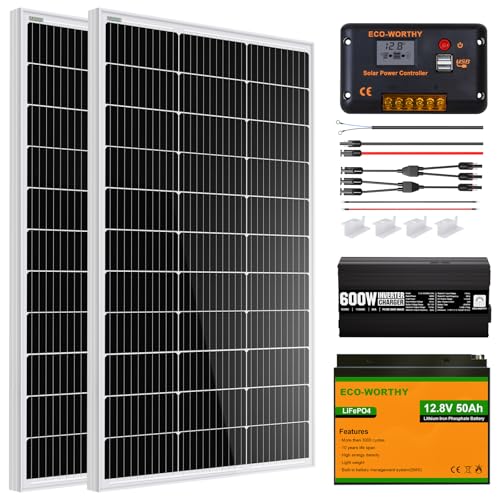
This beginner-friendly solar kit includes all required accessories for immediate connection, delivering up to 800Wh daily with four hours of sun. The panel features a corrosion-resistant aluminum frame and tempered glass for outdoor durability, with 21% efficiency. The LiFePO4 battery supports thousands of deep cycles and includes a built-in BMS for safety, reducing risks of overcharge, overdischarge, and short circuits.
Key considerations:
- LiFePO4 batteries offer robust cycle life and safety characteristics.
- All-in-one kit minimizes the need for extra purchases, great for newcomers.
- Panel construction supports long-term outdoor use in varied climates.
VEVOR 200W 12V Complete Power Kit
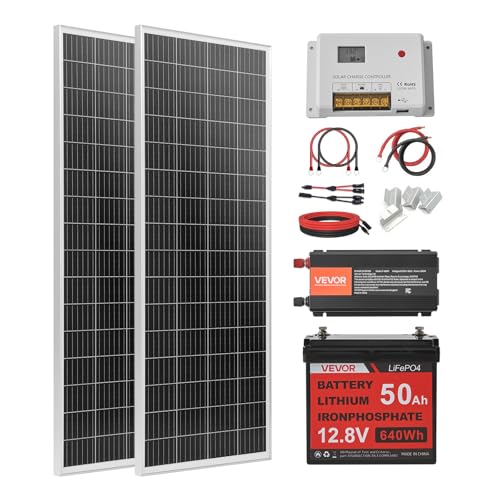
VEVOR’s kit pairs two 100W monocrystalline panels with a 50Ah LiFePO4 battery, a 40A PWM controller, and an 800W inverter to cover everyday RV loads. The system emphasizes reliable power conversion and a sturdy build, suitable for boating, camping, and off-grid living. The IP67-rated panels and rust-resistant frame enhance durability in harsh outdoor conditions.
Key considerations:
- Monocrystalline panels deliver strong performance in bright sun and moderate shade.
- LiFePO4 battery provides good cycle life with safety protections via BMS.
- Ensure the inverter size aligns with peak loads typical of your RV appliances.
Buying Guide: key purchase considerations
When choosing an off-grid solar kit for RV use, several factors influence long-term satisfaction and performance:
- Energy needs: Assess daily watt-hour consumption of appliances you plan to run. More devices and longer trips require higher daily energy production and storage capacity.
- Panel count and wattage: More panels increase daily output, especially in marginal sunlight. Consider available roof space and weight limits on your RV.
- Battery technology: Lithium (Li-ion or LiFePO4) offers longer life, lighter weight, and deeper discharge compared to lead-acid, though at a higher upfront cost.
- Inverter size: The inverter should handle your peak AC loads. A 600W–1000W inverter suits most RV essentials; larger appliances may require more capacity or staged use.
- Controller type: MPPT controllers generally maximize efficiency in variable conditions, especially with longer cable runs from panels to battery.
- Durability and weather sealing: Outdoor-ready components (IP ratings, tempered glass, corrosion-resistant frames) extend system life in RV environments.
- Monitoring and smart features: Bluetooth/Wi‑Fi and app-based monitoring add convenience, but verify compatibility and data reliability in remote areas.
- Ease of installation: All-in-one kits reduce assembly complexity and ensure compatibility among components, beneficial for first-time installers.
In selecting a kit, weigh the trade-offs between upfront cost, system expandability, and the level of electrical knowledge you’re ready to apply. For many RV users, a balanced combination of 200W panels, a 100Ah LiFePO4 battery, an MPPT controller, and a mid-range inverter offers reliable daily power with room to grow as energy needs evolve.