Best Multi Core Electrical Cable Options for Your Projects
Answering the common buyer question: when choosing multi-core electrical cable, look for conductor count and gauge, insulation quality, shielding, and durability for your specific application. The top picks below cover low-voltage LED lighting, control wiring, and general multi-core needs. They’re best for hobbyists wiring LEDs or small electronics, electricians handling multi-conductor runs, and DIY enthusiasts building control or audio paths.
| Product | Conductor Count / Gauge | Key Use | Best For |
|---|---|---|---|
| DEKIEVALE 22 Gauge 8 Conductor Electrical Wire | 22 AWG, 8 conductors | LED lighting, small electronics, automotive wiring | Best for compact, low-current circuits with color-coded lines |
| LRXCREEK 20/6 Shielded Wire 30FT | 20 AWG, 6 conductors, shielding | CNC machines, microphones, electronics; EMI-sensitive runs | Better for environments with interference and movement |
| 2/0 AWG 19-Stranded THHN Black Copper Building Wire (50Ft) | Up to 19 strands, THHN insulation | Building wiring, power distribution, general multi-core needs | Choose for larger power runs and robust copper core |
| iCrimp Ratchet Cable Wire Cutter IWS-325S | Cutting tool, not a cable itself | Preparing copper/aluminum multi-core cables | Best for clean, precise cuts of thick cables |
| KF CPTEC Ratchet Cable Cutters up to 300mm² | Cutting tool, ratchet mechanism | Thick electrical cables; multi-core and armored cables | Choose for heavy-duty, smooth cuts with reduced effort |
DEKIEVALE 22 Gauge 8 Conductor Wire

Best for compact LED projects and small electrical runs. This 22 AWG, 8-conductor cable uses tin-plated copper for improved conductivity and corrosion resistance. The PVC jacket protects against abrasion and environmental exposure, with an outside diameter of 0.24 inches and a 10-foot length. Suitable for LED lighting, automotive wiring, and speaker low-power paths. Cautions: handle with care to avoid kinking; maximum operating temperature up to 80°C. It is flame-retardant and designed for long service life in mixed environments.
LRXCREEK 20/6 Shielded Wire (30FT)
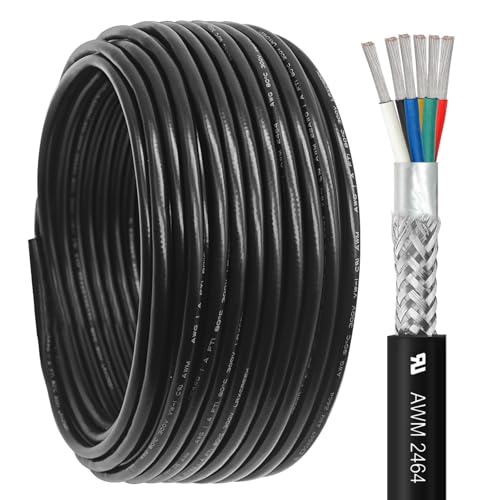
Best for applications requiring EMI protection and flexible routing. This 20 AWG cable features 6 conductors with a 85% shielding rate via tinned copper braid and aluminum foil, plus PVC insulation for durability. The shield helps minimize interference in CNC, audio, or control lines. Cautions: shielding improves signal integrity but can increase overall cable stiffness; ensure compatibility with your connector types and terminations.
2/0 AWG 19-Stranded THHN Building Wire

Best for robust power distribution and multi-core-style runs in construction or large DIY projects. The 2/0 AWG heavy copper strand design provides low resistance for high-current needs. The nylon outer jacket and oil/gas-resistant features are noted. Cautions: not suited for small, delicate electronics; ensure appropriate conduit and protection for outdoor or exposed routes.
iCrimp Ratchet Cable Cutter IWS-325S

Best for professionals needing a compact, one-handed operation to cut copper and aluminum multi-core cables up to 32 mm in diameter. The tool features precision-milled blades and a spring-loaded design for smooth cuts. Cautions: not for steel cables; ensure the blade is sharp and clean before use to maintain clean termination surfaces.
KF CPTEC Ratchet Cable Cutter (Up to 300mm²)

Best for heavy-duty electrical work on thick, multi-core cables. The ratcheting mechanism multiplies user force, delivering clean cuts with minimal effort. It’s suitable for copper, aluminum, and armored cables up to 300 mm². Cautions: avoid using on live cables; verify proper sizing to prevent blade damage and ensure safe operation.
Buying Guide
- Conductor count and gauge: Match wire gauge to current and voltage needs. Smaller gauges like 22 AWG carry less current but are suitable for signal or LED runs; thicker cables handle higher loads.
- Shielding and insulation: Shielded cables reduce EMI in noisy environments; PVC insulation adds durability for indoor or outdoor use. Consider temperature ratings and environmental exposure.
- Conductor material: Tin-plated copper offers corrosion resistance and easier soldering in DIY projects; pure copper provides maximum conductivity for high-current runs.
- Jacket durability and flexibility: Nylon or advanced jackets resist oils, gasoline, and abrasion. Flexibility matters in tight bends or moving applications.
- Tools versus cables: For cutting and terminating multi-core cables, choose purpose-built cutting tools with ratchet mechanisms for safety and control.
Frequently Asked Questions
- What is multi-core electrical cable?
It is a cable containing multiple insulated conductors within a single jacket, used for devices and systems requiring several separate circuits or signals.
- What gauge should I choose for LED projects?
For low-current LED runs, smaller gauges like 22 AWG or 20 AWG are common; for higher power or longer runs, thicker gauges are better to reduce voltage drop.
- Is shielding necessary for CNC or audio wiring?
Yes, shielding helps minimize EMI and improves signal integrity in environments with interference.
- Can I cut multi-core cables with standard scissors?
No. Use a proper ratchet cable cutter to ensure clean cuts and reduce fraying, especially on thick or armored cables.
- Should I choose tin-plated copper or uncoated copper?
Tin-plated copper offers better corrosion resistance and easier soldering, which can extend service life in challenging environments.