Best Blood Pressure Monitors for Home Use: Top Arm and Wrist Models
Staying on top of heart health starts with reliable home blood pressure monitoring. This guide highlights five top-rated devices that fit standard to large arm sizes, offer clear displays, multiple memory options, and user-friendly features. Each option is selected for accuracy, ease of use, and value for daily tracking with or without a smartphone. Review the picks, compare features, and choose the model that fits your needs and routine.
| Product | Brand | Type | Key Benefit |
|---|---|---|---|
| iHealth Track Smart | iHealth | Upper Arm | Bluetooth sync and large backlit display |
| Sinocare Blood Pressure Monitor | sinocare | Upper Arm | One-button operation, wide cuff compatibility |
| Oklar Upper Arm Monitor | Oklar | Upper Arm | Two users, 240 readings, large LED display |
| AILE Blood Pressure Monitor | AILE | Upper Arm | High accuracy, adjustable cuff 8.7″–16.5″ |
| ATUDER Upper Arm Monitor | ATUDER | Upper Arm | AI-based accuracy, 240 records, clear backlight |
iHealth Track Smart Upper Arm BP Monitor
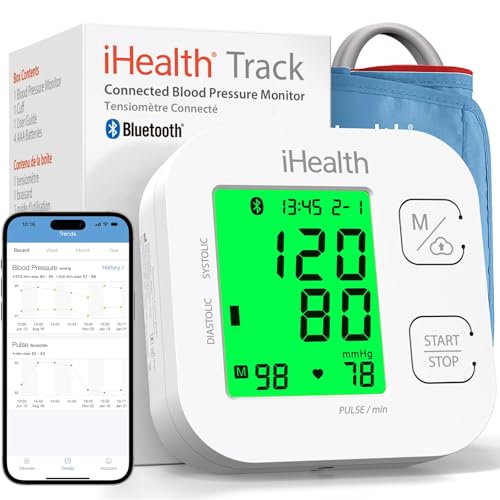
The iHealth Track monitor offers clinically accurate readings with a simple two-button interface, eliminating calibration needs. It features a large multi-color backlit display that uses green, yellow, and red indicators to show whether readings are optimal. It stores up to 99 readings on the device and unlimited readings on the iHealth app for iOS and Android. Bluetooth 4.0 compatibility enables easy syncing with smartphones.
Sinocare Blood Pressure Monitor

The Sinocare BP monitor emphasizes simple operation with a one-button start. It features a large 3.6-inch display and clinically comparable results. The cuff supports a broad range, and the device operates on two power options: 4 AA batteries or a Type-C charge (cable not included). It aims for dependable accuracy with a focus on ease of use for home monitoring.
Oklar Upper Arm Monitor
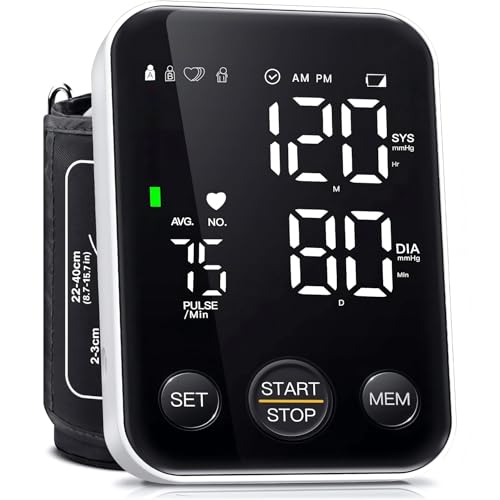
This Oklar model emphasizes a one-button operation with a large LED display for quick readings—often within a minute. It supports two users with up to 120 readings each and includes a sturdy cuff design suitable for average arm circumferences. The straightforward interface makes it a practical option for daily use at home.
AILE Blood Pressure Monitor

AILE’s BP monitor emphasizes accuracy with calibrated Dutch high-precision chips and AI-assisted measurement. It delivers systolic, diastolic, and heart rate readings in about 30 seconds, with a large, readable LED display and an adjustable cuff that fits 8.7 to 16.5 inches. The device is designed for elderly users with clear visuals and a simple start button.
ATUDER Blood Pressure Monitor

ATUDER introduces a large-backlit display with a 240-record memory and two-user support. It measures using FitAccu AI algorithms and provides an integrated reading that can help users monitor trends over time. The cuff supports 8.7 to 15.7 inches, making it suitable for a broad range of arm sizes and daily health tracking needs.
Buying Guide: Key Purchase Considerations
- Arm compatibility: Most upper-arm monitors fit 8.7″ to 15.7″ or 16.5″ ranges. For larger arms, ensure the cuff size accommodates your measurement circumference to avoid skewed readings.
- Display readability: Large LED or backlit screens reduce errors, especially at night or in bright rooms. Look for high-contrast digits and color-coded indicators.
- Memory and data options: Devices vary from 2-user, 120-240 readings per user, to unlimited cloud syncing. Decide if local memory suffices or if you want app-based tracking and sharing with clinicians.
- Accuracy features: Chips and AI-based algorithms, irregular heartbeat detection, and average-of-three readings can improve reliability. Check for validation by medical standards if possible.
- Power and portability: Battery operation, USB-C charging, and the option of a carrying case affect convenience for travel and daily routines.
When evaluating a model, consider who will use it (elderly individuals, caregivers, or personal use), whether you need smartphone connectivity, and how you plan to store and view historical data. A device with a simple one-button operation and a clear display often reduces user error, while models with extensive memory and app integration support long-term health tracking and trend analysis. For households with multiple users, pay attention to two-user memory and cuff fit options to ensure accurate, independent readings for each person.