Best Low Voltage Electric Motors for DIY Projects and Small Electronics
In the world of hobby electronics, low voltage electric motors are ideal for lightweight projects, educational kits, RC toys, and model builds. This guide highlights five reliable options, explains who each is best for, and why they were selected. Use these picks to match voltage, speed, and torque with your project needs. A quick summary table of the top choices follows to help you compare at a glance.
| Product | Best For | Key Benefit |
|---|---|---|
| Gikfun 1.5V-6V Type 130 Mini Motor | Educational kits, Arduino experiments | Wide voltage range with ready wire leads |
| AUTOTOOLHOME 6-12V Mini DC Motor | RC cars and small DIY motors | Higher voltage for faster operation |
| EUDAX 6 Set Rectangular Mini Motor | DIY science projects, STEM kits | Multiple units with gears and accessories |
| Antrader DC 6V 5rpm Gear Motor | Precision gear reduction and torque | Low RPM for controlled motion |
| BOJACK Low Voltage Motor Controller | Motor speed control projects | PWM control for variable speed |
Gikfun 1.5V-6V Type 130 Mini DC Motor

The Gikfun Type 130 motor operates from 1.5V to 6V, with 3V recommended for best performance. It comes with 6-inch wire leads (red and black) for easy connections, and features a compact size (15 x 20 mm) with a 2.0 mm shaft diameter and 9 mm shaft length. This motor best suits beginner Arduino projects, small educational kits, and experiments that require simple wiring without additional gearing. A potential limitation is that performance can vary at the lower end of the voltage range, so test voltages for precise results.
AUTOTOOLHOME 6-12V Mini DC Motor
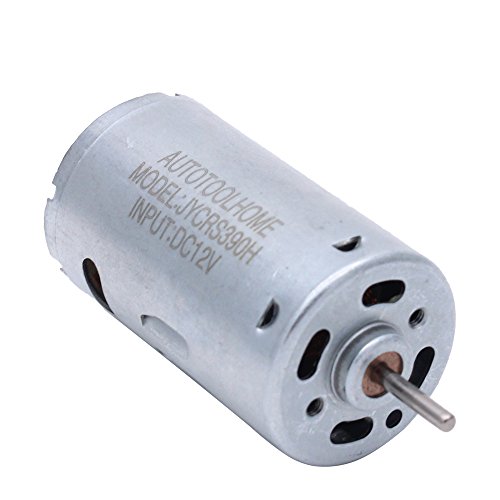
This motor is designed for 6V to 12V applications, making it suitable for RC cars, small drills, and DIY electronics. It features a 2.3 mm shaft and roughly 12 mm shaft length, aiding compatibility with gears, pulleys, and couplers. It is a solid choice for projects requiring higher speed or power within a compact form factor. Best for mid-range voltage projects; consider its slightly larger shaft and mounting requirements. Check original motor size and wiring to ensure a proper match.
EUDAX 6 Set Rectangular Mini Motors

Included are six rectangular DC motors rated for DC 3V operation with 24,000 RPM and a 27 mm body diameter. The set also includes 84 plastic gears, a wiring harness, battery holder, and a rocker switch, enabling rich DIY science projects. This is best for classroom kits or multi-project experimentation. A caution is to carefully follow wiring diagrams to avoid heat buildup or short circuits, especially with the included battery holder setup.
Antrader DC 6V 5RPM Gear Motor
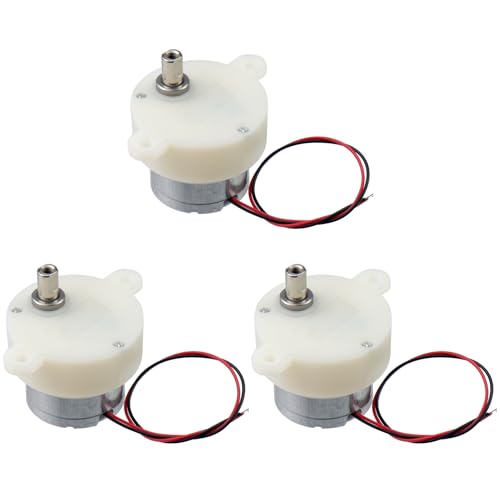
The Antrader micro motor delivers 6V operation with a very low speed of about 5 RPM, making it ideal for precise position control and slow-rotation applications. It uses a plastic gear set and requires careful lubrication considerations. It supports direction changes by swapping polarity, which can simplify control in DIY projects. Best for slow, high-torque needs; avoid if higher speeds are required for your project.
BOJACK Low Voltage Motor Controller PWM

This speed controller supports an adjustable duty cycle from 0% to 100%, with a maximum output of 30W and 2A continuous current. It is suitable for projects that require variable speed control across a range of low-voltage motors. Choose this when you need to dial in precise speeds or implement PWM-based propulsion control. A potential limitation is the need for proper heat management at higher duty cycles, as sustained use can generate heat.
Gebildet PWM Low Voltage Motor Controller

The Gebildet controller handles 1.8V to 12V input with a 2A continuous current and up to 30W output. It includes a NE555 chip and a speed-control knob for easy adjustments, plus a self-recovery fuse for safety. This option is better for projects needing both a safety fuse and adjustable speed. Use caution if your supply dips below the minimum input, as performance may vary.
XYRSTOLR 5Pack DC Motors

The XYRSTOLR set provides five DC motors rated for 1V-6V with speeds ranging from 5,000 to 20,000 RPM. The motors boast a 21 mm body diameter, 25 mm length, and a 2 mm shaft. They are designed for RC boats, airplanes, and model projects, offering low-noise operation and stable performance. Best for ready-to-run kits or projects requiring multiple similar motors; consider stock and fit in tight enclosures.
Buying Guide: Low Voltage Motors For Your Projects
- Voltage range and compatibility: Match motor voltage to your power source and control electronics. Lower voltages favor Arduino and microcontroller projects; higher voltages suit RC or larger hobby builds.
- Speed and torque needs: If you need slow, precise motion, favor gear motors with low RPM. For quick spins, choose higher RPM motors.
- Control options: PWM controllers allow variable speeds. Ensure the controller current rating matches the motor’s current draw.
- Physical fit: Check motor diameter, shaft size, mounting holes, and anticipated load. Small form factors save space but may limit torque.
- Durability and safety: Look for motors with proper isolation and heat management in mind. Use fuses or overcurrent protections when wiring multiple motors.
- Accessories and gear compatibility: Sets with gears, battery holders, and switches can streamline assembly. Verify gear compatibility to avoid misalignment.
FAQ
- What is “low voltage” for these motors? Most listed motors operate from about 1.5V to 12V, with many optimized around 3V to 6V for hobby projects.
- Do I need a separate motor driver? For variable speed, yes. PWM controllers are common and provide smooth speed changes with limited current capacity.
- Can these motors run continuously? They can run, but prolonged operation may require heat management and proper current limits to prevent overheating.
- What type of projects are best for small motors? Educational kits, micro-robots, RC cars, model airplanes, and science experiments.
- How do I choose between a geared vs. direct-drive motor? Geared motors provide higher torque and lower speeds; direct-drive motors offer higher speeds and simpler setups.
- Is wiring important for safety? Yes. Use proper insulation, verify polarity, and follow circuit diagrams to avoid short circuits or overheating.