Best Linear Actuator Control System Buying Guide for 2026
Finding the right linear actuator control system requires matching performance to your project needs. This guide highlights five strong options best suited for DIY furniture, automation projects, and small to mid-scale industrial tasks. Each pick balances control features, compatibility, and practical limitations. The buyer types most likely to benefit include DIY builders seeking wireless control, home automation enthusiasts, and light industrial integrators looking for reliable, low-noise operation.
Below is a quick comparison to help you decide at a glance. The table lists key traits for each selected product, focusing on control capability, voltage, and suitability.
| Product | Control Type | Voltage | Best For |
|---|---|---|---|
| VEVOR 2PCS Linear Actuator Kit | Wireless remote included | 110V | Residential furniture and lifting tasks |
| Progressive Automations Wireless DC Motor Controller | Wireless remote control | 12V | Single-actuator automation projects |
| DIHOOL Electric Linear Actuator Controller | WiFi app control, timing, safety sensors | 6V–30V | Smart home setups and obstacle safety |
| RVMARINEPAT Linear Actuator with Controller | 3-position and reverse polarity switch | 12V | Heavy-load, longer stroke projects |
| URANT Forward/Reverse Remote Switch | Wireless remote, manual override | 12V–48V | Outdoor or remote actuator control |
VEVOR 2PCS Linear Actuator Kit

Best for: Home or small workshop lifting tasks such as TV mounts, tables, or minimalist sofa adjustments. This kit includes two actuators with a 30-inch stroke and 220 lbs (1000 N) of thrust, designed for reliable lifting and positioning.
Why selected: The extended stroke expands clearance for tall installations, and the included wireless remote enables convenient, hands-free operation. The IP54 rating provides basic protection against dust and splashes in non-wet environments.
Important note: While suitable for many residential tasks, extremely dynamic or heavy industrial cycles may stress the 110V system over extended use. Plan for cooling and duty-cycle limits in continuous operations.
Progressive Automations Wireless DC Motor Controller
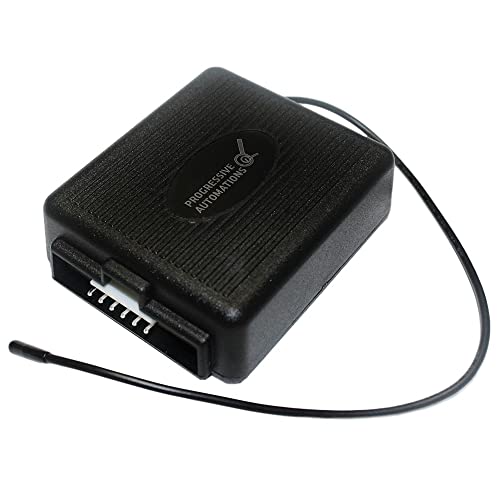
Best for: Projects needing simple wireless control integrated with a single actuator. The PA-31 control box is compact and supports plug-and-play setup for 12VDC actuators.
Why selected: It provides straightforward integration with standard 12V actuators and includes an inline fuse for basic circuit protection. The 12A rating suits many modest automation tasks while keeping wiring simple.
Caution: For actuators exceeding 12A, you may need thicker gauge wiring or external relays to avoid overheating or voltage drop during peak demand.
DIHOOL Electric Linear Actuator Controller

Best for: Smart home and automation setups needing WiFi control, current sensing, and obstacle protection. Suitable for furniture, lifts, and small machinery controlled via a smartphone.
Why selected: Features include load safety with current limit and rebound protection, reducing pinch risks and motor damage. The eWeLink app compatibility enables remote control in multiple languages.
Limitation: Supports 2.4 GHz WiFi only; 5 GHz networks are not supported, which may affect access in certain network environments.
RVMARINEPAT Linear Actuator With Controller

Best for: Heavy-duty tasks that require more thrust and precise stop positions, such as industrial lifting or equipment positioning with longer reach.
Why selected: A 3000N class actuator paired with a robust control option and a three-position switch provides reliable, smooth rule-based motion and safety through simple manual overrides.
Caution: The kit’s higher load and longer stroke require careful mounting and power supply considerations to avoid binding or overheating during cycles.
URANT Forward and Reverse Remote Switch

Best for: Systems requiring versatile remote direction control with a clear manual option. The device supports both momentary and self-locking remote modes for flexible operation.
Why selected: Long-range wireless capability (up to 50 meters in open areas) suits outdoor installations or workshop setups where line-of-sight control isn’t guaranteed. Modular wiring keeps integration straightforward.
Limitations: Ensure compatibility with the actuator’s voltage range (12V–48V) and confirm that the receiving unit and actuator share the same control protocol to avoid misoperation.
Buying Guide: Key Considerations for Linear Actuator Control Systems
What is your voltage and current requirement?
Actuators and controllers come in a range of voltages (12V, 24V, 110V). Match the system to your power source and ensure the controller can safely handle peak current without overheating.
Do you need wireless or wired control?
Wireless options add convenience for furniture and remote installations but may introduce latency or interference. For critical or precision applications, a wired control path can offer lower delay and higher reliability.
What kind of safety features are essential?
Look for load safety features such as current sensing, obstacle detection, and mechanical stops. Rebound protection helps prevent pinching and damage when a load meets resistance.
Is integration with smart home ecosystems important?
Smart control requires app compatibility and robust WiFi standard support. Check for compatibility with your preferred app ecosystem and whether the controller supports multiple languages or automations.
What is the expected duty cycle?
Duty cycle determines how long an actuator can run before overheating. For frequent, long-running tasks, choose a system with a higher duty rating and adequate cooling or heat dissipation.
What mounting and environment considerations apply?
Assess installation space, mounting orientation, and environmental exposure. IP ratings (like IP54) provide guidance on dust and water resistance; for outdoors, consider higher protection levels and weatherproof enclosures.
FAQ
- What is a linear actuator controller? A device that directs the motion of a linear actuator, typically handling direction, speed, and safety features.
- Do I need a WiFi-enabled controller? Not required for all projects, but helpful for remote access and automation through smartphones or voice assistants.
- Can I mix actuators from different brands with one controller? Compatibility varies; verify voltage, current ratings, and control interface before mixing components.
- What is a duty cycle? The recommended active operating time versus rest time to prevent overheating and extend lifespan.
- How important is wireless range? Range matters for outdoor or large spaces; ensure the controller covers your installation distance with reliable signal.
- Are safety features essential? Yes. Obstacle sensing, current monitoring, and proper stops reduce pinch risks and component damage.