Best IR Illuminator Flood Lights for Night Vision Security
Answering the question of how to improve night coverage for security cameras, these IR illuminator flood lights deliver infrared light that enhances visibility without visible glare. This guide highlights top options for home, small business, and professional setups. Best for wider camera fields, longer ranges, outdoor durability, and easy aiming, these picks help you choose the right infrared flood light for your CCTV system.
Buyer type summary at a glance:
| Product | Best For | Range/Spread | Key Advantage |
|---|---|---|---|
| Tendelux DI10 IR Illuminator | Small-to-medium range security setups | Medium range | Compact size with even illumination |
| Tendelux DI20 IR Illuminator | Long-range night surveillance | Long range | High illumination in a compact form |
| [Upgraded] Univivi IR Illuminators 20 LEDs 850nm | Cameras needing wide-angle, outdoor use | 90° wide angle | Auto on/off and rugged build |
| Univivi IR Illuminator 15 LEDs 90° Wide Angle | Indoor/outdoor, flexible mounting | 90° wide angle | Balanced power and heat management |
| JCHENG SECURITY JC 210ft IR Illuminator | Long-distance surveillance | Very long range | High-distance capability with IP66 rating |
Tendelux DI10 IR Illuminator

The Tendelux DI10 is designed for medium-range applications with a compact footprint. Best for small to mid-sized security setups where linear, even illumination is crucial. The integrated lens aims to minimize hot spots, producing more uniform night images. It includes a 360-degree swivel and 90-degree tilt for flexible aiming, and uses a premium aluminum housing for weather resistance.
Best for: small businesses or home cameras that need discreet, evenly spread IR light. Limitations: the product focuses on compact form rather than extreme long-range power.
Tendelux DI20 IR Illuminator
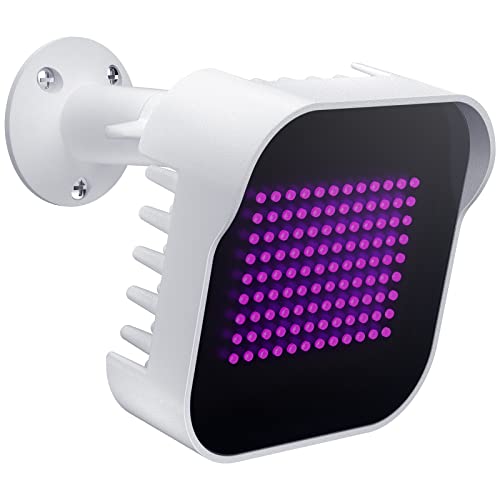
The Tendelux DI20 targets longer-range applications while maintaining a compact size. It offers the same even illumination principle and 360-degree rotation for easy horizontal positioning. The aluminum construction supports outdoor use and reduces aging from sun exposure, making it a solid choice for outdoor perimeter surveillance where distance matters.
Best for: longer-range night vision where space-saving hardware is preferred. Limitation: longer range may require proper camera alignment to maximize effectiveness.
[Upgraded] Univivi IR Illuminators 20 LEDs 850nm

This Univivi model emphasizes a 90° wide angle with 20 high-power LEDs and a robust aluminum housing with a heat sink. It includes an auto on/off photocell sensor for dusk-to-dawn operation and is designed for outdoor use with IP67 waterproofing. The 850nm infrared light remains invisible to the naked eye but improves night visibility for most CCTV setups.
Best for: outdoor installations needing reliable auto operation and waterproofing. Caution: ensure the camera’s field of view pairs well with the 90° spread to avoid unintended light spill.
Tendelux 80ft IR Illuminator
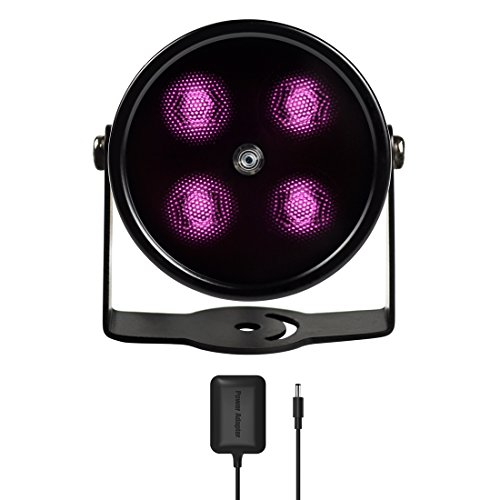
This unit provides an 80-foot effective range with four 1-watt LEDs and a 90-degree flood light pattern. The black coating and upgraded materials emphasize better external durability and even illumination, reducing hotspot issues. It pairs well with CCTV lenses around 2.8/3.6/4 mm for balanced night performance.
Best for: mid-to-long-range outdoor perimeters with a need for an even wash of infrared light. Caution: ensure alignment with the camera angle to prevent gaps in coverage.
JCHENG SECURITY JC 210ft IR Illuminator

The JC 210ft model is designed for extended-range night surveillance with 20 LEDs in a 90-degree configuration. It is specified as IP66 for protection against dust and powerful water exposure, making it suitable for harsh outdoor environments. It is best for long-distance monitoring where camera placement supports extended reach.
Best for: professional or security installations needing very long-range infrared illumination. Limitation: distance performance depends on camera lens and alignment; verify compatibility with your camera’s focal length.
Buying Guide: Key Factors To Consider
- Range vs. Coverage: For longer distances, choose units like the JCHENG JC 210ft or DI20. For wide-angle coverage, look at the Univivi models with 90-degree spreads.
- Power and Heat Management: Aluminum housing and heat sinks improve longevity in outdoor settings, especially with continuous operation.
- Weather Resistance: IP67 or IP66 ratings are important for outdoor use. Ensure the housing protects against dust, rain, and temperature swings.
- Automation Features: Auto on/off photocell sensors reduce energy use and extend light life; consider this for perimeter lighting and security zones.
- Compatibility with Cameras: Match lens focal length and field of view with the IR flood light to avoid hotspots and dark spots.
- Aiming and Mounting: Look for 360-degree swivel and tilt capabilities to easily aim illumination without repositioning the entire setup.
- Physical Footprint: If space is limited, compact models like the DI10 and DI20 can fit tighter installations without sacrificing performance.
Frequently Asked Questions
- What is infrared illumination, and why is it used with security cameras?
Infrared illumination provides light that is invisible to the human eye but helps cameras capture clearer images in darkness or low light.
- Should I prioritize long-range or wide-angle IR flood lights?
Long-range models suit distant surveillance; wide-angle units are better when you need broad coverage across a field of view.
- Are outdoor IR illuminators weatherproof?
Yes, select models with IP ratings (IP66/IP67) to ensure durability against dust, rain, and temperature changes.
- Can IR lights cause hotspots in images?
Yes, improper alignment can cause hotspots. Choose lights with built-in designed lenses and ensure proper camera alignment.
- Do IR illuminators require maintenance?
Auto on/off features reduce wear; periodic inspection of mounting hardware and seals helps maintain performance over time.
- Is 850nm the only effective wavelength for night vision?
850nm is common and effective; some models may offer other wavelengths, but 850nm is widely supported by cameras.