Best 12V to 220V Inverter Options for Car, RV, and Home Backup
Answered simply: these 12V to 220V inverters convert a vehicle or off-grid battery supply into standard AC power for everyday devices. This guide helps buyers choose the right wattage, waveform, and protections. Best fits include frequent travelers needing mobile charging, campers requiring quiet operation, and users seeking reliable backup power. Below are five well-rounded options with clear use cases and considerations.
Summary of selected products
| Product | Best For | Key Benefit | Notes |
|---|---|---|---|
| Junbpaw 500W Power Inverter | Light daily use in cars | Compact, affordable 500W peak 1000W | Good for phones, laptops; lower power ceiling |
| VariCore 1800W Pure Sine Wave | Home, RV, off-grid | Pure sine wave, high protection suite | Quiet cooling, LCD status |
| Surakey Car Power Inverter 3000W | Road trips, camping | High power, multiple protections | USB port included, robust for devices |
| Keenso 200W Inverter | Compact car use | Built-in cooling, multiple outputs | Lower wattage, portable |
| BAOJUHUIKANG 3000W 24V/60V | Off-grid and multi-vehicle setups | Wide DC input range, high efficiency | Auxiliary protection features |
Junbpaw 500W Power Inverter

Type: DC 12V to AC 220V, continuous 500W with 1000W peak. Best for light loads in vehicles, including charging phones and operating small laptops. The data shows a straightforward, low-profile unit suitable for daily car use. Choose this if you need a compact solution for occasional 220V devices while on the road. Caution: limit continuous draw to stay within the rated 500W to avoid overheating.
VariCore 1800W Pure Sine Wave Inverter

Best for home or RV use due to pure sine wave output and comprehensive protection. This unit provides 1800W continuous power with a 3600W surge, making it suitable for refrigerators, TVs, and laptops. It includes LED indicators for low/high voltage, over-temperature, overload, and short-circuit protection, plus cooling features and a ground-fault circuit breaker. Consider this if you need cleaner power and more surge headroom; it’s a stronger, quieter option for sensitive electronics. Limitation: higher price and larger footprint than compact inverters.
Surakey 3000W Car Power Inverter

Best for power-hungry devices during road trips or camping. This inverter offers 3000W continuous power, with multiple protections to safeguard connected electronics. It features a standard AC outlet plus USB ports, enabling charging of laptops, tablets, and other gear. Use this if you need to run larger appliances or multiple devices simultaneously. Limitation: higher idle draw and potential noise with heavy loads; ensure adequate ventilation.
Keenso 200W Car Power Inverter
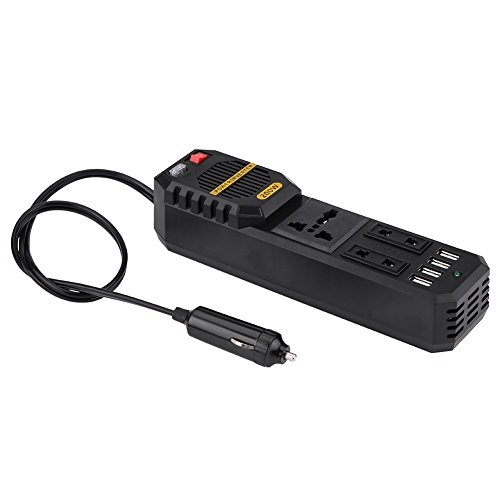
Best for compact, everyday car use when you only need 220V power occasionally. This inverter includes a built-in cooling fan and multiple outputs, including USB ports. It is lightweight and easy to carry, making it ideal for short trips or small electronics. Caution: with only 200W capacity, avoid running multiple high-wattage devices at once. Choose this if portability is the priority and you typically power small devices.
BAOJUHUIKANG 3000W Pure Sine Wave Inverter

Best for off-grid and multi-vehicle setups due to wide input range and high efficiency. It converts 12V/24V/48V/60V/72V DC to 110-120V and 220-240V AC, making it adaptable for diverse battery banks. It emphasizes high efficiency (up to 95% theoretically) and multiple protections like overheating, overload, undervoltage, and overvoltage. Choose this when you need a flexible inverter for variable DC sources. Limitation: complexity of installation and integration with larger systems.
Buying Guide
What wattage do you need? Determine your total continuous load plus a safety margin. Light use (phones, small laptops) can rely on 200–500W units, while home backup or RV needs often require 1000–1800W or more for surge-capable operation.
Pure sine wave vs. modified sine wave: Pure sine wave inverters provide the clean power that sensitive electronics expect and are generally better for laptops, TVs, and medical devices. Modified sine wave units can work for simple loads but may cause buzzing or inefficiency with some devices.
Protection features matter: Look for overload, over/under voltage, over-temperature, short-circuit protection, and a GFCI or similar safety mechanism. Cooling options (fan or passive cooling) affect long-term reliability in hot environments.
Input compatibility: Confirm the inverter supports your battery system (12V, 24V, or higher). Wide-input models offer flexibility for off-grid configurations and multi-vehicle use, but installation may be more complex.
Portability and outlets: Consider the number and type of outlets, USB ports, and whether you need a built-in display for real-time monitoring. For travel, compact and light designs are advantageous; for work sites, multiple outlets and higher wattage are better.
FAQ
- What is the difference between pure sine wave and modified sine wave? Pure sine wave provides clean power similar to mains electricity and is safer for sensitive electronics. Modified sine wave is adequate for basic devices but can cause noise or inefficiency in some equipment.
- Can I run a refrigerator from a 12V inverter? Yes, but you’ll want a higher wattage inverter with surge capacity to handle compressor startup. A pure sine wave model is recommended for compressors.
- How do I choose the right inverter wattage? Add up the running wattage of all devices you plan to use and add 20–30% headroom for startup surges. Choose an inverter that matches or exceeds that total.
- Is a built-in cooling fan necessary? For extended use or high loads, a cooling fan helps maintain performance and longevity. Quieter models with efficient heat dissipation are preferable for living spaces.
- Are these inverters safe for vehicle use? When properly installed with correct wiring and fusing, these inverters are suitable for vehicles, RVs, and boats. Follow manufacturer installation instructions to ensure safety.
- What maintenance is needed? Regularly check connections, keep vents clear of debris, and inspect for signs of overheating or wear. Replace any damaged cables or fuses promptly.