Best Instant on Electric Water Heaters for Fast Hot Water
If you need hot water instantly at the tap, these electric tankless options deliver quick heat with compact designs. This guide helps buyers choose the right unit for under-sink or point-of-use needs, apartments, RVs, or small kitchens. The top five selections favor reliability, safety features, and space-saving design while explaining who each model is best for and potential limitations.
| Product | Brand | Power & Voltage | Best For | Notes |
|---|---|---|---|---|
| AIYEZIDT Tankless Water Heater | AIYEZIDT | 110V, 3000W | Small spaces, under-sink use, apartments | Rapid 3–5 second heat; IPX4 and safety protections |
| EcoSmart ECO 11 | EcoSmart | 240V, 13kW (self-modulating) | Homes needing continuous on-demand hot water; compact wall-mount | Very small footprint; energy efficient |
| Rheem 11kW 240V | Rheem | 240V, 11kW | Moderate flow under-sink hot water | Self-modulating with LED display |
| xwdzswgs 110V 3000W | xwdzswgs | 110V, 3000W | Portable or small-space use; kitchen/bathroom | LED display; multiple safety protections |
| LECLOC 3000W 120V | LECLOC | 120V, 3000W | Under-sink or point-of-use; easy operation | IPX4, safety features; note about low-flow use |
Note: The table highlights practical use-case guidance to help compare spaces, watts, and installation needs. All products listed serve point-of-use hot water, not full-house solutions.
AIYEZIDT Tankless Water Heater for Quick Hot Water
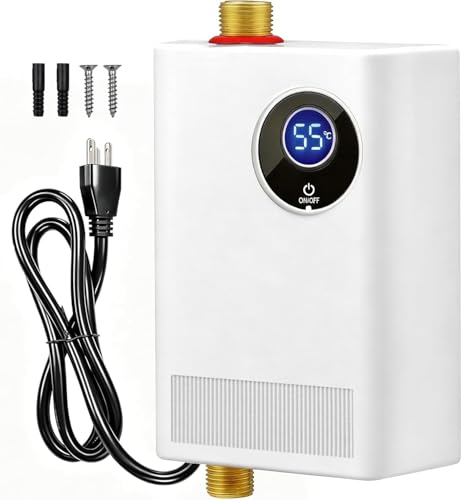
The AIYEZIDT unit provides immediate hot water at the sink with 110V, 3000W power. It heats water in 3–5 seconds, avoiding preheating delays. The maximum temperature is 55°C (131°F). A compact, wall-mounted design frees up space, making it suitable for kitchens, apartments, bathrooms, RVs, and camping. This model includes an LCD display for status and several safety protections, including IPX4 waterproofing and automatic power-off in non-working conditions.
Best for: Small-space homes, apartments, and portable setups where rapid hot water at a sink is a priority. Limitation: Not intended for shower use; capacity is best for lower flow at a single tap.
EcoSmart ECO 11 Electric Tankless Water Heater

The EcoSmart ECO 11 uses patented self-modulating technology to provide endless on-demand hot water. It continuously monitors water temperature and adjusts flow to maintain the selected setting within 1 degree. With a compact 11.5 x 8 x 3.75 inches footprint, it saves space and is 99% thermally efficient because it only heats water when called. It’s designed for wall mounting or point-of-use installation.
Best for: Homes or apartments needing efficient, space-saving hot water with precise temperature control. Limitation: Higher flow needs (multiple taps) may require a higher-wattage unit for larger households.
Rheem 11kW 240V Tankless Electric Water Heater
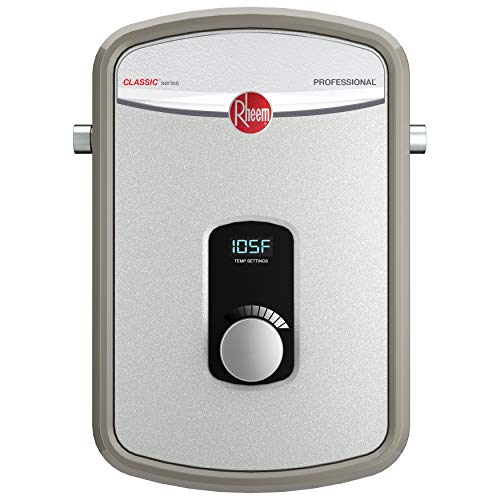
This Rheem model uses an ON/OFF dial with an adjustable digital temperature display and self-modulating power control. It can heat water up to a steady flow of up to 2.68 GPM, balancing energy use with hot water demand. The unit emphasizes simple control and reliable performance in compact spaces.
Best for: Small households or under-sink installations where predictable, adjustable temperature is important. Limitation: May require compatible electrical wiring and dedicated circuit.
xwdzswgs Tankless Electric 110V 3000W Under Sink

This under-sink model offers 110V, 3000W with an LED digital display and temperature control. It heats water in 3–5 seconds, with a temperature range from 30°C to 55°C. IPX4 waterproofing and dry-boil protection contribute to safety, while the unit’s compact, wall-mounted design preserves cabinet space. It notes that it’s not ideal for showers due to flow requirements.
Best for: Kitchen or bathroom under-sink use where compact form and quick heat are desired. Limitation: Not suitable for shower use or high-flow demands at multiple taps.
LECLOC Mini Tankless 3000W Under Sink

The LECLOC model is a 3000W, 120V plug-in unit designed for low-flow use with a big LED digital display and a large control knob. It includes comprehensive safety features such as overheat protection, leakage protection, dry heating protection, IPX4 waterproofing, and automatic power-off in inactive states. It’s best suited for small-volume, point-of-use applications and emphasizes ease of use over high-flow performance.
Best for: Quick hot water at a single outlet with straightforward operation. Limitation: Not designed for high-flow showers or multiple taps at once.
Buying Guide
Key considerations when choosing an electric tankless water heater for instant hot water:
- Flow rate and heat capacity: Match the unit’s maximum GPM to your hot water needs. Higher wattage units heat more water at once, which is important for showers or multiple taps.
- Voltage and installation: 110V units are easier to install in small spaces and rentals but may limit flow. 220–240V models deliver higher capacity for larger loads but require appropriate wiring.
- Space and placement: Point-of-use units save cabinet and counter space. Wall-mounting keeps floors clear and simplifies installation in bathrooms or kitchens.
- Safety features: Look for IPX4 waterproofing, leakage protection, dry-burn protection, auto-shutoff, and temperature controls. Self-modulating tech helps conserve energy.
- Temperature control: Consider units with digital displays or knobs for precise temperature setting. Fahrenheit/Celsius switching can help with ease of use.
- Compatibility and flow limits: Some units are designed for low-flow only or do not support showers at typical home flow rates. Check product notes for optimal use.
- Energy efficiency: Self-modulating heaters adjust power based on demand, reducing unnecessary energy use and heat loss.
- Installation considerations: Some units are designed for vertical installation or simple wall mounting; others require professional electrical work for 240V connections.
FAQ
- What is the difference between 110V and 240V tankless heaters?—110V models are easier to install but typically provide lower flow, while 240V units offer higher capacity for greater hot-water needs but require suitable wiring.
- Can these heaters supply hot water to a shower?—Some models are designed for low-flow use only and may not supply consistent hot water to showers, especially at higher flow rates.
- Do tankless heaters save energy?—Yes, many use self-modulating technology and heat water only when needed, reducing standby energy use.
- Is professional installation required?—It depends on electrical wiring, local codes, and the unit. Some 240V units may require a licensed electrician.
- What maintenance is needed?—Regular inspection for leaks, connections, and mineral buildup is advised; follow the manufacturer’s guidelines.
- How do I choose the right size?—Estimate your peak hot-water demand (one shower vs. multiple fixtures) and select a unit with sufficient GPM and wattage for that usage.