Best Fuel Tank Leak Detectors for Home, Auto, and RV Maintenance
If you need to locate leaks in fuel systems or tanks, this guide highlights reliable options and explains who each tool is best for. This list covers automotive oil and fuel dye, gas leak detectors, and specialized sniffers for propane, natural gas, and HVAC systems. Whether you’re a DIY homeowner, a professional technician, or an RV enthusiast, you’ll find suitable picks to identify leaks quickly, safely, and with minimal hassle.
| Product | Brand | Best For |
|---|---|---|
| A/C Pro Certified Auto Pro Oil and Fuel System UV Dye Leak Detection | A/C Pro | Engine oil and fuel system leaks in cars and trucks |
| RectorSeal Better Bubble Advanced Leak Detector | RectorSeal | Refrigerant gas and general leak detection in HVAC and plumbing |
| ComStar Leak Bubbles Yellow | ComStar | Micro-leaks in HVAC, propane, natural gas, and refrigerant lines |
| Kuntech Universal Easy Intake Adapter | Kuntech | EVAP/smoke-diagnostic testing for fuel systems |
| Gas Leak Detector – Portable Natural Gas Sniffer | EG | Broad combustible gas detection for home, RV, and industrial use |
A/C Pro UV Dye Leak Detection For Fuel And Oil Systems

Best for: automotive enthusiasts or technicians who service cars and trucks and need a simple dye-based leak test. This dye is compatible with engine oil, transmissions, power steering systems, and gas or diesel fuel systems, making it a flexible choice for multi-system diagnostics.
Why selected: The dye works across multiple petroleum-based lubricants, helping you spot leaks under UV light with a single additive. It’s particularly useful for quick checks during routine maintenance or when monitoring for slow leaks.
Limitation: It requires a UV light source to visualize the dye, and exact concentrations depend on the system being tested. Ensure compatibility with the lubricant weight before use.
RectorSeal Better Bubble Advanced Leak Detector

Best for: professionals or serious DIYers dealing with refrigerant leaks and HVAC/plumbing systems. It detects refrigerant gas, air, and oxygen leaks, and adapts to varied temperature and pressure conditions.
Why selected: Its broad leak-detection capability helps locate leaks across equipment like pipes, coils, tanks, and condensers. The spray/application format makes it easy to apply on diverse surface types.
Limitation: It’s designed for leak localization rather than precise leak rate measurement, so you may need additional methods for quantification in critical systems.
TOPTES PT199 Natural Gas Detector
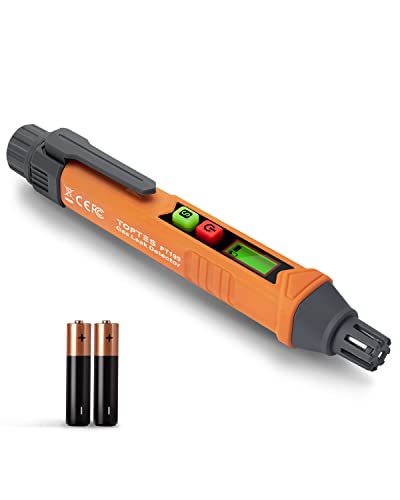
Best for: homeowners and travelers who want a portable gas-leak sniffer with audible and visual alarms. Useful for quick checks around gas lines, stoves, and fuel storage areas.
Why selected: This detector offers a fast response, a visual LCD readout, and batteries included for on-the-go testing. It helps identify combustible gas sources quickly to prevent incidents.
Limitation: It focuses on natural gas and similar fuels; for non-combustible leaks (e.g., water contamination or coolant leaks), a different tool is needed.
TOPTES PT520A Natural Gas Detector

Best for: professionals needing a longer reach with a 17-inch gooseneck probe to locate gas leaks in hard-to-reach spaces such as pipelines, basements, and storage areas.
Why selected: Its extended probe helps trace gas sources in tight spots, and it provides rapid visual and audible alerts proportional to gas concentration.
Limitation: It detects flammable gases and requires careful handling in occupied spaces to avoid exposure to high concentrations.
ComStar Leak Bubbles Yellow

Best for: professionals and DIYers needing a reliable spray for identifying micro-leaks in HVAC, propane systems, and gas lines with immediate visual feedback.
Why selected: Its yellow bubbles create high-visibility evidence of leaks, even at micro levels, which aids precise pinpointing for quick repairs.
Limitation: While highly effective for leak spotting, it does not replace electronic detectors for certain refrigerants or for precise measurement of leak rates.
Kuntech Universal Easy Intake Adapter

Best for: technicians using smoke-testing equipment to diagnose fuel system leaks and EVAP issues, especially during intake and exhaust port testing.
Why selected: This adapter broadens compatibility with different port shapes and improves detection efficiency by enabling quick, reliable seal testing for leaks around fuel lines.
Limitation: It is a diagnostic accessory rather than a standalone detector; effectiveness depends on compatible test equipment and proper use.
Gas Saf Propane Tank Gas Gauge Leak Detector

Best for: propane users needing a tank-level gauge and leak-detection in one device, especially for QCC1 Type1 tanks.
Why selected: The color-dial provides at-a-glance propane level awareness, while the built-in leak-detection function adds safety when handling fuel tanks.
Limitation: Primarily focused on propane tank monitoring; may require a separate system tester for comprehensive leak diagnostics in complex setups.
Buying Guide: Key Purchase Considerations
- Scope of detection: Choose dye-based, bubble-based, or electronic detectors based on whether you need dye tracking, visual confirmation, or real-time gas readings.
- Target fuels: Ensure the tool covers the fuels you work with—gasoline, natural gas, propane, refrigerants, or general combustible gases.
- Accessibility: For hard-to-reach areas, prefer tools with long probes or flexible adapters to reach pipes, tanks, or EVAP components.
- Portability and power: Portable detectors with battery operation are ideal for field work; check battery life and warm-up times.
- Ease of use: Look for simple spray, readout, or alarm features that provide quick, actionable results without extensive calibration.
- Safety and materials: Select non-corrosive formulas and materials compatible with your systems to avoid unintended damage or residue.
- Maintenance and replacement: Consider availability of consumables (dyes, bubbles, seals) and ease of cleaning after use.
Frequently Asked Questions
- What’s the difference between dye-based and bubble-based leak detectors?
Dye-based detectors reveal leaks under UV light after introducing a dye into the system, while bubble-based detectors show visible bubbles at the leak point when sprayed with a surfactant solution.
- When should I use a portable gas detector versus a dye test?
Use a portable gas detector for real-time monitoring of ambient or confined spaces and immediate alerts. Dye tests are useful for ongoing, trace-level detection of leaks in complex systems where dye can visualize slow leaks under UV light.
- Are there safety considerations when using leak detectors near open flames?
Yes. Avoid using flammable or reactive testers near ignition sources. Follow manufacturer directions and use appropriate PPE as needed.
- Can these detectors be used for RV propane systems?
Yes. Several products are suitable for propane and other fuel systems in RVs, but verify compatibility with your tank and piping configuration before use.
- Do I need professional calibration for these detectors?
Most consumer leak detectors do not require professional calibration for basic use, but follow the provided instructions for best results and re-test periodically as part of maintenance.
- Is it better to combine multiple detectors for comprehensive testing?
Yes. A combination of dye tests, bubble tests, and electronic gas detectors can provide complementary information and reduce the chance of missed leaks.