Best Instant on Demand Hot Water Heaters for Quick, Reliable Hot Water
Instant on demand hot water heaters provide warm water instantly at the tap, without a storage tank. This guide highlights top options suited for kitchens, bathrooms, apartments, RVs, and small homes. Best for quick point-of-use hotspots, compact living spaces, and energy-conscious buyers who want reliable hot water without waiting. The following selections focus on under-sink, portable, or compact whole-home models that balance speed, safety, and space savings. The table below summarizes five prime choices to consider.
| Product | Brand | Type | Best For |
|---|---|---|---|
| DOYXC Mini Tankless Water Heater | DOYXC | Under-sink, 110V, 0.3-0.5 GPM | Kitchens, RVs, apartments needing fast sink-hot water |
| AIYEZIDT Mini Tankless Water Heater | AIYEZIDT | Under-sink, 110V, up to 3-5 seconds | Compact spaces, bathrooms, RVs |
| Orbek 14kW Tankless Water Heater | Orbek | 240V, 3.38 GPM, two-pole breaker | Small homes needing multiple points of use |
| APUS 18kW Tankless Water Heater | APUS | 240V, up to 4.4 GPM | Whole-house or multi-use upstairs/downstairs |
| APUS 4.5kW Tankless Water Heater | APUS | Under-sink, 240V, 3 seconds | Single-point use, compact spaces |
DOYXC Mini Tankless Water Heater

Best for: small kitchens, RVs, and compact spaces needing immediate hot water at the sink. The DOYXC unit heats water to 82°F (0.3 GPM) to 131°F (0.5 GPM) in seconds without preheating. It supports wall mounting to save space. Safety intelligence includes IPX4 waterproofing, leakage protection, and dry burning protection with an LCD display. This model is ideal for users who value quick response and a portable, easy-install solution.
Limitations: performance varies with water flow — higher flow lowers temperature; vertical installation is recommended to avoid heating element issues.
AIYEZIDT Mini Tankless Water Heater
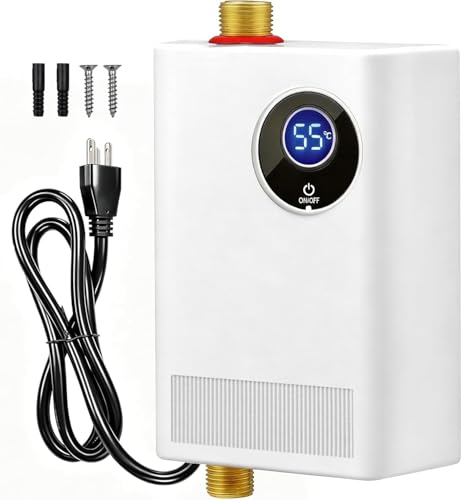
Best for: apartments, bathrooms, and camping setups needing instant water with a compact footprint. AIYEZIDT delivers hot water within 3-5 seconds, reaching up to 131°F at low flows. It is designed for wall mounting, freeing counter space while offering reliable safety features such as IPX4 waterproofing and dry-burning protection with a digital LCD readout.
Limitations: optimal performance occurs at modest water usage; very high flow rates may exceed the unit’s heat capacity.
Orbek 14kW Tankless Water Heater

Best for: small homes or condos needing steady hot water at 2-3 points of use. Orbek provides up to 3.38 GPM and emphasizes high efficiency and cost savings with advanced water-electricity separation to reduce scale and corrosion. It requires a 240V/60A two-pole breaker and proper piping. This model is chosen for those who want a robust, higher-capacity solution without a full-size heater.
Limitations: requires a substantial electrical panel, which may necessitate electrical work before installation.
APUS 18kW Tankless Water Heater
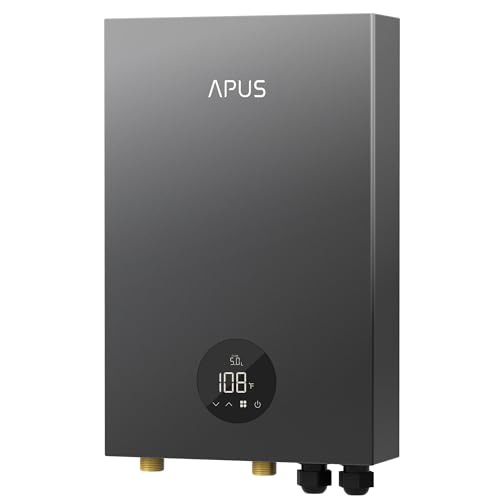
Best for: households needing multiple simultaneous hot-water uses with stable temperatures. The APUS 18kW unit supplies up to 4.4 GPM and features an LED display with adjustable 86°F–140°F temperatures. Self-modulating technology improves energy efficiency, achieving high thermal efficiency and reducing standby losses. It is suited for homes that require reliable hot water across several fixtures.
Limitations: installation requires careful electrical planning and a suitable 240V power supply to meet demand.
APUS Tankless Water Heater 4.5kW
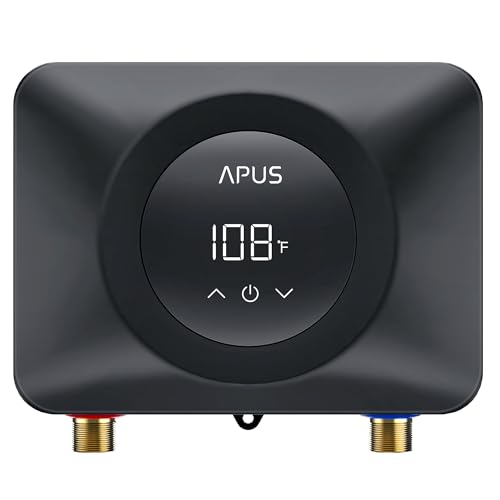
Best for: single-point use in tight spaces such as under-sink installations or small apartments. APUS 4.5kW delivers hot water in about 3 seconds, with a temperature range suitable for most domestic tasks. It uses self-modulating technology to optimize energy use while maintaining a consistent output. Its slim profile makes it a practical fit for narrow cabinets.
Limitations: capacity is best for one faucet at a time; multiple simultaneous uses may reduce flow and temperature consistency.
Buying Guide: Key Purchase Considerations
What size and capacity do you need? Choose a unit that matches your typical hot-water demand. Point-of-use models (under-sink) are great for single fixtures; whole-house designs handle multiple outlets but require more electrical capacity.
What electrical requirements apply? Many units run on 110V or 240V. Check your home’s circuit capacity and panel space. Some models demand a dedicated 60A 240V circuit or higher for optimal performance.
How important is installation space? Compact, wall-mounted units save cabinet space and are ideal for apartments or RVs. Wall mounting also reduces clutter in kitchens and bathrooms.
What safety features are included? Look for IPX4 waterproofing, dry-burning protection, automatic power-off on inactivity, and LCD displays for status. These features help prevent overheating and leaks.
How does temperature control work? Self-modulating tech adjusts heat output to match flow, improving efficiency and stabilizing temperature. Consider models with a wide temperature range to adapt to different tasks.
What about energy efficiency and cost savings? Tankless designs avoid standby heat loss. High-efficiency units can reduce electricity use by up to 50–60% depending on usage and climate.
FAQ
- What is instant on demand hot water? It is hot water produced immediately at the tap by a tankless heater, without storing hot water in a tank.
- Can I install a tankless heater myself? Some models are designed for DIY under-sink or wall-mount installation, but complex whole-house units may require a licensed electrician and plumber.
- Do these units work with multiple fixtures? Smaller under-sink units are point-of-use; larger 14kW or 18kW units can support 2–3 fixtures depending on flow and temperature needs.
- Will a tankless heater increase my electricity bill? Tankless models typically reduce standby losses and may lower bills when compared to traditional tanks, especially with self-modulating technology.
- What maintenance is required? Periodic checks for leaks, mineral buildup, and electrical connections help maintain performance and safety.
- How do I choose between 110V and 240V models? 110V units are easier to install in smaller spaces but typically have lower flow; 240V units handle higher flow and multi-point use but require suitable wiring.