Best in-Wall Cat 6 Cables for Safe, Reliable Network Upgrades
Answering the need for sturdy, in-wall friendly Cat 6 installations, this guide highlights five top Cat 6 options designed for in-wall use, long runs, and reinforced performance. The selections cover shielded, riser-rated, and bulk cables suitable for home or small office wiring. Ideal buyers include network installers, homeowners upgrading home offices, and IT staff planning future-proof wired networks for streaming, gaming, and multi-device connectivity.
| Product | Type | Length | Key Benefit |
|---|---|---|---|
| Cable Matters 10Gbps Snagless Shielded Cat 6A | Shielded Cat6A | 50 ft | High bandwidth, EMI protection |
| Cable Matters UL Listed 23AWG Cat6 | Bulk Cat6 | 500 ft | Solid copper, easy tracking |
| Cable Matters UL Listed 23AWG CM Riser Cat6 | CMR Cat6 | 300 ft | Riser-rated, fire safety |
| Cable Matters UL Listed 23AWG CM in-Wall Cat6 | CM in-Wall Cat6 | 500 ft | In-wall rated, bulk |
| Jadaol Cat6 50 ft Flat Cable | Flat Cat6 | 50 ft | Flat design, easy routing |
Cable Matters 10Gbps Snagless Shielded Cat 6A Ethernet Cable — 50ft

Best for high-demand LAN components needing EMI protection. This shielded Cat6A cable uses SSTP/SFTP shielding to reduce crosstalk and interference, supporting future 10-Gigabit Ethernet while remaining backward compatible with Fast and Gigabit Ethernet. The 26 AWG conductors balance flexibility and performance for longer in-wall runs. Suitable for PCs, servers, routers, NAS, VoIP, and PoE devices.
- Best for: Home or small office networks requiring strong EMI resistance and future-proof bandwidth.
- Caution: Shielded construction can be stiffer than unshielded cables, which may require careful routing in tight spaces.
Cable Matters UL Listed 23AWG Cat6 Bulk — 500 ft

Best for whole-home or small-office runs where bulk cable minimizes connections and supplier visits. This 23 AWG Cat6 bulk cable is UL Listed and CM-rated for reliable in-wall/install use, with a foot-marked jacket to track remaining length. It supports 10-Gigabit Ethernet and remains backward compatible with Cat5e networks.
- Best for: Projects needing long, continuous runs with straightforward installation and length tracking.
- Caution: Bulk cable requires proper termination tools and a clean workspace to avoid kinks.
Cable Matters UL Listed 23AWG CM in-Wall Cat6 — 300 ft

Best for multi-story installations where riser-rated safety matters. This CM in-wall rated Cat6 cable uses UTP construction with solid bare copper conductors, designed for high-speed networks and easy pull-box management with a foot-marked jacket. It’s compatible with Gigabit and 10-Gigabit Ethernet and ideal for multi-floor setups.
- Best for: In-wall installations in offices or homes with elevated safety requirements.
- Caution: Longer runs may require careful burn-in testing to ensure signal integrity.
Cable Matters 10Gbps Snagless Cat 6 — 25ft
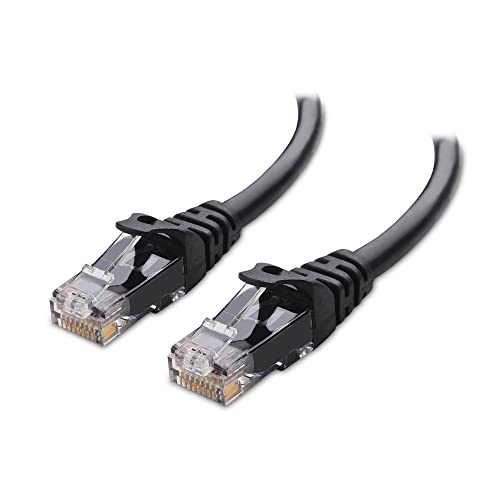
Best for shorter, high-performance Ethernet links within desks, media centers, or racks. This 24 AWG Cat6 cable delivers reliable, fast network connections with backward compatibility to Cat5 networks. It is designed for 10-Gigabit Ethernet readiness and emphasizes security and consistency for wired connections.
- Best for: Short, fast connections in workstations, printers, and local devices.
- Caution: Shorter lengths may not suit all in-wall needs; plan routing accordingly.
Jadaol Cat6 50 ft Flat Cable

Best for flexible routes under carpets or behind walls where space is tight. The flat design and 30 AWG conductors offer easy steering in tight channels, while still delivering Cat6 performance up to 250 MHz and 10 Gbps support for modern networks. It supports a wide range of devices including routers, modems, switches, gaming consoles, and streaming devices.
- Best for: Low-profile routing in flat cable channels and budget-conscious installs.
- Caution: Flat cables can be less durable for heavy bending; handle with care in wall cavities.
Buying Guide
What is in-wall Cat6, and why choose CM or CMR mentions?
In-wall Cat6 cables are designed to be installed within walls or between floors. CM (communications) rating applies to general in-wall use, while CMR (riser) and S/CMR (riser shielded) ratings address fire safety and vertical installations. For multi-story buildings, CMR is often preferred, while CM is suitable for single-story indoor runs.
Shielded vs. unshielded: which is right?
Shielded Cat6 (SF/FTP/SSTP) reduces EMI and crosstalk, making it better for environments with electrical interference or long runs. Unshielded Cat6 is easier to install and typically sufficient for standard home networks. In-wall installations near motors, dimmers, or dense cabling may benefit from shielding.
Length, flexibility, and installation considerations
- Bulk cables (500 ft, 300 ft) are cost-efficient for long runs but require proper termination and spooling techniques.
- Pre-made patch cables (shorter lengths) offer convenience for desk-to-router connections but are not ideal for long in-wall runs.
- Riser-rated (CMR) cables help with fire safety in vertical installations; consider local building codes.
Performance expectations
Cat6 supports up to 1 Gbps at typical distances and up to 10 Gbps at shorter runs. Cat6a versions provide higher bandwidth and EMI protection, beneficial for high-demand devices like NAS, servers, or PoE installations. Always verify compatibility with network hardware and PoE requirements if applicable.
Installation tips for in-wall projects
- Plan routes to minimize sharp bends and avoid running cables parallel to electrical lines.
- Use pull boxes or fish tapes for long runs to reduce stress on cables.
- Label cables at both ends to simplify future maintenance.
FAQ
- Q: Is Cat6 enough for 10-Gigabit networks in-wall? A: Yes, Cat6a offers higher bandwidth and EMI protection, but Cat6 with shorter runs can also support 10 Gbps.
- Q: What is the difference between CM, CMR, and CM in-wall ratings? A: CM is general in-wall; CMR is riser-rated for between floors; CM in-wall variants provide different safety certifications depending on installation zones.
- Q: Should I choose shielded or unshielded for a home office? A: Shielded is better in interference-prone environments; unshielded is simpler and sufficient in quiet home offices.
- Q: Do I need to terminate shielded cables differently? A: Shielded cables require proper grounding at terminations and connectors designed for shielded systems.
- Q: Can I mix Cat6 and Cat6a in the same network? A: Yes, they are backward compatible, but performance gains are maximized when shielding and higher bandwidth cables connect to compatible hardware.
- Q: How can I identify the right length for in-wall runs? A: Measure exact run distances and add extra slack for routing and termination, then use foot-marked jackets to monitor remaining length.