Best Bifacial Vertical Solar Panels for Efficient Off-Grid Living and RV Setups
Answering the question most buyers have: bifacial vertical solar panels can maximize energy harvest in compact, space-constrained setups such as RVs, boats, rooftops, and off-grid cabins. This guide highlights five well-rounded options, ideal for buyers seeking high efficiency, durable construction, and versatile installation. Each product is explained with who it’s best for, why it stands out, and a concise caveat. The featured units are suitable for energy storage, charging stations, and hybrid grid/off-grid configurations.
| Product | Best For | ||
|---|---|---|---|
| SUNGOLDPOWER UL61730 10Pcs 590W | Large energy users, home storage | 590W per panel | Can be used in varied angles |
| Callsun N-Type 200W (2Pcs) | Compact systems, RVers | 200W per panel | Dual-module parallel design |
| SUNGOLDPOWER UL61730 8Pcs 590W | Medium installations, rooftops | 590W per panel | Flexible mounting |
| JJN Bifacial 425W | Off-grid small farms, RVs | 425W per panel | IP65/IP68 protection |
| Star 860W 2Pcs 430W Each | Space-limited but high output | 430W per panel | Space-saving half-cell design |
SUNGOLDPOWER UL61730 N-Type 10PCS 590W Bifacial Panels
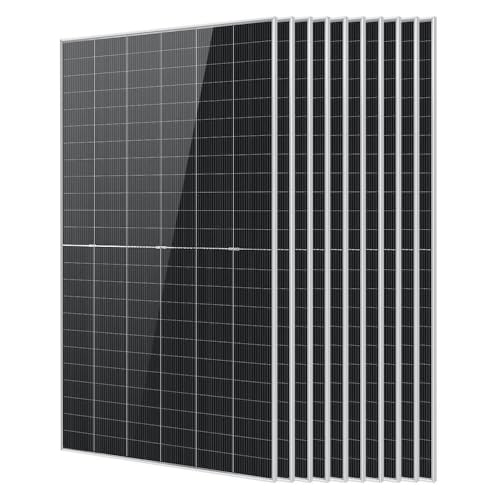
Best for high-demand energy setups, these 590W bifacial modules use N-Type 16BB cells and a dual-glass design for durability. They can harvest up to 22.8% energy on the front and up to 30% more from the rear under suitable conditions. The modules’ robust construction supports varied climates, making them a strong choice for energy storage systems and charging stations. The product is best for buyers prioritizing maximum energy yield in larger installations, especially where mounting flexibility is valued.
Key advantages: high efficiency with multi-directional harvesting, wide installation tolerance, and strong weather resistance. A potential limitation is that full rear-side gains depend on albedo and mounting angles, so real-world gains may vary by location and shading.
Who it’s best for: homeowners or off-grid setups needing substantial daily energy, or those planning on a home energy storage system with a substantial solar input. Why selected: top-tier output per panel and proven bifacial performance under diverse conditions.
Caution
Rear-side energy gains depend on reflective surfaces and installation geometry; consider site shading and space to realize full benefits.
Callsun N-Type 16BB 400W Bifacial Panels (2Pcs)

Best for compact, off-grid systems and RV setups, this pair of 200W panels uses N-Type 16BB cells and a bifacial backsheet to harvest extra energy from the rear. The twin-cell anti-shade design helps maintain output when part of the array is shaded, which is common in mobile installations. This option suits buyers seeking reliable performance in smaller arrays and in applications where shading is a concern.
Why selected: strong shading tolerance and a design that supports flexible, parallel configurations. The main caveat is that 200W per module means you’ll need more panels to reach large power levels, which could complicate installation in very tight spaces.
Who it’s best for: RVers, boat owners, or tiny off-grid setups needing dependable power while preserving space. Why selected: balance of efficiency, shade resilience, and modular scalability.
Caution
Two-panel systems may require more wiring and balancing to optimize total output versus a single high-capacity unit.
SUNGOLDPOWER UL61730 8Pcs 590W Bifacial Panels

Best for rooftop or ground-mounted setups where a higher total output per installation is desired, these 8 panels deliver 590W each, with the same N-Type 16BB efficiency and rear-side energy capture. They suit homes or small businesses prioritizing robust daily energy generation and straightforward system integration. They’re a solid upgrade option when more power is needed without significantly increasing array footprint.
Why selected: high power density with proven bifacial gains. Limitation: larger arrays require more space and mounting hardware, increasing upfront installation considerations.
Who it’s best for: homeowners upgrading an existing system or new builds where roof space is available for a high-output install. Why selected: good balance of space efficiency and total energy yield.
JJN Bifacial 425W Solar Panel

Best for small-to-medium off-grid projects, this 425W bifacial module uses N-Type 16BB cells with a transparent backsheet to capture front and rear rays, delivering up to 25% more energy. Its durable black aluminum frame and IP65/IP68-rated components support outdoor use in varied climates. This option is well-suited for RVs, farms, and rooftop installations where reliability and extended service life matter.
Why selected: strong efficiency with solid weather resistance and a robust protection design. Limitation: 425W per panel means a larger array is needed for high power targets, potentially increasing mounting complexity.
Who it’s best for: off-grid enthusiasts and mobile setups needing dependable performance with wide installation latitude. Why selected: proven bifacial gains and rugged build for outdoor use.
Star 860W Bifacial Panels (2×430W)

Best for space-limited installations needing high daily output, these 430W panels come in a two-panel configuration totaling 860W. Their half-cell design improves current collection and reduces shading losses, while high durability ratings support rooftop or ground installations in harsh environments. This setup is ideal for customers prioritizing maximum wattage in a compact footprint and straightforward integration into larger solar systems.
Why selected: high total output with a compact form factor. Limitation: a higher upfront system energy target may require additional hardware and monitoring to optimize performance.
Buying Guide: Bifacial Vertical Solar Panels — Key Considerations
- Energy yield and panel capacity: Compare wattage per panel and total system size to meet daily energy needs.
- Bifacial gain potential: Real-world gains depend on rear-side reflection and mounting angle; prefer systems designed for higher rear energy capture when site conditions are favorable.
- Cell technology: N-Type with 16BB busbars typically offers better shading tolerance and durability than older busbar designs.
- Durability and weather resistance: Look for IP ratings, sturdy frames, and double-glass or protective backsheet features for outdoor reliability.
- Installation flexibility: Consider whether the panels are easy to mount at non-traditional angles or in space-constrained locations like RV roofs or balconies.
- System integration: Ensure the chosen panels are compatible with your storage, inverter, and grid/off-grid plan, including parallel or series configurations.
- Maintenance and longevity: Favor panels with robust warranties and materials designed to minimize degradation in harsh climates.
FAQ — Quick Answers For Buyers
- What is a bifacial solar panel?
A bifacial solar panel can harvest light from both its front and rear surfaces, potentially increasing total energy output in suitable environments.
- Are bifacial panels better for RVs or small spaces?
Yes, they can offer higher energy per footprint, but mounting and shading considerations are crucial for realizing gains.
- Do I need special inverters for bifacial panels?
Most standard inverters work, but some setups benefit from monitoring and optimizers to maximize rear-side gains.
- What affects rear-side energy gains?
Rear gains depend on back panel reflectivity, mounting angle, and reflected light from the environment.
- How do I choose the right wattage?
Calculate daily energy needs, available installation space, and desired system redundancy to pick a suitable total wattage.
- Are these panels suitable for off-grid living?
Yes, several listed options are designed for off-grid and energy storage applications with robust durability.