Best in Line Heat Tape for Pipe Freeze Protection
Answering common buyer needs: in line heat tape is best for concealed or buried pipes, where external tape isn’t visible or practical. This guide highlights five top in line heat tape options, explaining who each is best for, and why. Ideal buyers include homeowners protecting drinking water lines, professional plumbers installing inside pipes, and contractors seeking durable, long‑term solutions. The following table summarizes the featured products for quick comparison.
| Product | Brand | Best For | Key Benefit |
|---|---|---|---|
| HEATIT In Line Self Regulating Heating Cable | HEATIT | Drinking water lines requiring in-pipe installation | CSA NSF61 certified and durable fluoropolymer sheath |
| Heat Tape Pro | Radiant Solutions Company | Commercial/rooftop and pipe freeze protection | GlowCap verification and 10-year warranty |
| YeloDeer In Pipe Heating Cable | YeloDeer | Concealed pipes with smart self-regulation | CSA certified, reliable internal installation |
| YeloDeer 100Ft Cut-to-Length | YeloDeer | Professionals needing roll-form flexibility | Bulk roll with end caps and splitter, -40°F protection |
| MAXKOSKO In Line Heating Cable | MAXKOSKO | Drinking water pipes, internal line heating | NSF61 certification with fluoropolymer jacket |
HEATIT In Line Self Regulating Heating Cable for Drinking Water
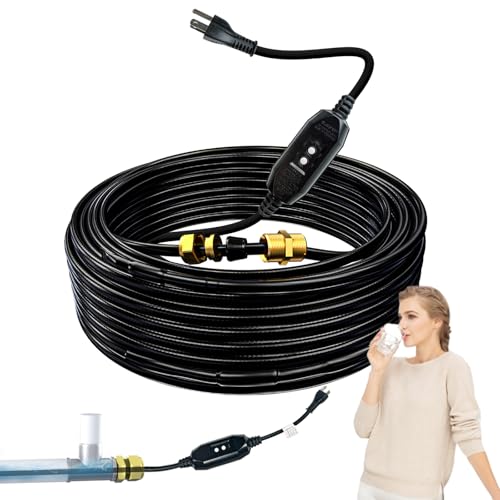
Best for drinking water lines inside pipes. This in-line cable is fully CSA NSF61 certified, ensuring safety for potable water. The fluoropolymer jacket provides durability against harsh conditions, making it suitable for long-term, hidden pipe installations. It’s designed to protect underground or enclosed pipelines where external heat tapes aren’t feasible. Suitable for both residential and small commercial applications. Primary limitation: installation inside pipes may require careful planning to accommodate fittings and access points.
Heat Tape Pro – Self-Regulating Heat Cable

Best for commercial-grade freeze protection on roofs and pipes. Heat Tape Pro features patented GlowCap technology to verify operation along the full length, plus a 10-year warranty and UL listing. It is designed to withstand outdoor and roof environments and may be preferred when high durability and maintenance-free operation are priorities. Limitation: it is a larger, heavier option with a heavy-duty build, which may be overkill for simple residential pipe protection.
YeloDeer In Pipe Heating Cable with Y-Fitting

Best for hidden or buried pipes where external heat tapes fail. This CSA-certified in-pipe solution provides direct freeze protection from within water lines and features smart self-regulating technology to adjust power output. It’s well-suited for homes with concealed plumbing or for installations where external access is limited. Caution: ensure compatibility with existing fittings when using a Y-Fitting approach and verify fit for pipe diameter before purchase.
MAXKOSKO In Line Heating Cable for Water Lines

Best for drinking water pipe protection with full CSA NSF61 certification and a fluoropolymer jacket. The in-line design targets concealed or ground-buried pipes, reducing exposure of cables and improving aesthetics. Choose this if you prioritize certified safety for potable water and robust, long-lasting performance. Limitation: assembly inside pipes may require careful alignment and professional guidance for complex plumbing layouts.
MAXKOSKO 28 Feet Pipe Heat Cable
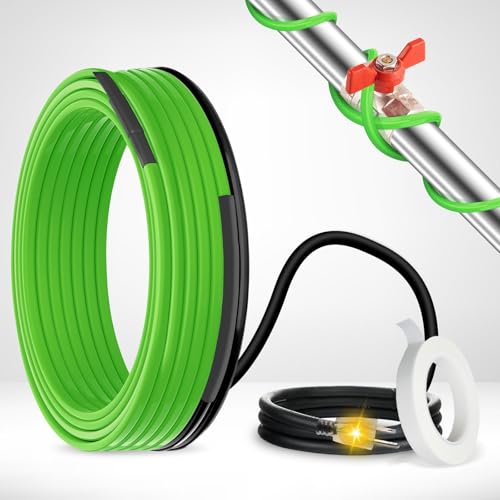
Best for flexible sizing with built-in thermostat. This 28-foot option provides predictable, automatic protection by turning on at 37°F and off at 50°F, helping to balance protection with energy use. It supports metal, PEX, PVC, and plastic pipes. Consideration: the straight-line installation rule means careful planning is needed to avoid overlaps or spirals that can impact performance.
Cupohus Heat Tape with Thermostat

Best for hoses and outdoor lines needing thermostat-controlled in-line heating. It provides automatic on/off to maintain a target temperature, guarding against wasting energy. The design emphasizes safety with GFCI-compatible outlets and protective cabling, and it’s suitable for hoses, outdoor pipes, and RV components. Limitation: primarily positioned for temporary or supplemental protection rather than long-term heavy-duty use on large residential systems.
MEBMIK Heat Transfer Tape (Non-Pipe Use)

Best for industrial and sublimation contexts, not specific to in-line pipe heating. This product is a polyimide heat transfer tape with high-temperature adhesive, useful for high-temp bonding tasks rather than residential pipe freeze protection. If your project centers on heat pressing or sublimation rather than water pipe protection, this is a relevant alternative. Limitation: not a hot-water pipe protection solution.
Buying Guide
What is an in-line heat tape?
In-line heat tape is installed inside a pipe to provide direct heat along the water line, preventing freezing and maintaining flow during cold conditions. These systems are typically self-regulating, adjusting heat output to temperature, and may carry safety certifications for drinking water contact.
Key considerations for selection
- Certification: For drinking water lines, NSF61 or CSA NSF61 certifications indicate safety for potable water.
- Installation environment: Internal (in-pipe) installations suit buried or concealed pipes; external installations are not always necessary.
- Temperature range and thermostat: Built-in thermostats or self-regulating features help balance protection with energy use.
- Durability: Fluoropolymer jackets offer chemical and temperature resistance for long-term use.
- Maintenance and warranty: Long warranties and robust construction reduce lifecycle costs and maintenance needs.
Practical buying questions
- Can I install an in-line heat tape myself? Some products are designed for straightforward DIY installation, while others may require professional plumbing work for proper sealing and fittings.
- Should I choose a self-regulating option or a thermostat-controlled one? Self-regulating cables adjust heat with temperature, while thermostat-controlled cables provide a fixed turn-on/off point; choose based on pipe exposure and energy goals.
- What pipe materials are supported? Most lines support metal, PVC, PEX, or other common plumbing materials; verify compatibility with your system.
- Are there safety risks with in-line heating? Follow manufacturer instructions, ensure proper insulation, and use GFCI outlets where applicable to avoid electrical hazards.
Quick guidance by scenario
- Residential buried pipes: Consider CSA or NSF61 certified in-line options for safe potable water protection inside walls or buried routes.
- Commercial roofs and exposed pipes: A robust, UL-listed or GlowCap-enabled Heat Tape Pro style solution offers durability and easy verification.
- Professional plumbing projects: Bulk roll or cut-to-length options from trusted brands offer flexibility for precise piping layouts.
FAQ
- What does NSF61 certification mean for in-line heat tape? It indicates safety for drinking water applications, addressing material and toxicity concerns.
- Is in-line heat tape more expensive than external tape? In-line systems can offer better protection for concealed pipes but may involve higher upfront installation complexity.
- Can I install in-line heat tape on all pipe types? Most are compatible with metal, PVC, and PEX pipes, but always confirm compatibility with your pipe diameter and material.
- Do in-line tapes consume a lot of electricity? Self-regulating and thermostatic models optimize energy use, reducing waste while protecting pipes.
- How long does in-line heat tape last? Durability depends on jacket material, installation conditions, and manufacturer warranty; durable fluoropolymers generally extend lifespan.
- When should I replace an in-line heat tape? Consider replacement if the cable shows visible damage, loss of insulation, or if it fails to regulate temperature as expected.