Best Hot Water Heater Boosters for Faster, Safer Warm Water
Hot water heater boosters improve delivery, temperature control, and efficiency for homes and small commercial setups. This guide highlights five reliable options and shows who benefits most from each. The top picks balance safety features, ease of installation, and energy efficiency for households, apartments, and small businesses.
A quick buying guide table summarizes the five recommended boosters, focusing on best use cases, notable benefits, and installation notes.
| Product | Best For | Key Benefit | Installation Note |
|---|---|---|---|
| Cash Acme 3/4″ Tank Booster with Thermostatic Mixing Valve | Families and small households needing precise tempered water | Temperature-actuated mixing valve with gauge for safe, adjustable output | Push-to-connect with common pipe types; no soldering |
| Rheem RTEX-AB Water Heater Booster | Compact spaces and quick hot-water boost | Compact unit with simple physical dimensions for easy fit | Lightweight; straightforward install |
| Eemax HATB007240 Tank Water Heater Booster | Digital control lovers needing precise temp and compact design | Digital UI; high temperature accuracy; adjustable settings | External controls for easy setup |
| Eemax TankBuddy | Boosting hot-water delivery for any tank size | Up to 45% more deliverable hot water; low wiring needs | No extra feed required with existing 10 AWG wiring |
| EcoSmart ECOTB240 | Electric boosters for small installations with existing wiring | Up to 45% more deliverable hot water; adjustable activation | No additional feed required with 10 AWG / 30A |
Below are five product profiles to help compare options side by side, focusing on who each product is best for and why it stands out.
Cash Acme 3/4 Inch Tank Booster With Valve
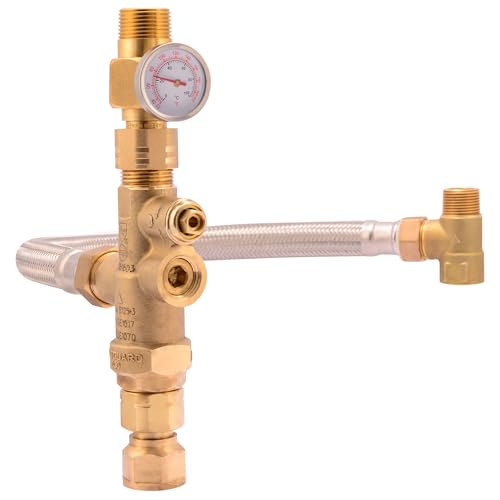
This booster uses a temperature actuated mixing valve and a gauge to temper hot water by mixing with cold water, delivering a controlled output. It is compatible with gas, electric, and tankless systems and supports PEX, PE-RT, CPVC, and copper piping, with a push-to-connect design that avoids soldering. Best for: homes needing precise, safe shower and bath temperatures while preserving flow. Caution: Setpoint control should be verified after installation to maintain safe levels.
Rheem RTEX-AB Water Heater Booster

This compact booster is suitable where space is limited and a simple installation is preferred. While technical specifications are minimal in listing, its small footprint makes it a practical choice for apartments or closets with limited room. Best for: people needing a quick, space-efficient upgrade. Caution: Detailed electrical compatibility should be confirmed during planning.
Eemax HATB007240 Tank Water Heater Booster

The Eemax HATB007240 offers a digital user interface and temperature accuracy within ±1 degree F, with external controls for easy adjustment. It can increase deliverable hot water up to about 45% and is designed for compact installation without extensive space needs. Best for: tech-savvy buyers who want precise control and quick setup. Caution: Digital interfaces require occasional maintenance to ensure calibration remains accurate over time.
Eemax TankBuddy Water Heater Booster Blue

TankBuddy focuses on increasing deliverable hot water for tanks of any size and claims up to 45% more hot water. It is marketed for installations where no additional feed is required if you already have a 10-gauge wiring and a 30-amp breaker. Best for: households seeking a straightforward upgrade with minimal electrical changes. Caution: Verify electrical capacity of existing circuits before installation to avoid overloads.
EcoSmart ECOTB240 Tank Booster
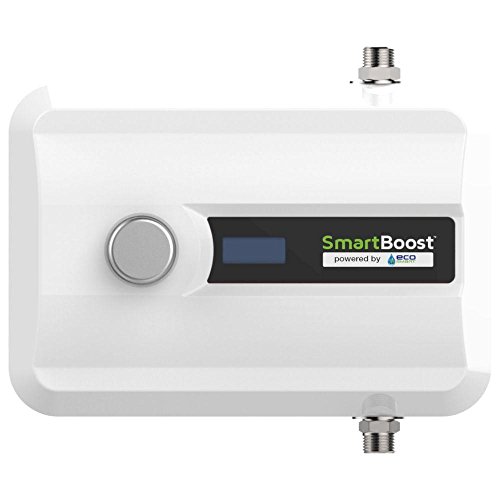
EcoSmart’s ECOTB240 booster emphasizes electrical compatibility, noting no extra feed is required when 10-gauge wiring and a 30-amp breaker are already in place. It can boost deliverable hot water by about 45% and offers an adjustable activation temperature between 80-130°F. Best for: homeowners with existing 240V circuits and a need to extend hot water without changing wiring. Caution: Activation temperature settings should align with household hot water usage patterns to avoid cold-water bursts during showers.
Buying Guide: Key Considerations For Hot Water Booster Upgrades
What type of water heater do you have? Tank versus tankless, gas versus electric, and the current hot-water demand will influence booster choice. Look for a model that matches existing piping materials (PEX, copper, CPVC) and has a simple installation flow to fit your setup.
What temperature should you set? Most boosters are designed to deliver safe, tempered water (around 120°F / 49°C). If you need higher temps for sanitation or specific appliances, verify that the unit supports higher setpoints without compromising safety.
How much extra hot water do you need? If your goal is to reduce wait times or improve showers, consider units that advertise higher percentage gains (usually 30-45% more deliverable hot water). For larger households, a dual or staged approach may be more effective.
What are the electrical and space requirements? Electric boosters require appropriate circuit capacity and breaker size. Check clearances and mounting space to ensure the booster fits where you plan to install it, especially in apartments or utility closets.
How easy is installation and maintenance? Push-to-connect fittings and external control panels simplify installation and adjustments. A digital interface can provide precise temperature control but may require occasional calibration or software updates.
FAQ: Quick Answers About Hot Water Booster Options
- Do boosters work with all water heater types? Boosters are designed to work with most common systems, including gas, electric, and tankless water heaters, but compatibility depends on piping and electrical connections.
- Will a booster increase energy use? Boosters typically increase hot-water delivery efficiency rather than major energy consumption. Exact energy impact varies by model and usage patterns.
- Is installation a DIY-friendly task? Many boosters offer push-to-connect fittings and straightforward mounting, but electrical work or substantial plumbing changes may require a licensed professional.
- What safety features matter most? Look for tempered-water output control, anti-scald valves, and clear temperature gauges or digital readouts to prevent burns and bacterial growth.
- How do I decide how much boost I need? Assess current hot-water delivery, shower duration, and household peak usage. If you notice cold patches or long wait times, a booster with higher deliverable water percentages is typically beneficial.
- Do these boosters affect warranty coverage? Installation by a qualified technician and adherence to the manufacturer’s guidelines help protect warranty terms; refer to each product’s documentation for specifics.