Best High Amp Hour Deep Cycle Batteries for Off-Grid Power
Direct answer: For long-lasting, high-capacity deep cycle energy, lithium options generally provide the best amp-hour density and cycle life, while AGM models offer a lower upfront cost with robust performance. This guide highlights five top choices suitable for off-grid cabins, RVs, boats, solar storage, and trolling-motor setups. Each product is evaluated for who benefits most, potential limitations, and why it’s a strong pick in its category.
Buyer type at a glance:
– Best overall high-capacity lithium: LiFePO4 packs with high cycle life and safety features.
– Best value long-life AGM: Sealed AGM options with low self-discharge for off-grid storage.
– Best dual-purpose marine/RV use: AGM that balances starting power and deep cycling.
– Best compact high-energy lithium: Lightweight, space-saving LiFePO4 for tight installs.
– Best large-capacity option: Very high Ah for extended off-grid runs, with strong BMS protection.
| Product | Type | Capacity (Ah) | Chemistry | |
|---|---|---|---|---|
| Weize Deep Cycle AGM 12V 100Ah | AGM | 100 | AGM | RV, marine, off-grid storage on a budget |
| LiTime 12V 100Ah RV Lithium Battery | LiFePO4 | 100 | LiFePO4 | High-cycle life and safety for RVs and boats |
| Weize BCI Group 31M Dual Purpose AGM Battery | AGM | 110 | AGM | Dual-purpose starting and deep cycling |
| HRBEENERGY 12.8V 100Ah LiFePO4 Battery | LiFePO4 | 100 | LiFePO4 | Long life and compact for off-grid or marine use |
| DUMFUME 12V 150Ah LiFePO4 Battery | LiFePO4 | 150 | LiFePO4 | Maximum capacity for extended off-grid or solar storage |
Note: This table is intended to help compare major attributes at a glance. Individual product details follow in the sections below.
Weize Deep Cycle AGM 12V 100Ah Battery

Features: Maintenance-free AGM design; 12.99 x 6.73 x 8.43 inches; low self-discharge (1-3% per month) long storage potential; operating temperature range suitable for outdoor and vehicle use; max 1100A (5 seconds) discharge capacity.
Best for: Budget-conscious buyers needing reliable 100Ah capacity for RVs, trolling motors, solar storage, and small off-grid systems.
Why selected: High-value 100Ah AGM option with maintenance-free design and robust self-discharge characteristics make it a solid all-around choice for moderate power needs.
Caution/limitation: AGM batteries can have higher weight and lower energy density than lithium equivalents; high current demands over long periods may reduce lifespan if not managed properly.
LiTime 12V 100Ah RV Lithium Battery
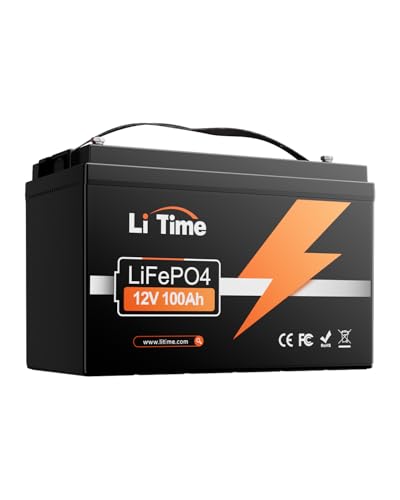
Features: UL 1973 safety certification; built-in 100A BMS; safeguards against overcharge, over-discharge, short circuits, over-temperature; compact high-energy density power delivery.
Best for: Users seeking long life, high safety standards, and space-efficient lithium storage for RVs, boats, and solar systems.
Why selected: Lithium iron phosphate chemistry with BMS enhances safety and longevity, ideal for frequent cycling and demanding off-grid needs.
Caution/limitation: Higher upfront cost than AGM; ensure compatible charging equipment and BMS settings to maximize life.
Weize BCI Group 31M Dual Purpose AGM Battery

Features: Dual-purpose design for deep cycle and starting power; AGM technology with low internal resistance; claims up to 2x longer cycle life than traditional flooded marine batteries; quick charging capability with 14.4V target voltage and up to 21A
Best for: Marine and RV users needing reliable starting power plus deep-cycle capability in a single battery.
Why selected: Balances starting performance and deep cycling, suitable for boats and campers where space allows for a flexible power source.
Caution/limitation: Charging must adhere to specific voltage/current guidelines; mischarging can shorten life or reduce performance.
12.8V 100Ah LiFePO4 Battery by HRBEENERGY

Features: Built-in 100A BMS with overcharge, over-discharge, short circuit and high/low temp protection; compact 12.8V 100Ah form factor; IP67 waterproof case compatibility for marine environments.
Best for: Off-grid installations, boats, and camping setups where space is limited but high energy density is needed.
Why selected: Strong safety features and waterproofing suit harsh outdoor conditions, offering reliable performance in limited spaces.
Caution/limitation: Ensure device compatibility with 12.8V systems and balance charging strategy to maximize lifespan.
DUMFUME 12V 150Ah LiFePO4 Battery

Features: 1920Wh energy capacity; 4000+ deep cycles; built-in 100A BMS; low-temperature protection; compact dimensions for high-density storage.
Best for: Off-grid systems and long-duration solar storage where maximum capacity and cycle life are critical.
Why selected: Very high Ah capacity with extensive cycle life makes it a strong option for sustained power needs, especially in solar-dominant setups.
Caution/limitation: Heavier than some compact lithium options; follow BMS guidelines for charging and storage to avoid degradation.
Buying Guide: Key Purchase Considerations
How to choose by chemistry and life cycle
Choose LiFePO4 for longer cycle life (often 2,000–15,000+ cycles) and safer thermal performance. AGM offers lower upfront cost and robust leak protection but shorter cycle life and higher weight for the same capacity.
How to select capacity for your needs
Estimate daily energy use in watt-hours (Wh) and divide by acceptable depth of discharge. For example, a 100Ah 12V battery at 50% DOD yields about 600Wh usable. Higher Ah means more storage and longer runtime between charges.
How important is a Battery Management System (BMS)?
A built-in BMS protects against overcharge, over-discharge, short circuits, and temperature extremes. For lithium options, a robust BMS is essential for safety and longevity.
Space, weight, and installation considerations
LiFePO4 packs are typically lighter and more compact for the same capacity than AGM. Consider mounting space, ventilation needs (AGM still requires some air flow), and compatibility with existing charging gear.
Charging and compatibility questions
Check voltage targets (14.4V for many AGM, 14.6V for some lithium charging regimes) and maximum current recommendations. Ensure your charger, inverter, and solar controller support the battery’s chemistry and the BMS settings.
Durability in harsh environments
IP ratings and waterproof enclosures are valuable for marine applications. For outdoor RV or camping use, consider temperature ranges and storage conditions to maintain performance.
FAQ
- What is the difference between 12V AGM and LiFePO4 in terms of lifespan? LiFePO4 typically offers many more deep-cycle cycles (thousands) than AGM, leading to longer overall lifespan under regular cycling.
- Can I mix different battery chemistries in a system? Mixing chemistries is generally not recommended because of differing charging profiles, voltages, and BMS requirements, which can shorten lifespan and create safety risks.
- Is a higher Ah always better? Higher Ah increases capacity and runtime, but may come with higher cost and size. Choose based on your energy needs and space constraints.
- What is a good rule of thumb for DOD (depth of discharge)? For lithium (LiFePO4), 80-90% DOD is common for long life; for AGM, many users target around 50-60% DOD to maximize lifespan.
- Do I need special chargers for lithium batteries? Yes. Lithium batteries require compatible chargers and often a BMS-aware charging setup to maximize safety and longevity.
- Which battery is best for trolling motors? AGM and certain LiFePO4 options are both viable; for long life and performance under load, LiFePO4 with a solid BMS is typically preferred.